Tories Withdraw Braverman Mental Health Statement Following Political Backlash
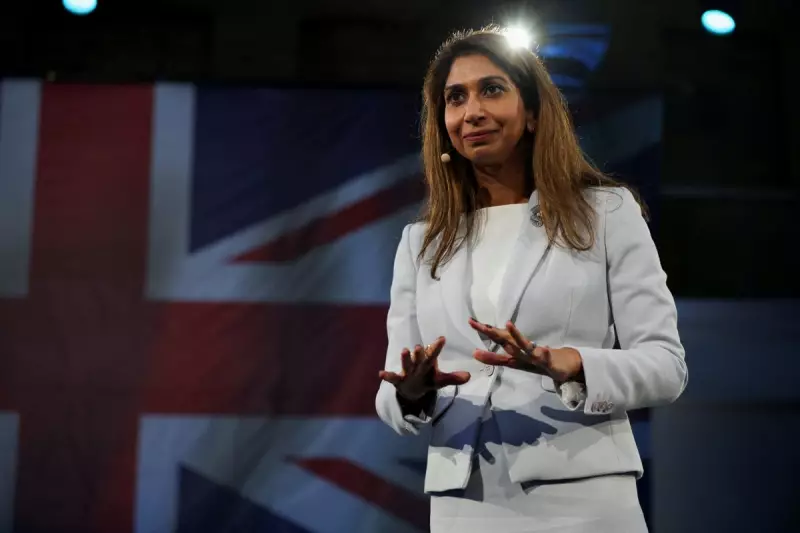
The Conservative Party has formally retracted a controversial statement that made claims about former home secretary Suella Braverman's mental health, following widespread condemnation from politicians across the spectrum and leading mental health charities. The incident occurred shortly after Ms Braverman was unveiled as the latest high-profile Conservative defector to join Nigel Farage's Reform UK party on Monday.
Controversial Statement and Swift Backlash
An initial response issued by the Conservative Party following Ms Braverman's defection contained the sentence: "The Conservatives did all we could to look after Suella's mental health, but she was clearly very unhappy." This reference to the former home secretary's mental wellbeing was immediately criticised as inappropriate and politically motivated.
Brian Dow, deputy chief executive of the Rethink Mental Illness charity, issued a strong warning against using mental health as a political tool. "Employers should never disclose any details about the mental health of their employees or former staff," he stated. "Doing so says far more about them than the person they are referring to. People living with mental ill-health do not deserve to have their experiences trivialised or used as a political football."

Cross-Party Political Condemnation
The statement drew criticism from both Conservative and Labour politicians, with many describing it as crossing ethical boundaries in political discourse.
Conservative peer Lord Jackson wrote on social media platform X: "What a nasty and unpleasant statement from @Conservatives. That's another few thousand votes they've lost."
Labour MP Jake Richards echoed these sentiments, stating: "I hope decent Conservatives call this statement out. It is beneath them."
Perhaps most significantly, Home Office minister Mike Tapp, while expressing no political sympathy for Ms Braverman's actions regarding immigration policy, criticised his own party's statement. "But the Tories attacking her mental health is below the standards we expect," he wrote. "British values are strong but decent, firm but fair. Neither the Tories nor Reform sign up to that."
Retraction and Revised Statement
Hours after the initial statement was released, the Conservative Party removed the controversial sentence and issued a revised version. Party officials claimed the earlier version was a draft that had been sent out in error.
The corrected statement from a Conservative Party spokesman now reads: "It was always a matter of when, not if, Suella would defect." The statement continues with a more political critique of Ms Braverman's motivations: "There are some people who are MPs because they care about their communities and want to deliver a better country. There are others who do it for their personal ambition."
The revised statement references Ms Braverman's previous leadership bids, noting she "stood for leader of the Conservatives in 2022 and came sixth, behind Kemi and Tom Tugendhat" and that in 2024 she "could not even muster enough supporters to get on the ballot." It concludes with a pointed remark about her new political home: "She has now decided to try her luck with Nigel Farage, who said last year he didn't want her in Reform. They really are doing our 'Spring cleaning'!"
Broader Implications for Political Discourse
This incident highlights growing concerns about the treatment of mental health in political contexts and raises questions about appropriate boundaries in political communication. The swift retraction following cross-party criticism suggests recognition that such personal references exceed acceptable political discourse, even in the heated environment of defections and party realignments.
The episode occurs against the backdrop of increasing political fragmentation on the right of British politics, with Reform UK continuing to attract disaffected Conservative figures. Ms Braverman's defection represents another significant blow to Conservative unity and presents further challenges for the party's leadership as they approach future electoral contests.