

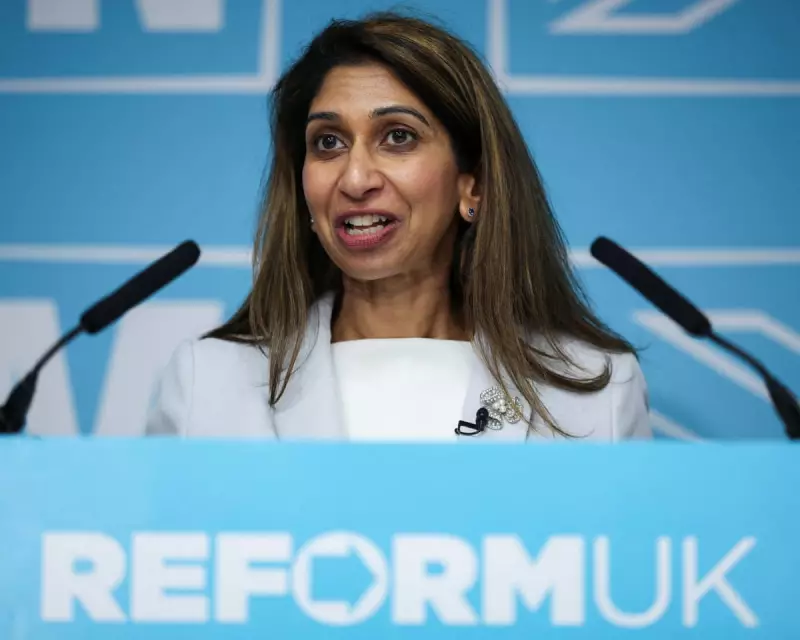
Tories Retract 'Error' Statement on Braverman's Mental Health After Defection
The Conservative Party has formally withdrawn a controversial statement that linked former Home Secretary Suella Braverman's defection to Reform UK with her mental health, labelling the communication as having been 'sent out in error'. The move follows immediate and severe criticism from across the political spectrum and from leading mental health charities.
Swift Condemnation and Apology
Earlier on Monday, an official party statement, circulated to journalists by a Conservative spokesperson, asserted: 'It was always a matter of when, not if, Suella would defect. The Conservatives did all we could to look after Suella's mental health, but she was clearly very unhappy.' The remarks were swiftly condemned as brutal, indiscreet, and for trivialising mental health struggles.
The spokesperson subsequently apologised and re-circulated a corrected statement omitting the reference entirely. This incident occurred as Braverman publicly announced her move from the Conservatives to Nigel Farage's Reform UK, marking a significant political shift.

Cross-Party Outrage and Charity Response
Reaction from MPs and peers was swift and damning. Nigel Evans, a former Conservative MP, described the original statement as an 'absolute disgrace' and 'completely underhand'. Tory peer Stewart Jackson stated it was 'nasty and unpleasant' and would cost the party votes.
From the opposition benches, Labour MP and chair of the all-party parliamentary group on mental health, Sojan Joseph, called the comments 'frankly appalling'. He emphasised that conflating political defection with mental illness undermines both healthcare professionals and those living with such conditions.
Mental health charities added their strong disapproval. Tom Pollard, Head of Policy at Mind, said it was 'disappointing to see a political party commenting publicly on someone's mental health', noting such actions are stigmatising. Brian Dow, Deputy Chief Executive of Rethink Mental Illness, stressed that employers should never disclose details about an employee's mental health, stating it trivialises people's experiences.
Internal and External Criticism
Even within government ranks, criticism emerged. Mike Tapp, a Home Office minister, posted that while he had 'no sympathy' for Braverman's immigration policies, attacking her mental health was 'below the standards we expect' and contrary to British values of decency and fairness.
A source from Reform UK told the Guardian the claim was 'not true' and a 'gross affront', highlighting Braverman's credentials as a Cambridge-educated barrister who has held senior positions, and stating she has never been diagnosed with a mental health condition. The source suggested the statement revealed a Conservative Party in 'real panic mode'.
Labour MP Josh Fenton-Glynn summed up the sentiment, calling the statement 'horrible' and akin to a petty first draft that should have been reconsidered.
This episode underscores the intense political tensions surrounding Braverman's high-profile defection, while raising serious questions about the appropriate discourse concerning mental health in public and political life.






