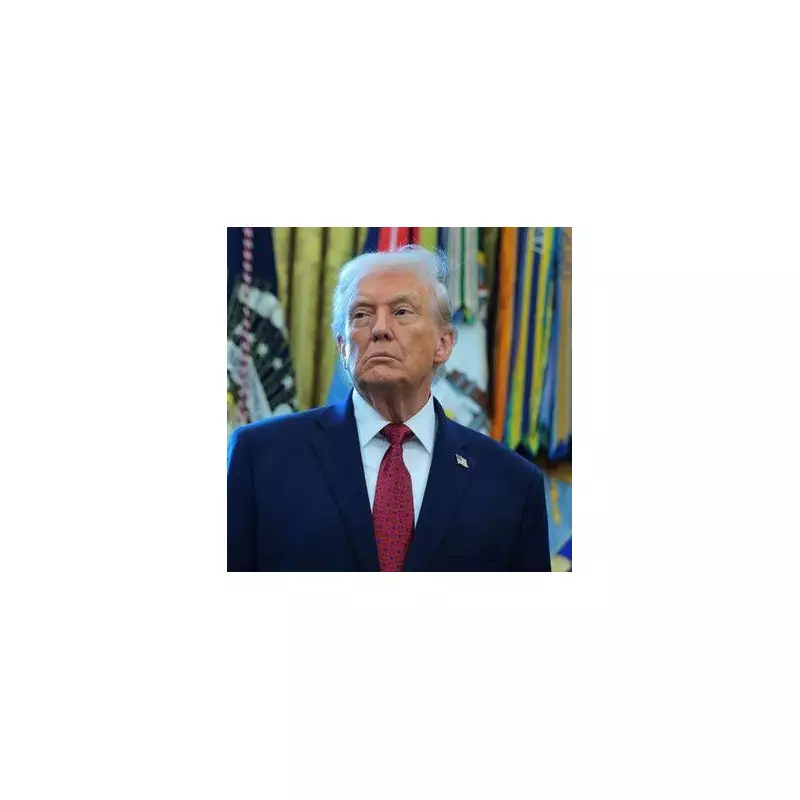
Staff working for President Donald Trump have been compelled to make a significant adjustment to their conduct during meetings, speaking more loudly to accommodate the leader's apparent hearing issues. This change comes amid ongoing and widespread speculation regarding the 79-year-old President's physical and mental fitness for office.
Mounting Health Concerns and Official Denials
Ever since Donald Trump returned to the White House, questions have swirled about his capacity to serve a full term. Despite his physician, Dr Sean Barbabella, providing a clean bill of health, persistent rumours suggest the use of a catheter and even the onset of dementia. The White House has firmly rejected these allegations.
Observers have pointed to several visible signs, including noticeable bruising on Trump's hands, which Press Secretary Karoline Leavitt attributed to vigorous handshaking. Reports also cite instances of apparent fatigue during official meetings and the noted auditory difficulties.

Aides Adjust to Auditory Issues
According to a report in the Wall Street Journal, Trump's "aides, donors and friends" have begun speaking louder in meetings to ensure he can hear them clearly. The President addressed these claims with sarcasm at a recent press conference, repeatedly stating, "I can't hear you." He later qualified this, explaining he only struggles to hear "when there's a lot of people talking."
Biographer Suggests Deeper Cognitive Concerns
The conversation around Trump's health has expanded beyond physical symptoms. On the 'Inside Trump's Head' podcast, biographer Michael Wolff addressed a comment from White House chief of staff Susie Wiles, who told Vanity Fair that Trump had an "alcoholic's personality." Wolff proposed a different interpretation.
He suggested Trump's behaviour could indicate a personality disorder, remarking, "Susie Wiles might just as well have said that it's like dealing with a dementia patient." Wolff described "uninhibited aspects of his personality - anger, self-pity...become increasingly more uninhibited."
Drawing a parallel with the scrutiny faced by President Joe Biden, Wolff noted the inherent difficulty in diagnosing a sitting president. "Everyone around him closed ranks to protect him," he said of Biden's situation, adding that there is "no mechanism for an objective diagnosis" and that the same dynamic now applies to Donald Trump.