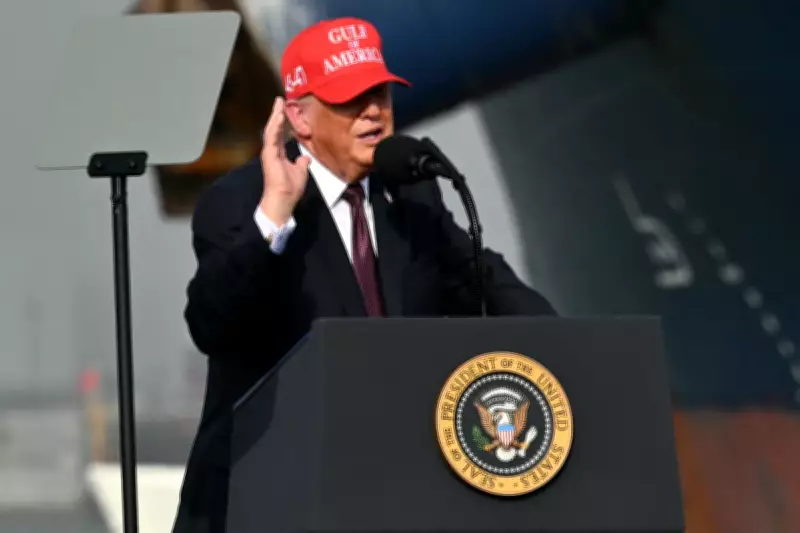
At a rally in Corpus Christi, Texas, former President Donald Trump made the controversial claim that he is 'entitled' to serve a third term as president, directly challenging the U.S. Constitution's 22nd Amendment, which limits presidents to two terms. This assertion was based on his repeated and unsubstantiated allegations that the 2020 election was 'stolen' from him by Democrats, whom he accused of cheating 'like hell.'
Constitutional Violation and Political Fallout
Trump's remarks have sparked immediate backlash, as the 22nd Amendment explicitly prohibits any individual from holding the office of president for more than two terms. Historically, this amendment was ratified in 1951 to prevent the kind of extended executive power seen during Franklin D. Roosevelt's presidency. Trump has previously acknowledged this constitutional limit, making his latest comments a stark departure from established legal norms and raising questions about his intentions for future political campaigns.
Attack on Ilhan Omar
During the same event, Trump targeted Democratic congresswoman Ilhan Omar, labeling her as 'crazy' for her actions at his recent State of the Union address. Omar had reportedly heckled Trump by shouting 'You have killed Americans!' in response to his comments on immigration enforcement. This confrontation highlights the ongoing tensions between Trump and progressive lawmakers, with Omar's outburst reflecting broader criticisms of his policies and rhetoric.

Broader Rally Themes
Beyond the term limit controversy, Trump's speech in Texas touched on other contentious issues. He reiterated his unproven claims of election fraud, a narrative that has been widely debunked by courts and election officials. Additionally, he criticized recent Supreme Court decisions on tariffs, though specific details were not elaborated in his remarks. The rally underscored Trump's continued influence in Republican politics and his willingness to push boundaries on constitutional matters.
As the 2026 political landscape evolves, Trump's statements are likely to fuel debates over presidential term limits, election integrity, and partisan divisions. Observers note that such rhetoric could impact upcoming elections and shape the discourse around democratic norms in the United States.