Trump-Appointed Commission Reviews Gold Coin Design Featuring President's Portrait
A commission handpicked by President Donald Trump is currently deliberating on whether to approve a design for a commemorative $1 gold coin that prominently features a portrait of the sitting president. This proposal, part of the Semiquincentennial Coin Program to mark America's 250th anniversary in 2026, would break with a longstanding tradition of excluding living or sitting presidents from such coin designs.
Design Details and Historical Context
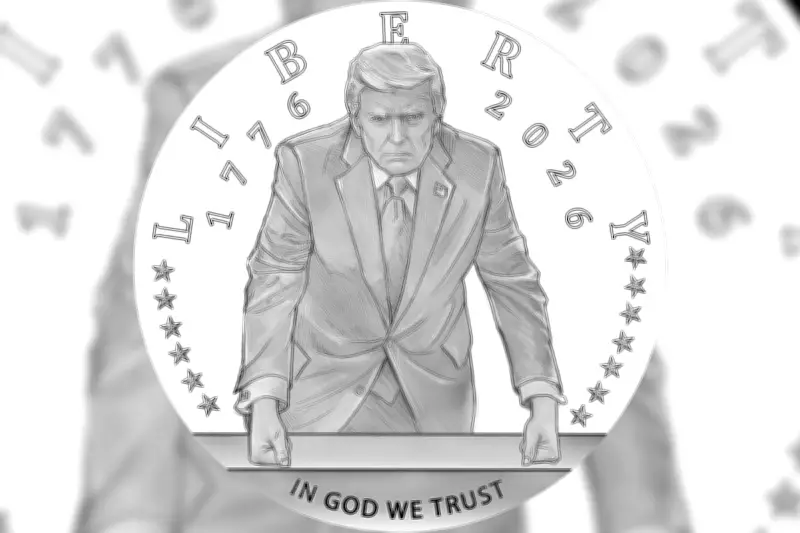
The proposed design, crafted in 14k gold, depicts President Trump standing over the Resolute Desk in the Oval Office, with his knuckles pressed firmly down and staring directly into the camera. The coin includes the word "Liberty" encircling the portrait, along with the years "1776" and "2026" to denote the nation's founding and its semiquincentennial anniversary. Below the portrait, the phrase "In God We Trust" is inscribed, while the reverse side features a bald eagle and the motto "e pluribus unum."
This image is based on a photograph by Daniel Torok, which currently hangs in the National Portrait Gallery at the Smithsonian Museum. If approved, it would be the first time a sitting president has appeared on a commemorative coin since 1926, when Calvin Coolidge was featured on a half-dollar for the 125th anniversary of the U.S. founding. That coin proved unpopular, leading to over 800,000 pieces being melted down.

Political Opposition and Legislative Efforts
The proposal has ignited significant controversy, with several Democratic senators vehemently opposing the move. Oregon Senator Jeff Merkley condemned the idea, stating, "President Trump's self-celebrating maneuvers are authoritarian actions worthy of dictators like North Korea's Kim Jong Un, not the United States of America." Nevada Senator Catherine Cortez Masto added, "While monarchs put their faces on coins, America has never had and never will have a king."
In response, these senators are pushing legislation to prohibit the government from minting coins featuring the likeness of a living or sitting president, aiming to codify what they describe as a long-standing tradition. The Treasury Department, however, defended the proposal in October, posting on social media that "on this momentous anniversary, there is no profile more emblematic for the front of this coin than that of our serving President, Donald J. Trump."
Approval Process and Uncertainties
The U.S. Commission of Fine Arts, whose members are all Trump appointees, is set to debate the design. Given that the commission recently approved the president's White House ballroom design, approval seems likely. However, the process involves multiple steps:
- The Citizens Coinage Advisory Committee must also review the design, but it has already declined to consider the three options proposed by the U.S. Mint.
- Typically, both panels must approve a design before it moves to the Treasury Secretary for final approval.
- Treasury Secretary Scott Bessent is not obligated to adopt a design even if approved by the committees.
It remains unclear whether the president or the Treasury requested the inclusion of his likeness on the coin, as a design featuring a sitting president was not part of the original proposals. The White House has declined to comment on the matter, and The Independent has sought further clarification from the U.S. Treasury.
Broader Implications and Public Reaction
This move has sparked a broader debate about presidential legacy and the norms surrounding commemorative items in the United States. Critics argue that placing a sitting president on a coin blurs the lines between democracy and monarchy, while supporters view it as a fitting tribute to a leader during a significant national milestone. The outcome of this commission's decision could set a precedent for future administrations, potentially altering how the nation honors its leaders through currency.

As the 2026 anniversary approaches, the controversy underscores the deep political divisions in the country, with the coin serving as a symbolic battleground over presidential power and tradition. The final decision will not only impact the commemorative coin program but also reflect the ongoing tensions between executive authority and legislative oversight in American governance.