The Perils of Armchair Diagnosis in Political Discourse
In recent weeks, a renewed wave of speculation has emerged concerning the cognitive health of former President Donald Trump. This fascination with potential medical conditions, while capturing public attention, risks diverting focus from the substantive political accountability that should be central to democratic discourse.
The Family Perspective and Public Observations
Mary Trump, the former president's niece and a trained psychologist, recently contributed to this conversation through an interview with New York Magazine. In her assessment, she noted that her uncle's occasional "deer-in-the-headlights" expression reminded her of her grandfather during his later years with Alzheimer's disease. She further observed that "sometimes it does not seem like he's oriented to time and place."
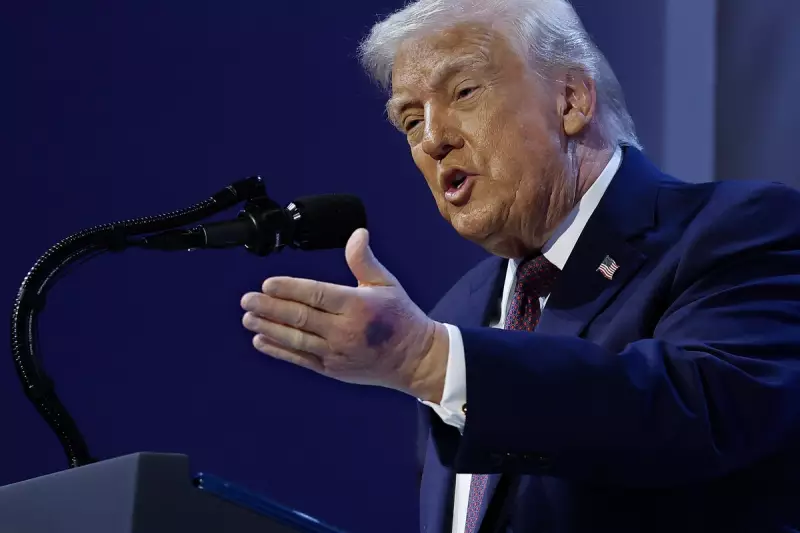
These comments arrive alongside numerous public observations that have fueled speculation. These include instances of dozing during public appearances, repetitive speech patterns described as "weaves," mysterious bruising on his hands, and his characteristic online outbursts in capital letters about tariffs and other grievances.

Trump's Own Commentary on Family Health History
The former president himself addressed his family's medical background this week, albeit indirectly. When discussing his father's health, he struggled to recall the term "Alzheimer's," requiring assistance from his press secretary Karoline Leavitt to complete his thought. Following this prompt, Trump asserted definitively: "Well, I don't have it."
This exchange highlights the complex interplay between public perception, family history, and self-assessment that characterizes discussions about political figures' health.
The Limitations of Public Diagnosis
Several important qualifications must be considered in this discussion. Mary Trump, while a psychologist, is not a geriatric specialist and has had limited personal contact with her uncle in recent years due to ongoing legal disputes between them. Furthermore, many behaviors attributed to potential cognitive decline can be explained through alternative interpretations.
Trump's repetitive speech patterns, for instance, may simply represent well-practiced rhetorical techniques rather than cognitive impairment. His public performances have maintained remarkable consistency throughout his political career, featuring familiar themes about the economy, immigration, political opponents, and his own perceived accomplishments.
The bruising on his hands appears related to medication use, which he has acknowledged publicly. At nearly eighty years old, some changes in energy levels and attention span might reasonably be expected without indicating pathological decline.
Personality Versus Pathology
It is crucial to distinguish between long-standing personality traits and potential medical conditions. Throughout his public life, Trump has demonstrated characteristics including vanity, mendacity, obsession, insecurity, vindictiveness, and irrationality. These traits, while objectionable to many observers, do not necessarily indicate cognitive impairment or mental illness.
As one commentator noted, if Trump's consistent rhetorical style indicates dementia, then most stand-up comedians with well-honed routines might be similarly categorized. The distinction between personality and pathology remains essential for meaningful political discourse.
The Constitutional Framework and Political Realities
The United States Constitution provides mechanisms for addressing presidential incapacity through the Twenty-fifth Amendment. However, the practical implementation of this provision requires consensus among cabinet members and congressional leaders—a challenging threshold in today's polarized political environment.
Trump himself has boasted about performing well on cognitive assessments, including his much-discussed ability to recall sequences like "person, woman, man, camera, TV." While such demonstrations might satisfy formal requirements, they do little to address broader concerns about fitness for office.

Redirecting Focus to Substantive Issues
The most significant concern arising from this health speculation is its potential to distract from substantive policy criticism. Numerous legitimate areas warrant scrutiny, including immigration enforcement approaches, economic policies, diplomatic conduct, and adherence to democratic norms.
When public discourse becomes preoccupied with medical speculation, it risks diminishing the serious work of political accountability. The appropriate focus should remain on policy consequences and governance standards rather than amateur diagnosis.
Structural Solutions for an Aging Political Class
If concerns about advanced age in political leadership persist, structural solutions merit consideration. The United States Constitution currently establishes a minimum age requirement of thirty-five for the presidency. Some have suggested establishing a maximum age limit, perhaps around eighty years, to address concerns about gerontocracy.
Implementing such changes would require constitutional amendment—a challenging process requiring congressional and state ratification. Given current political dynamics, meaningful movement on this front likely awaits future political generations.
Ultimately, while speculation about political figures' health may generate attention, it represents a distraction from the substantive evaluation of policies, decisions, and governance that forms the foundation of democratic accountability.