Trump Administration Finalises Rule to Ease Firing of Federal Workers
The Trump administration has moved to finalise a significant overhaul of the federal civil service system this week, issuing a rule that strips job protections from approximately 50,000 career federal employees. The rule, issued by the Office of Personnel Management (OPM), grants the president authority to fire and hire these workers, fundamentally altering long-standing safeguards.
Reclassification of Roles and Whistleblower Changes
Under the new regulation, certain career civil service positions are being reclassified, enabling agencies to "quickly remove employees from critical positions who engage in misconduct, perform poorly, or obstruct the democratic process by intentionally subverting Presidential directives", according to the OPM. This shift effectively treats many non-partisan roles as political appointees under a new "Schedule Policy/Career" category, potentially allowing removals based on perceived disloyalty.
Concurrently, the rule modifies how whistleblower protections are enforced. Instead of the independent Office of Special Counsel handling most disclosures, federal agencies will now determine job protections for whistleblowers within their own departments, raising concerns about impartiality and retaliation risks.
Historical Context and Presidential Justification
This initiative echoes previous efforts during Trump's first term, notably the October 2020 "Schedule F" rule, which was rescinded by the Biden administration before implementation. On his first day in office on 20 January 2025, Trump issued an executive order to reclassify thousands of federal employees as political appointees, setting the stage for this week's action.
In April 2025, following the OPM's proposal, Trump defended the move on his Truth Social platform, stating, "If these government workers refuse to advance the policy interests of the President, or are engaging in corrupt behavior, they should no longer have a job. This is common sense, and will allow the federal government to finally be 'run like a business.'"
Immediate Backlash and Legal Challenges
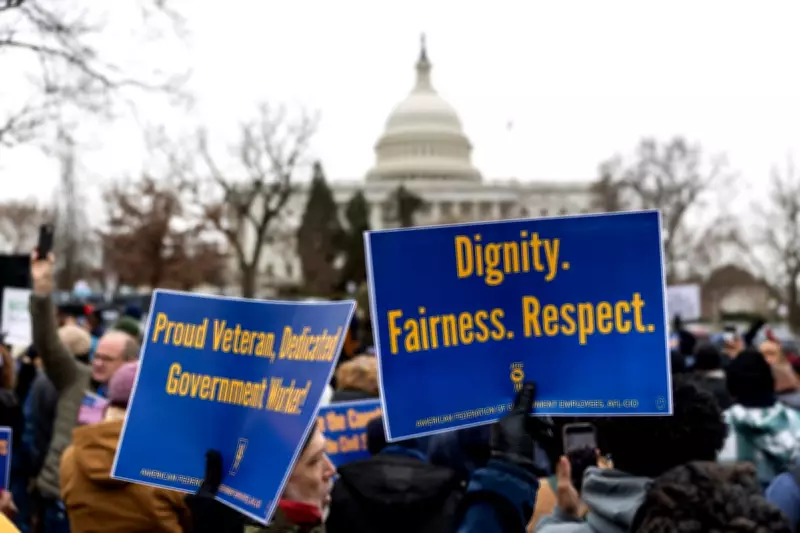
The rule has ignited fierce opposition from unions and advocacy groups. The American Federation of Government Employees (AFGE) union, representing federal workers, organised protests in Washington DC on 11 February 2025, denouncing the change as "a direct assault on a professional, nonpartisan, merit-based civil service". AFGE President Everett Kelley criticised the OPM for "rebranding career public servants as 'policy' employees, silencing whistleblowers, and replacing competent professionals with political flunkies without any neutral, independent protections against politicization and arbitrary abuse of power."
Non-profit organisation Democracy Forward has announced plans to challenge the rule in court, with CEO Skye Perryman vowing, "We have successfully fought this kind of power grab before, and we will fight this again. We will return to court to stop this unlawful rule and will use every legal tool available to hold this administration accountable to the people." The rule is set for review by a federal judge upon its publication in the Federal Register.
Broader Implications and Support
Critics argue the reclassification could facilitate politically motivated purges, undermining the integrity of the civil service. However, the rule explicitly prohibits "personal or political loyalty tests as a condition of employment", though opponents remain sceptical of its enforcement.
OPM Director Scott Kupor, anticipating the rule's release, stated it would bring "much-needed accountability to career policy-influencing positions in the Federal government". The move aligns with the Heritage Foundation's Project 2025 blueprint, which advocates for stripping civil service protections to enhance executive control.
Traditionally, only about 4,000 political appointees could be dismissed "at will", but this rule expands that flexibility dramatically, reshaping the federal workforce's dynamics and sparking a contentious debate over governance and employee rights.