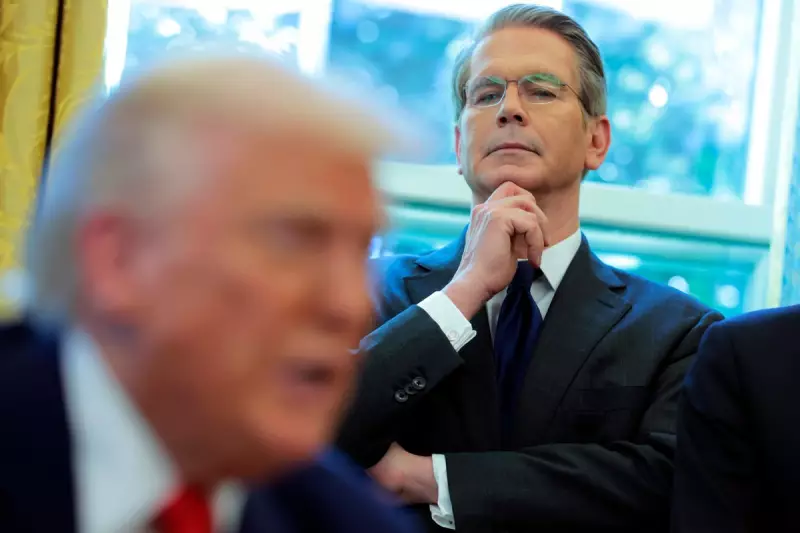
The Trump administration has taken decisive action against a major consulting firm following a significant data breach that exposed sensitive taxpayer information, including the president's confidential tax returns. In a move that sent shockwaves through both government contracting circles and financial markets, Treasury Secretary Scott Bessent announced the immediate cancellation of all departmental contracts with Booz Allen Hamilton.
Contract Termination and Financial Impact
Secretary Bessent confirmed on Monday that the Treasury Department would be terminating all 31 of its existing contracts with Booz Allen Hamilton. These agreements represented substantial financial commitments, with annual spending totalling $4.8 million and overall obligations reaching $21 million. The announcement triggered an immediate market reaction, with Booz Allen Hamilton's stock price plummeting by 10 points following the revelation.
"President Trump has entrusted his cabinet to root out waste, fraud, and abuse, and canceling these contracts is an essential step to increasing Americans' trust in government," Bessent stated in an official release. He further elaborated on the reasoning behind this drastic measure, noting that "Booz Allen failed to implement adequate safeguards to protect sensitive data, including the confidential taxpayer information it had access to through its contracts with the Internal Revenue Service."
The Data Breach That Prompted Action
The contract cancellations stem from a major security incident that occurred between 2018 and 2020, when Charles Edward Littlejohn – then an employee of Booz Allen Hamilton – systematically stole and leaked confidential tax information. According to Treasury Department investigations, Littlejohn accessed and distributed the tax returns and related information of approximately 406,000 taxpayers during this period.
His actions extended beyond ordinary taxpayer data to include highly sensitive information concerning prominent public figures. The leaked materials included detailed tax information pertaining to President Donald Trump, alongside financial data belonging to billionaire entrepreneurs Jeff Bezos and Elon Musk. These confidential documents were subsequently provided to major media organisations including The New York Times and ProPublica.
Legal Consequences and Corporate Response
Littlejohn has since faced significant legal repercussions for his actions, pleading guilty to felony charges related to the unauthorised disclosure of confidential tax information. In January 2024, he received the maximum possible sentence of five years imprisonment for his crimes, marking one of the most severe penalties ever imposed for such a data breach.
In response to the Treasury Department's contract termination announcement, Booz Allen Hamilton issued an online statement defending its position. The firm emphasised that "We have consistently condemned in the strongest possible terms the actions of Charles Littlejohn, who was active with the company years ago."
The consulting giant further asserted that "Booz Allen has zero tolerance for violations of the law and operates under the highest ethical and professional guidelines." Their statement clarified that "When Littlejohn's criminal conduct occurred over 5 years ago, it was on government systems, not Booz Allen systems," adding that the company "stores no taxpayer data on its systems and has no ability to monitor activity on government networks."
Booz Allen Hamilton also highlighted their cooperation with authorities, noting that they "fully supported the U.S. government in its investigation, and the government expressed gratitude for our assistance, which led to Littlejohn's prosecution." The company concluded by stating they "look forward to discussing this matter with the Treasury," suggesting potential dialogue about the contract cancellations.
Broader Implications for Government Contracting
This incident raises significant questions about data security protocols within government contracting arrangements, particularly those involving sensitive financial information. The Treasury Department's decisive action signals a heightened scrutiny of contractors' ability to safeguard confidential data, especially when dealing with taxpayer information through agencies like the Internal Revenue Service.
The $21 million contract termination represents not just a financial blow to Booz Allen Hamilton but serves as a stark warning to other government contractors about the consequences of security failures. As the Trump administration continues its stated mission to eliminate "waste, fraud, and abuse" within government operations, this case establishes a precedent for holding contractors accountable for data protection shortcomings.