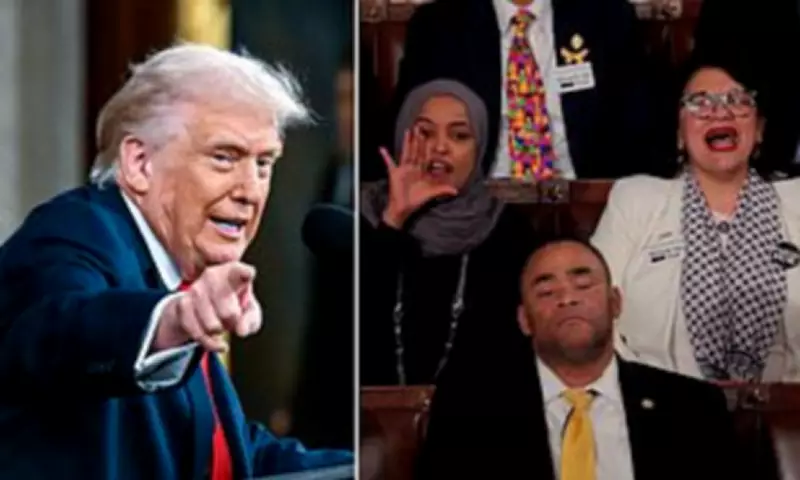
Former President Donald Trump on Wednesday escalated his rhetoric against Democratic Representatives Ilhan Omar and Rashida Tlaib, suggesting they should "get on a boat" and depart the United States. This outburst came in response to their vocal interruptions during his State of the Union address to Congress the previous night.
Trump's Fiery Tirade Targets Democrats and Actors
While Trump maintained a relatively restrained demeanor throughout his hour and 48-minute-long speech on Tuesday evening, he unleashed a furious verbal assault at lunchtime on Wednesday. His targets included not only Omar and Tlaib but also actor Robert De Niro, who participated in an anti-Trump protest event in Washington on Tuesday night, and longtime foe Rosie O'Donnell. Trump floated the idea of seeing all four individuals float away, intensifying his criticism.
Insults and Accusations Fly
In his remarks, Trump launched into a harsh characterization of Omar and Tlaib, stating, "When you watch Low IQ Ilhan Omar and Rashida Tlaib, as they screamed uncontrollably last night at the very elegant State of the Union, such an important and beautiful event, they had the bulging, bloodshot eyes of crazy people, LUNATICS, mentally deranged and sick who, frankly, look like they should be institutionalized." He then added, "When people can behave like that, and knowing that they are Crooked and Corrupt Politicians, so bad for our Country, we should send them back from where they came - as fast as possible."

Background on the Targeted Representatives
Ilhan Omar is an American citizen who immigrated from war-torn Somalia, with Trump previously bashing her immigrant community in Minneapolis. Rashida Tlaib was born in Detroit to Palestinian immigrant parents. Both women are founding members of the progressive Democratic "squad" and have been vocal critics of Trump's policies. Their attempts to interrupt Trump during the State of the Union address sparked this latest controversy.
Context and Implications
This incident highlights ongoing political tensions and partisan divisions in U.S. politics. Trump's comments have drawn attention to issues of immigration, citizenship, and decorum in governmental proceedings. The suggestion that elected officials should leave the country based on their behavior or origins has sparked debate about the boundaries of political discourse.
As a breaking news story, further developments are expected, with potential updates on reactions from other political figures, legal implications, and public response. The event underscores the volatile nature of current political interactions and the personal attacks that have become increasingly common in public debates.