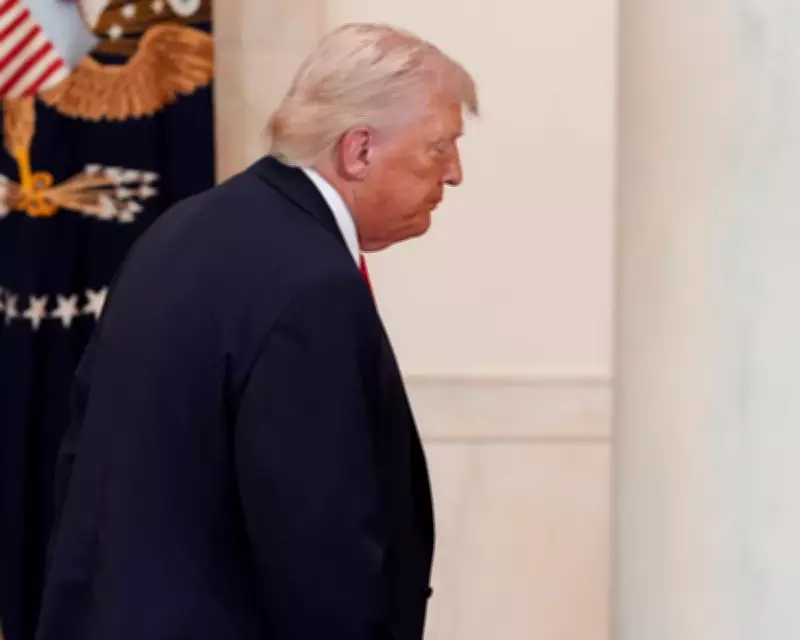
President Donald Trump was pictured after delivering a televised address to the nation on 1 April, discussing progress in the war on Iran. This image, captured by Getty Images, highlights a moment in a presidency that has sparked intense debate over age and leadership in American politics.
The Ageing Patriarch of a Decaying Order
In response to Gaby Hinsliff's insightful piece questioning when to take away the car keys from an ageing figure like Trump, Dr Georgios Samaras from King's College London argues that concerns over Trump's age and judgment are valid but belated. American politics has a long history of recycling elderly men, presenting them as symbols of reassurance and national strength.
Ronald Reagan was celebrated publicly even as whispers of his decline and confusion circulated behind closed doors. Similarly, Joe Biden has been defended as a steady hand despite growing public doubts. Trump, according to Samaras, represents the ugliest culmination of this pattern, where the presidency serves as a screen for a failing political order to project fantasies of rescue.

The Appeal of Absurdity in Modern Politics
Samaras points out that absurdity is not necessarily a weakness in this context; it can become part of the appeal. Trump's rambling performances, repetitive rhetoric, and shameless demeanor feed into a culture that prioritizes identification over substantive policy. This raises critical questions about whether the political system can effectively restrain a visibly unstable strongman.
However, Samaras emphasizes that this inquiry does not go far enough. The same system has repeatedly elevated such figures, wrapping them in myths of authority. Trump emerged from a political culture that has long mistaken decline for wisdom, making him less of an exception and more like the ageing patriarch of a decaying order, still holding all the cards and determined to impose his legacy on the future.
Who Could Replace Trump and Would It Be Better?
Jim Hatley from Brighton, East Sussex, adds another layer to the discussion by questioning the practicality of removing Trump from the White House to make the world less dangerous. While the idea is welcome, Hatley wonders who could execute such a change and whether any replacement would be an improvement.
Hatley notes that Trump has followed the golden rule of bad management by appointing people around him who are even worse at their jobs than he is. This complicates any potential transition, suggesting that the issues run deeper than just one individual, pointing to systemic failures in leadership and governance.
Broader Implications for US Politics
The letters highlight a broader critique of the US political system, where age and experience are often conflated with wisdom, even as signs of decline become apparent. This pattern not only affects current leaders like Trump and Biden but also reflects on historical figures such as Reagan.
As the debate continues, it underscores the need for a political culture that values substance over symbolism and effective governance over mere identification. The ageing of leaders in high office serves as a symptom of a deeper malaise within the political order, one that requires urgent attention and reform.
Readers are encouraged to share their opinions on these topics, as the Guardian considers letters for publication in its letters section, fostering ongoing dialogue about the state of US politics and leadership.