Trump's Cognitive State Becomes Diplomatic Concern After Years of Mocking Biden
For an extended period, Donald Trump strategically employed age and mental fitness as his primary political weapons. He relentlessly targeted Joe Biden with a barrage of cruel nicknames, meticulously crafting a narrative designed to convince voters that his rival was elderly, confused, and fundamentally unfit for the presidency. Trump transformed what he portrayed as Biden's personal frailty into a daily political spectacle, questioning not merely his opponent's stamina but amplifying every perceived weakness.
Growing Alarm Among International Allies
Now, with Trump having returned to power at the age of seventy-nine, the uncomfortable focus has shifted decisively. The pressing question is no longer centred on Biden but on whether Trump himself is exhibiting far more troubling signs than the individual he once derided. Concerns regarding the president's mental state have escalated beyond the realms of social media speculation and partisan attacks. They are now being articulated quietly, and at times more openly, by diplomats, international allies, and officials who have engaged with him directly.
According to multiple sources, apprehensions about Trump's health are "rapidly becoming a more conversed topic at all levels" throughout European capitals. This development alone should trigger significant alarm bells. One of the most striking warnings reportedly originated from Slovak Prime Minister Robert Fico, a political ally of Trump who has frequently echoed his criticisms of Europe. Following a meeting with the US leader this month, Fico allegedly informed fellow European leaders that he was deeply worried about Trump's "psychological state".

Disturbing Accounts from Diplomatic Encounters
Diplomats present at these discussions described Fico as "shocked", with one source claiming he went so far as to characterise Trump as "out of his mind", while another suggested the Slovak leader appeared "traumatised" by the encounter. This was not an isolated impression. During a White House meeting earlier this year with fossil fuel industry executives, a supposedly serious and high-stakes discussion, Trump's attention notably drifted. He reportedly stood up mid-meeting, wandered over to a window, and exclaimed, "Wow! What a view."
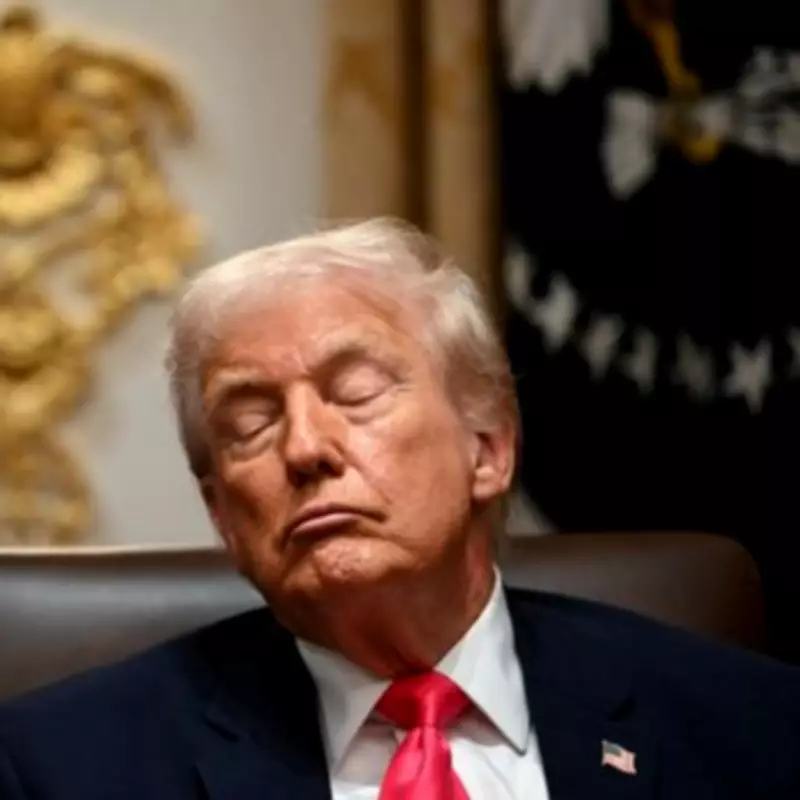
At that moment, Vice President JD Vance and Secretary of State Marco Rubio were observed exchanging weary, resigned glances. This was not mere political showmanship for a rally audience; it was a president apparently losing focus during the critical process of governance. Furthermore, there are numerous accounts of Trump frequently nodding off during crucial meetings, incidents that have sometimes occurred even in the presence of world leaders.
A Pattern of Behaviour and Physical Signs
In isolation, episodes of fatigue can happen to anyone. However, repeated occurrences, combined with increasing displays of anger, rambling and incoherent speech, and apparent memory lapses, collectively paint a portrait that is becoming increasingly difficult to dismiss as harmless eccentricity. The physical manifestations are equally unsettling. Trump's ankles are often visibly swollen, and his hands frequently appear bruised.
The White House has previously attributed the bruising to excessive handshaking and long-term aspirin use, while confirming a diagnosis of chronic venous insufficiency, a condition common in older adults that affects blood flow. None of these individual factors conclusively proves mental decline. Yet, together, they underscore a fundamental truth that Trump spent years vehemently denying regarding Biden: age undeniably matters, and health matters profoundly more when an individual holds nuclear codes and global stability in their hands.
The Irony of Heightened Scrutiny
What renders this moment particularly galling is Trump's own historical conduct. He demonstrated no restraint when Biden stumbled over words or appeared fatigued. He weaponised every pause, every verbal slip, every visible sign of frailty. He publicly demanded cognitive tests and encouraged the electorate to laugh at his opponent's expense. Now, as his own behaviour prompts serious questions, he bristles under scrutiny and lashes out at anyone who dares to inquire.

There is also a growing perception that Trump's temperament has undergone a shift. Allies describe him as more volatile, more easily distracted, and more prone to sudden bursts of anger. His threats, ranging from seizing Greenland to tearing up longstanding international alliances, no longer resonate as calculated political provocations but increasingly sound like impulsive outbursts. When even friendly foreign leaders depart meetings visibly shaken, it ceases to be "fake news" to question what is transpiring.
A Legitimate Question of Capacity
This scrutiny is not about scoring cheap political points or engaging in amateur diagnosis. Dementia is a profoundly serious medical condition, and formal diagnosis rightly belongs to healthcare professionals, not political pundits. However, it is entirely legitimate and necessary to ask whether the world's most powerful office is occupied by someone showing mounting signs of significant mental and physical strain.
Trump himself made health and age fair political game. He insisted the public had an unequivocal right to know. By his own declared standard, that exacting scrutiny must now be applied to him. The genuine danger lies in silence and the fear of speaking plainly due to uncomfortable consequences. If world leaders are already whispering about Trump's stability behind closed doors, voters deserve complete honesty in the open. America, and indeed the rest of the world, cannot afford to discover too late that the individual in command was not as well as he consistently claimed.
Trump spent years pointing at Biden and laughing. That laughter has now stopped. The urgent and persistent questions, however, very much remain.