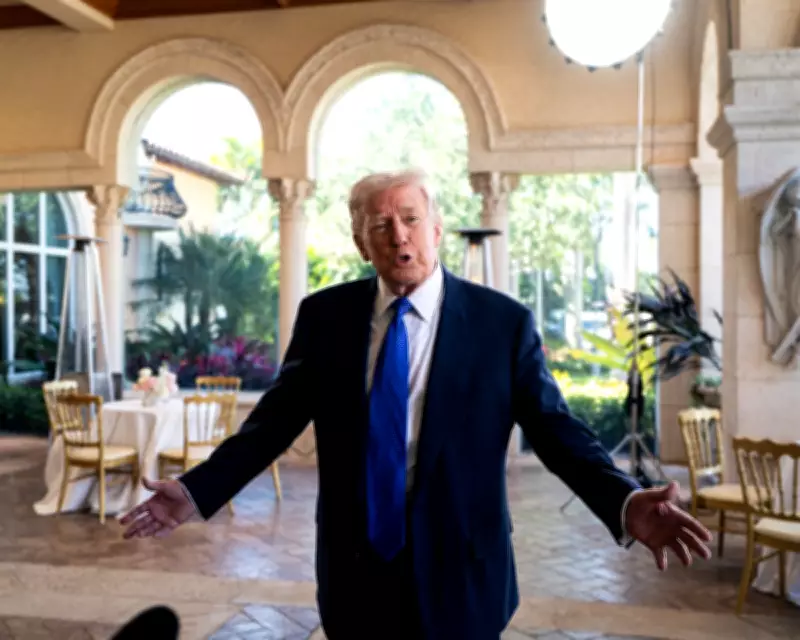
Trump's Luxury Properties Become Political Arenas for Access and Profit
Since Donald Trump's inauguration last year, elected leaders from Israel to Iowa have flocked to his luxury resorts a staggering 145 times, according to a new report by the political watchdog group Citizens for Responsibility and Ethics in Washington (Crew). This unprecedented activity has transformed Trump's properties into what critics call "an extension of his administration," serving as a proxy for political access and a significant source of revenue.
Millions in Political Spending at Trump Venues
A Guardian analysis of campaign finance records uncovered that US political campaigns and committees have spent at least $1.3 million at Trump properties since January 2025. However, this figure likely represents just a fraction of the total proceeds, as foreign governments and private corporations are not required to disclose their expenditures, leaving a vast financial landscape obscured from public view.
The Republican National Committee and Maga Inc have been the primary drivers of this spending, accounting for $985,449 over 39 different occasions in 2025 alone. "President Trump has turned his properties into a hub for his allies and his own political committees to raise money, line his pockets and curry favor," stated Rebecca Jacobs, a research manager at Crew.

Mar-a-Lago: The New Epicenter of Political Clout
Following the closure of the Trump Hotel in Washington in 2022, business has decisively shifted south to Mar-a-Lago in Palm Beach, Florida. Trump himself has dubbed this resort "as close to paradise as I'm going to get," and its appeal is undeniable. Membership fees have skyrocketed from $100,000 in 2016 to an astonishing $1 million in 2024, creating an exclusive enclave for the wealthy and powerful.
Florida congresswoman Kat Cammack recently booked Mar-a-Lago for a record-breaking fundraiser. Her communications director, Andrew Espitallier, noted the venue's oceanside beauty was a key draw, but conceded, "if we can be honest, Trump does have a very large sway in the Republican party." This sentiment underscores the property's dual role as both a luxury destination and a political leverage point.
Foreign Governments and Special Interests Flock to Trump Properties
Crew's analysis, which utilized event announcements, government disclosures, and social media tracking, found that more than 50 special interest groups have paid to rent or cater events at Trump properties since January 2025. Much of this corporate spending revolves around golf tournaments, with entities like Lockheed Martin, the Saudi-backed LIV Golf, and an Emirati shipping company hosting events at various Trump courses.
Foreign government officials have also been frequent visitors. Israeli diplomats led the list with 10 visits in the past year, while Argentina's leadership, including President Javier Milei, visited nine times. Notably, weeks before headlining a conservative gala at Mar-a-Lago, Milei secured a substantial $20 billion loan from the Trump administration, highlighting the potential policy implications of such access.
Blurred Lines Between Business and Presidency
Traditionally, presidents have divested from business interests to avoid conflicts of interest, as exemplified by Jimmy Carter placing his peanut farm in a blind trust. In stark contrast, Trump has embraced his luxury resorts and golf clubs as executive assets. "Trump has established these places as an extension of his administration," explained Walker Davis, research director at Crew. "By visiting and promoting his properties, and talking about them in his official remarks, Trump is conveying to foreign governments and special interests that it is a priority, for him, for people to patronize his businesses."
A White House spokesperson defended Trump's arrangements, stating his assets are in a trust managed by his children and asserting there are no conflicts of interest. However, unlike a blind trust, this setup allows Trump to retain knowledge and potential influence over his business empire while in office.

Direct Links to Policy Outcomes
The interplay between spending at Trump properties and policy decisions is illustrated by the case of the Seasonal Employment Alliance (SEA). This group, which lobbies for seasonal foreign workers, hosted a fundraiser at Mar-a-Lago in March, offering attendees special hotel rates and $1,500 tickets to events. Their promotional material emphasized, "President Trump resides on the property and frequently interacts with guests."
Two weeks after the fundraiser, the Trump administration announced new slots for the H2-B visas championed by SEA, which had previously been stalled. Furthermore, the group later installed Trump's personal visa filing agent and Mar-a-Lago member, Peter Petrina, as its board chair. A board announcement cited Petrina as "the perfect man to lead us through the remainder of Trump's presidency," given the administration's critical support.
Legal and Ethical Concerns Mount
Jon Golinger, an attorney and democracy advocate for Public Citizen, argued there is no modern precedent for this level of presidential profiteering. "There are already plenty of laws on the books and in the constitution that effectively say: 'If you want to be president, you shouldn't own properties around the world where anyone who wants something from you can give you money,'" Golinger stated. "Because that at least looks, to the American people, like you're trying to enrich yourself and work for the people who pay you off, and not for us."
While efforts have been made to investigate potential violations of the emoluments clauses—constitutional provisions barring the president from accepting payments—Trump is likely shielded by presidential immunity while in office. Golinger noted that others in Trump's orbit could face legal action, but lamented, "The people in charge of enforcement are either asleep at the wheel or wearing blindfolds."
A New Normal in Presidential Conduct
As Trump continues to host events at his properties, from discussing the World Cup to planning UFC gatherings at the White House, the normalization of this conduct raises profound questions about ethics and accountability in government. With taxpayers footing the hefty security bills for his 76 visits to Mar-a-Lago in his second term, and the full scale of foreign and corporate spending remaining hidden, the legacy of Trump's business-presidency nexus may well redefine the boundaries of presidential power for years to come.