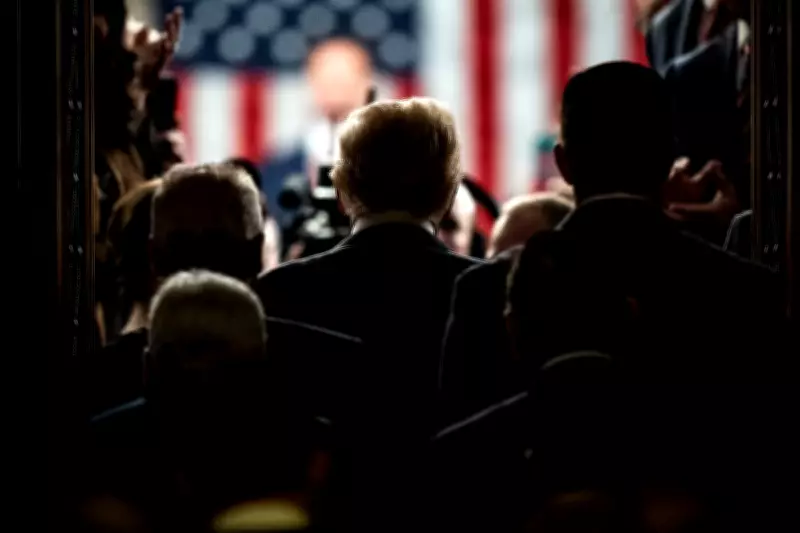
Trump's State of the Union Address in a Nation Riven by Division
President Donald J. Trump is set to deliver a State of the Union address to a joint session of Congress on March 4, 2025, in the Capitol building's House chamber. This speech occurs against a backdrop of intense political polarization, with the United States grappling with contentious issues as midterm elections loom on the horizon. Opinion polls indicate that more voters disapprove of Trump's performance than approve, setting the stage for a highly charged political environment.
A Contrast to Past Theatrics
The last time Trump addressed Congress in such a format, in February 2020, it culminated in the dramatic moment when then-Speaker Nancy Pelosi ripped up his speech, symbolizing Democratic disdain for his optimistic portrayal of the nation. That theatrical gesture is unlikely to be repeated tonight, as Republican Mike Johnson now holds the speaker's gavel and is a staunch ally of the president. However, six years later, the state of the union remains more disputed than ever, with Democratic opposition expected both inside and outside the chamber.
Economic Challenges and Voter Discontent
On the economic front, recent figures reveal annual GDP growth slowed to 1.4% in the last quarter of 2025, falling short of the 3% forecast by economists and down from 4.4% in the previous quarter. This slowdown is partly attributed to a record-long 43-day government shutdown last fall. While the economy has shown resilience to Trump's tariffs policy, with 130,000 new jobs added in January and robust consumer spending reported by retailers, it falls far short of the "golden age" he promised. Voters express dissatisfaction with affordability issues, which Trump has dismissed as a "Democrat hoax," despite low unemployment and inflation figures. Many feel the economy is worse than under Joe Biden, who faced criticism for rising prices.

Tariffs Policy in Disarray
Trump's signature economic policy of imposing broad import duties has been thrown into disarray by a recent Supreme Court ruling. The court found that he exceeded his authority under the International Emergency Economic Powers Act, dealing a devastating blow to his tariff regime. This ruling casts uncertainty over his strategy to spur an American manufacturing renaissance through tariffs. Paradoxically, Trump may benefit politically, as most voters oppose tariffs, believing they increase costs and inflation. Economic studies support this view, suggesting tariffs contribute to inflationary pressures. In response, Trump angrily denounced the justices and announced new 15% across-the-board tariffs under a different legal authority, a topic he is likely to address tonight.
Immigration Enforcement Backlash
Immigration, a central pillar of Trump's agenda, has sparked public backlash due to aggressive enforcement tactics. The deployment of over 3,000 federal agents in "operation metro surge" in Minneapolis led to incidents where U.S. citizens were shot dead or detained, including an elderly man and a five-year-old boy. Footage from these episodes has caused nearly half of voters to say Trump has gone "too far," despite initial support for his immigration policies. Although federal forces were withdrawn by border czar Tom Homan, Trump shows no signs of retreating on this issue, which has been core to his message since 2015.
Foreign Policy Shifts and Tensions
Trump's promise of an "America first" foreign policy to end "forever wars" appears shaky as the U.S. prepares for potential strikes on Iran, with reports suggesting he may contemplate regime change—a move reminiscent of the 2003 Iraq invasion he has criticized. This follows recent tensions with Venezuela and NATO, including demands for Denmark to cede Greenland. Trump has positioned himself as a peacemaker, launching a Board of Peace aimed at conflicts like Gaza, but European allies have declined to join, limiting membership to authoritarian leaders.

Rule of Law and Judicial Retribution
Under Attorney General Pam Bondi, the Department of Justice has seen its independence eroded, with Trump using it to pursue retribution against political adversaries. Prosecutions against figures like former FBI director James Comey and New York attorney general Letitia James were dismissed by a federal judge due to illegal appointments. Other targets include Federal Reserve chairman Jerome Powell, under investigation after defying Trump on interest rates. Additionally, the slow release of Jeffrey Epstein files, with 3 million documents still withheld and redactions obscuring identities, has raised concerns.
Crime Statistics and Health Concerns
Trump claims to have reduced murder and violent crime to a 125-year low through national guard deployments in Democratic-run cities. However, data shows the homicide rate was already declining before his presidency, with fluctuations during the COVID-19 pandemic. It is expected to fall to four per 100,000 residents in 2025, following record declines under the Biden administration. On health, there is widespread unhappiness over rising healthcare costs, cuts to Medicaid, and the end of Obamacare subsidies. More than half of Americans fear affording essential care, and Health Secretary Robert F. Kennedy Jr.'s "make America healthy again" agenda faces backlash for undermining vaccines and public health infrastructure.