President Donald Trump has announced ambitious plans to construct a monumental arch near the Lincoln Memorial in Washington, D.C., asserting that the capital city has awaited such a structure for two centuries. However, historical experts are casting doubt on the accuracy of his claims, suggesting a significant misreading of the nation's architectural history.
Historical Justification Under Scrutiny
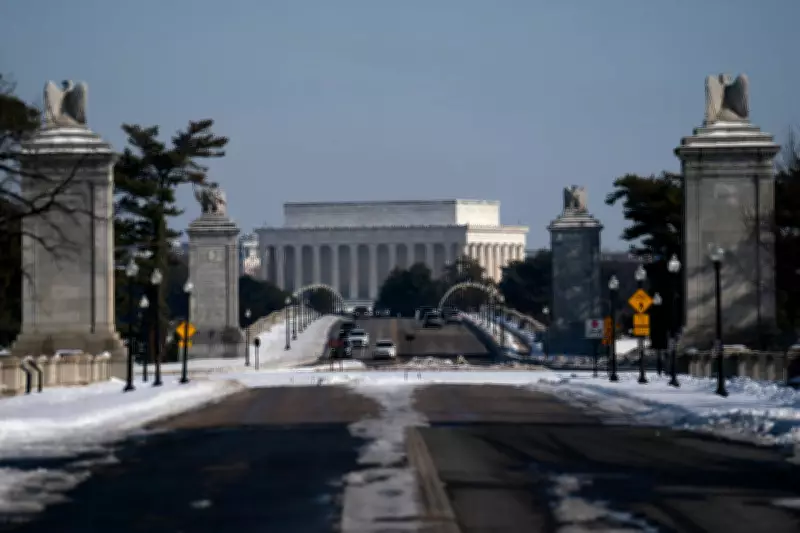
During a recent flight aboard Air Force One, President Trump elaborated on his vision, stating, "For 200 years they've wanted to build an arc." He referenced the Civil War as an interruption to earlier plans and mentioned a near-attempt in 1902 that never materialised. The President specifically pointed to four eagle statues as evidence of prior groundwork, suggesting they were part of an abandoned arch project.
Historical records, however, tell a different story. The eagle sculptures Trump mentioned are actually integral components of the Arlington Memorial Bridge, a structure conceived and built decades after the Civil War. Furthermore, the closest Washington came to an arch was a temporary wood and plaster Victory Arch erected in 1919 to mark the end of World War I, which was always intended to be dismantled.
Expert Analysis Contradicts Presidential Narrative
Chandra Manning, a respected history professor at Georgetown University and former National Park Service ranger, provided context. "Washington coming into the Civil War was still this unfinished city," Manning explained. "There's no push for decorative memorialisation in Antebellum Washington because it's still such a place that doesn't even have all the functional buildings it needs yet."
Manning further noted that building arches is not a longstanding American tradition, remarking, "That sounds like an import from elsewhere to me." This perspective challenges the President's assertion that Washington is uniquely lacking among major global cities, with Trump claiming fifty-seven cities worldwide have arches while the U.S. capital does not.
Architectural Ambitions and Comparisons
The proposed arch would stand approximately 250 feet tall, potentially dwarfing the Lincoln Memorial and White House, and rivalling the U.S. Capitol's 288-foot height. President Trump expressed his desire for the structure to be "the biggest one of all," drawing inspiration from Paris's Arc de Triomphe, though that monument stands at just 164 feet.
Trump first revealed the concept during an October dinner for top donors to his White House ballroom project. He presented three different-sized models, all featuring a statue of Lady Liberty atop the arch. The President has not disclosed funding sources, projected costs, or whether he will seek approval from planning authorities, stating only that "We're setting up a committee, and the committee is going to be going over it."
Pattern of Historical Rationales
This arch proposal follows a similar pattern to Trump's justification for the $400 million White House ballroom, where he argued that officials had wanted such a space for 150 years—a claim historians also find dubious. The White House spokesperson, Davis Ingle, defended the arch plan, stating, "President Trump is right. The American people for nearly 200 years have wanted an Arch in our Nation's capital to showcase our great history."
Timeline Discrepancies and Bridge History
Further historical examination reveals additional inconsistencies in the President's timeline. The Arlington Memorial Bridge, which features the eagle statues Trump referenced, was first proposed in 1886 but wasn't approved by Congress until 1925. Construction occurred between 1926 and 1931, decades after the Civil War period Trump mentioned.
According to National Park Service records, the bridge was conceived post-Civil War to symbolise reunification between North and South, linking the Lincoln Memorial site with the former home of Confederate General Robert E. Lee, now Arlington National Cemetery. The orientation of the eagles—facing inward toward the city or outward toward visitors—sparked controversy during its planning.
Broader Construction Legacy
The arch forms part of President Trump's broader effort to leave a physical mark on Washington, drawing on his background as a former New York construction mogul. His administration has undertaken numerous projects including White House renovations, Kennedy Center closures for refurbishment, Rose Garden modifications, and various interior redecorations.
Trump has spoken about beautifying "tired" areas of Washington, addressing broken signage and street medians, and has deployed the National Guard to manage homeless encampments. The local firm Harrison Design is reportedly working on the arch project, though no construction timeline has been announced. The President aims to unveil the structure as part of America's 250th birthday celebrations.
While a 2000 proposal for a peace arch in Washington existed, those plans were abandoned following the September 11 attacks. As the debate continues, the disparity between presidential historical claims and documented facts remains a central point of contention surrounding this monumental proposal.