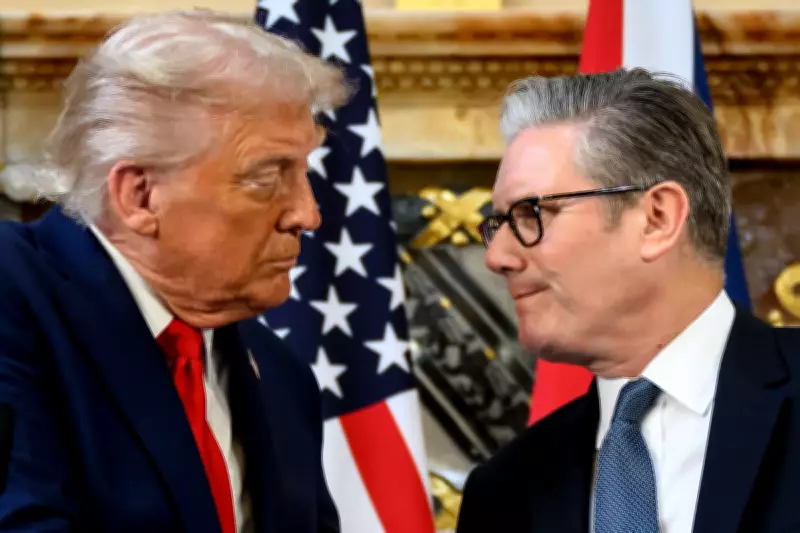
Downing Street Reaffirms US as 'Staunch Ally' Despite Trump's Criticism
Downing Street has declared that the United States remains a "staunch ally" of the United Kingdom, following sharp criticism from US President Donald Trump directed at Prime Minister Sir Keir Starmer over the ongoing Middle East conflict. The Prime Minister's official spokesman emphasized the enduring nature of the special relationship, highlighting decades of collaboration on national security and trade.
Trump's Disappointment and Accusations
In interviews with British media outlets, President Trump expressed his "very disappointed" sentiment regarding the UK's decision not to permit US jets to launch initial strikes from British bases over the weekend. He specifically stated that Sir Keir had "not been helpful" and lamented the transatlantic rift as "very sad." Trump contrasted the UK's stance with that of other European allies, noting, "France has been great. They've all been great. The UK has been much different from others."
UK's Legal and Strategic Stance
Chancellor of the Duchy of Lancaster Darren Jones clarified the UK's position, explaining that the initial US and Israeli strikes in Iran did not meet the criteria set by Prime Minister Starmer. Jones stated that the UK would only engage its armed forces when it is in British interests, with a clear plan, and on a legal basis. He reiterated this point on BBC Radio 4's Today programme, noting that while the president expressed frustration, UK decisions are made independently based on legality and national interest.

Prime Minister Starmer himself underscored this approach on Monday, asserting that his government "does not believe in regime change from the skies," in an apparent critique of the US bombing campaign.
Political Reactions and Broader Conflict
In the House of Commons, Foreign Office minister Stephen Doughty assured MPs that the UK-US relationship is "strong" and will endure. However, Conservative Party representative Chris Philp argued that Sir Keir had "seriously undermined" the special relationship by not immediately backing the US action, which he deemed "completely justified."
The conflict has escalated significantly, with America and Israel continuing strikes on Iran since the killing of Supreme Leader Ayatollah Ali Khamenei on Saturday. Tehran and its allies have retaliated against Israel, Gulf states, and energy facilities. In response to a drone hit on a British base in Cyprus, the UK is considering deploying a Type 45 air defence destroyer to the region.
Evacuation Efforts and Regional Impact
Amid the turmoil, the UK government is actively working to evacuate British nationals from the Middle East. Foreign Secretary Yvette Cooper confirmed that a government charter flight will depart from Muscat, Oman, in the coming days to repatriate vulnerable citizens. Over 100,000 Britons have registered with the Foreign Office, though closed airspace and missile attacks, including on destinations like Dubai, complicate evacuation efforts. Some flights, such as an Etihad Airways service to Heathrow, have already returned nationals.
Trump's Warnings and Military Posture
President Trump has warned of further escalation, suggesting to CNN that a "big" wave of airstrikes on Iran is imminent. He indicated the conflict could last four to five weeks, with aims to destroy Iran's missile capabilities, navy, and nuclear ambitions. In a Truth Social post, Trump boasted of a "virtually unlimited" supply of munitions, claiming the US could sustain the conflict "forever" with these resources, though he provided scant details on an exit strategy.
Despite the tensions, Downing Street remains steadfast in its commitment to the alliance, with the Prime Minister's spokesman affirming, "The UK's relationship with the US is we are staunch allies. It is reflected in decades of that special relationship." The UK continues to collaborate with the US on defensive actions in the Middle East to protect British citizens, with over 300,000 in the region at risk.