Britain is failing in its efforts to fight a hybrid war with Russia and is unprepared for a wider-scale global conflict, a top former government aide and senior analysts have warned.
Warning from Former White House Aide
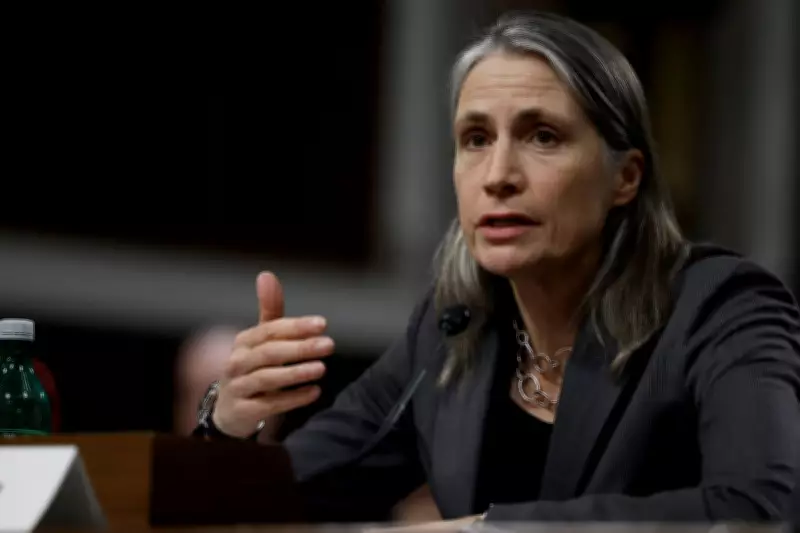
Fiona Hill, former director for European and Russian affairs in the National Security Council under Donald Trump, describes the UK's contingencies for dealing with present and future disruptions as "not fit for purpose." As war in Iran and the closure of the Strait of Hormuz cause global economic turmoil, and conflict continues in Ukraine, fundamental planning to protect the UK is not taking place.
Dr Hill, co-author of the UK's 2025 Strategic Defence Review (SDR), will deliver a speech at the Imperial War Museum this week to galvanise Britain's response to threats against its infrastructure. In an interview with The Independent, she warned: "In the UK, our systems are not designed to cope with major disruptions. It is up to the leadership to come up with a plan because, at the moment, what is there is not fit for purpose."

Key Vulnerabilities Highlighted
Dr Hill pointed to several critical weaknesses: the NHS cannot handle mass casualties, food supplies and systems to cope with import disruptions are inadequate, and there are no digitised archives of maps or analogue systems if digital networks collapse. She called for an urgent national debate.
With no single minister responsible for national resilience, Dr Hill, chancellor of Durham University, sees no sign of government action. Her co-author of the SDR, Lord Robertson, former Nato secretary general, accused the government of "corrosive complacency" over failure to implement the review's 62 recommendations, particularly the trade-off between welfare spending and military expansion.
Russia as Principal Threat
Britain's security officials have increasingly warned that the country is already in a form of modern war. "We are now operating in a space between peace and war," said MI6 head Blaise Metreweli last year. Russia, according to Dr Hill and the heads of the British army, navy, and air force, is the principal threat. Vladimir Putin's hybrid war includes cyber attacks, assaults on supply lines, power grids, and food supplies.
Dr Hill highlighted that the UK has no effective system to monitor small drones that could be weaponised to "fly through the windows of the tallest buildings." The UK is seen as largely defenceless against long-range missile attacks and vulnerable to attacks on undersea communications cables, gas pipelines, and electrical connections to Europe.
Undersea Surveillance Surge
In the past two years, Russian surveillance of Britain's most sensitive undersea strategic communications and supply lines has surged by 30%. Dr Sidharth Kaushal, senior research fellow at the Royal United Services Institute, warned: "The preparation moment of sabotage takes years and years, and that is what we're seeing." The Royal Navy and Nato allies recently exposed Russian Akula attack submarines and spy boats surveying British cables. These operations have been ongoing for decades, led by Russia's Main Directorate for Deep Sea Research (Gugi), with no Nato equivalent.
Other vulnerabilities include potential cuts to gas supplies from Norway, which provide 60-80% of the UK's gas. Dr Hill and Dr Kaushal highlighted attacks on the Langeled and Vesterled pipelines as a major risk. Combined with tens of thousands of daily cyber attacks on critical infrastructure, the nation has little capacity to cope.
Strategic Defence Review Recommendations
The SDR, published last June, called for building national resilience through a concerted effort involving industry, finance, civil society, academia, and communities. However, Dr Hill warns there is no national, compulsory programme to survive disasters or attacks, unlike in Norway, Sweden, and Finland. She suggests devolving authority to local government to build capacity, citing Ukraine as a model where every city's mayor coordinates emergency services and provincial governors work closely with the military.
In Kharkiv, mayor Ihor Terekov showed The Independent a secret bunker where civilian emergency responses operate alongside military early-warning systems. No such system exists in the UK.

Expert Consensus on Lagging Preparedness
Stephen Arundell, vice chair of the Emergency Planning Society, added: "When you factor in global events and the risk of kinetic war in Europe, it becomes significantly challenging for the UK because we've not been investing in resilience due to a long period of peace." The defence review called for a "whole of society" response, endorsed by Sir Keir Starmer, but experts agree the UK lags behind European allies, with politicians failing to make the case for more spending and legislation to force private sector involvement.
In response, the Ministry of Defence stated: "We have the resources we need to keep the United Kingdom safe from attacks. The UK stands ready 24/7 to defend itself, and as a founding member of Nato, we benefit from collective defence capabilities. This government has made air and missile defence a priority, announcing up to £1bn in new funding last June to strengthen defences and boost Nato contributions."