Union Leader Issues Stark Warning to Labour Prime Minister
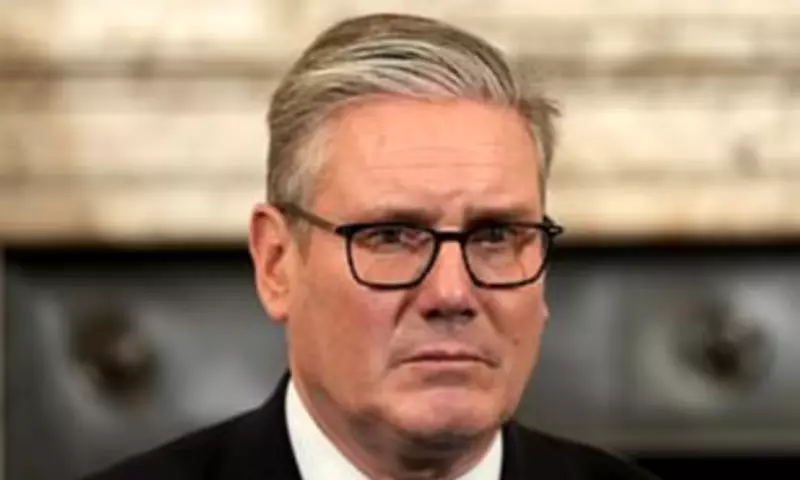
The general secretary of the Fire Brigades Union has delivered a stark warning to Sir Keir Starmer, suggesting the Prime Minister is on his "last chance" with Labour's affiliated trade unions. Steve Wright, whose union is formally linked to the party, indicated that all eleven Labour-affiliated unions could collectively tell the Prime Minister it is time to depart if the upcoming May local elections prove disastrous for the party.
"I Think So" - The Damning Assessment
In a revealing interview with the House magazine, Mr Wright was asked directly whether the unions would demand Starmer's resignation following poor election results. His response was unequivocal: "I think so." This intervention represents a significant blow to the Prime Minister, who has recently faced internal party strife after refusing to allow Greater Manchester Mayor Andy Burnham's bid to return to Parliament through the Gorton and Denton by-election.
The newly-elected union leader, who assumed his position last year, expressed frustration with what he described as the party's "own goals," including the initial refusal to scrap the controversial two-child benefit cap. He identified Reform UK as the "real threat" to Labour's electoral prospects, stating: "I want to see Labour in a position to fight that off. And I'm not sure who's best to do that at the moment."

Burnham Blockage Fuels Union Discontent
The decision to block Andy Burnham's parliamentary ambitions has particularly angered union leaders. Mr Wright criticised Starmer's handling of the situation, questioning why the popular Manchester mayor was prevented from contesting the selection. "Why not allow Andy Burnham into the selection? My view is, he's a good politician. He's done a decent job in Manchester," Wright stated.
This sentiment was echoed by Andrea Egan, head of Unison - Britain's largest trade union - who has also issued warnings to the Prime Minister following the Burnham decision. The blockage has prompted scores of Labour MPs to express concerns in letters to the chair of the party's ruling body, highlighting deepening divisions within the party.
Cost Concerns and Electoral Calculations
Sir Keir Starmer defended his decision to block Burnham by citing the substantial cost of fighting a Manchester mayoral election against Reform UK. However, Burnham countered this argument, revealing: "I would have pointed out to them I've never had any support from the party in the three mayoral elections I've fought, so the Greater Manchester mayoral election has never been a great expense."
The Greater Manchester Mayor expressed disappointment that Starmer refused to speak with him before making the decision, telling BBC Radio Manchester: "I would have preferred to speak in advance of the decision to assure him of what I was trying to do. I think it could have created a more positive path for everybody." Burnham maintained that he was in the "best position to beat Reform" and could have helped "push them back" in the constituency.
By-Election Context and Union Loyalty
The forthcoming by-election on February 26th to replace former Labour MP Andrew Gwynne - who was suspended after offensive WhatsApp messages were uncovered - has transformed what was once a safe Labour seat into a three-way marginal contest between Labour, Reform UK, and the Green Party.
Despite his criticisms, Steve Wright emphasised that he would not disaffiliate the Fire Brigades Union from the Labour Party, believing it remains "best placed within the Labour Party." He expressed a desire to see the Labour government deliver on its promises, stating pragmatically: "I don't really care who does it, I'll be honest."
The union leader drew parallels with recent Conservative turmoil, noting: "No one liked the ever-revolving door of No 10 when Conservatives were in, did they? So, there is a benefit to keeping someone in position as long as they're delivering and listening." He concluded with cautious optimism: "There's hope. We'll see what happens in May, won't we?"