American Democracy Faces Unprecedented Threat One Year Into Trump's Second Term
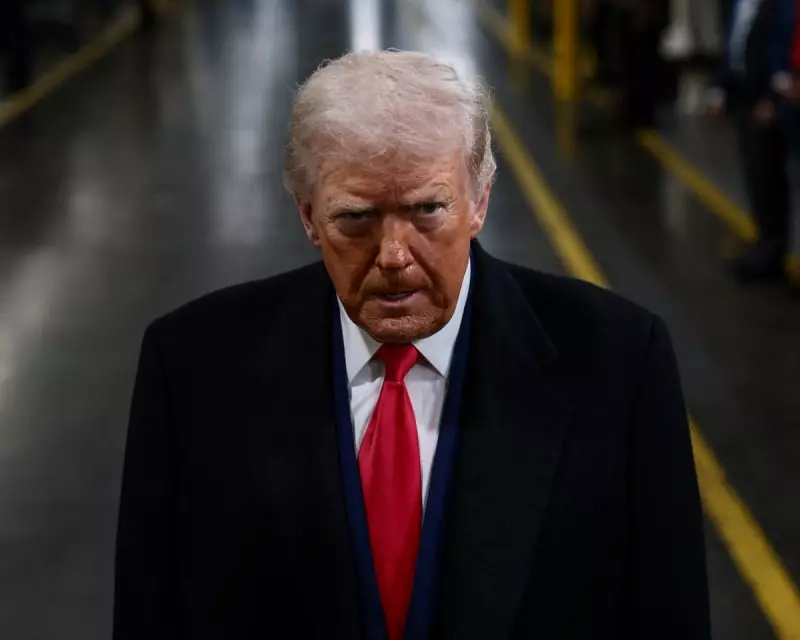
Three hundred and sixty five days after Donald Trump's remarkable return to presidential power, a growing consensus among historians, scholars and political experts suggests that American democracy has been pushed to the brink - with some arguing it has already crossed into dangerous territory. The democratically elected president's first year back in office has witnessed a startling acceleration of executive authority consolidation that has alarmed observers of authoritarian regimes worldwide.
Rapid Consolidation of Presidential Power
In just twelve months, the Trump administration has moved with unprecedented speed to dismantle federal agencies, purge civil service positions, fire independent watchdogs, sideline congressional oversight, challenge judicial rulings, deploy federal forces in Democratic-leaning cities, stifle political dissent, target political opponents, intensify immigration enforcement, scapegoat marginalised groups, order the capture of foreign leaders, leverage presidential position for personal profit, trample academic freedoms and escalate attacks on news media organisations.
The sheer scale and velocity of these actions have transformed academic debate from whether American democracy is experiencing backsliding to whether it can still legitimately claim democratic status at all. Steven Levitsky and Daniel Ziblatt, the prominent Harvard political scientists behind How Democracies Die, alongside University of Toronto professor Lucan Way, recently declared in Foreign Affairs that "In 2025, the United States ceased to be a full democracy in the way that Canada, Germany or even Argentina are democracies."

Quantitative Evidence of Democratic Decline
Multiple quantitative assessments paint a concerning picture of America's democratic health. According to data from Bright Line Watch, a nonpartisan democracy-monitoring initiative, ratings of US democracy by political scientists and the general public dropped "significantly" following Trump's return to office. Their September survey placed American democracy at just 54 on a 100-point scale - positioning the country closer to illiberal or hybrid regimes than to fellow G7 democracies like Canada or the United Kingdom.
Even more startling findings emerged from the Century Foundation's democracy indexing project, which recorded a staggering 28% collapse in democratic health over the past year - from 79/100 in 2024 to 57/100 in 2025. This dramatic decline resembles the kind of sudden democratic deterioration typically associated with coups or major political shocks.
The "Broligarchy" and Unprecedented Oligarchic Influence
Particularly worrying for scholars studying contemporary authoritarianism is the president's close relationship with technology billionaires, sometimes referred to as the "broligarchy." Many of these figures donated substantially to Trump's campaign and featured prominently at his inauguration ceremony one year ago. Most notably, Trump appointed Tesla and SpaceX CEO Elon Musk to lead the newly created "Department of Government Efficiency" (DOGE).
Ruth Ben-Ghiat, a prominent historian and author of Strongmen: Mussolini to the Present, noted that while oligarchs typically exert influence from outside government structures, "with DOGE, the oligarch of oligarchs was allowed to come inside the government and was basically given the key to access our treasury, the payment systems and data systems of a superpower. So we are innovating the autocratic playbook."
Divergence from Traditional Autocratic Models
Ben-Ghiat further observed that Trump's approach diverges from traditional autocratic strategies. Whereas conventional authoritarian regimes typically expand social services to buy loyalty while stripping away political rights, the Trump administration - with congressional Republican support - has moved to "kneecap" public health and social programs, including child care benefits. These cuts are expected to feature prominently in Democratic campaigns during this year's midterm elections.

Resistance and Democratic Resilience
Despite the concerning trends, experts emphasise that democratic decline is not irreversible. Brendan Nyhan, a political scientist at Dartmouth College and co-director of Bright Line Watch, stressed that "history suggests that it is possible to recover from democratic erosion - but far from a guarantee." He identified multiple avenues for contesting presidential overreach, including public engagement, protest, voting and supporting dissenting Republicans.
Significant resistance has emerged across multiple fronts:
- Millions participated in "No Kings" rallies protesting what they perceive as monarchical presidential power
- Democrats secured successive victories in 2025 off-year elections
- Legal challenges have achieved notable success, with the ACLU reporting a nearly 65% success rate in "defeating, delaying, or diluting federal policies"
- Local resistance has emerged in cities like Minneapolis, where hundreds registered as enforcement observers following Trump's threat to invoke the Insurrection Act
White House Response and Political Context
The White House has consistently rejected claims of authoritarian behaviour, dismissing such criticism as "deeply unserious" and attributing it to what the president calls "Trump derangement syndrome." White House spokesperson Abigail Jackson stated: "Here's the reality: President Trump was resoundingly reelected by the American people based on his America First agenda. Now, he's delivering on all his campaign promises - that's democracy in action."
Nevertheless, Trump remains unpopular nationally, with a CNN poll finding that a majority of Americans believe his policies have worsened economic conditions and 58% consider his first year back in office a failure. This political vulnerability creates challenges for his party heading into upcoming elections.
Looking Toward 2026 and Beyond
Many scholars predict that Trump's assault on democratic norms and the rule of law will likely intensify in the lead-up to the 2026 midterm elections. The most recent Bright Line survey reveals growing expert concern about political violence, aggressive responses to peaceful protest, weaponisation of government agencies against political opponents, and unprecedented gerrymandering efforts in Republican states.
Despite these challenges, Ben-Ghiat recalls a conversation with Yulia Navalnaya, widow of Russian opposition leader Alexei Navalny, who offered a perspective on American resilience: "You still have elections," she noted. "And you can use them." This fundamental democratic mechanism, however threatened, remains a critical avenue for resistance and potential restoration of democratic norms in the years ahead.