Provisional Agreement Reached to Prevent US Government Shutdown
A critical bipartisan agreement has been struck between Democratic leaders and the White House to avert a partial government shutdown, temporarily funding the Department of Homeland Security while intense negotiations continue over President Donald Trump's immigration enforcement policies. This provisional deal emerges as the United States grapples with the tragic deaths of two protesters in Minneapolis, reportedly at the hands of federal agents, adding urgency to the political negotiations.
Two-Week Funding Extension for Homeland Security
The two sides have agreed to separate homeland security funding from the broader legislative package, providing exactly two weeks of funding for the DHS. This temporary measure allows for continued debate over Democratic demands for significant curbs on the U.S. Immigration and Customs Enforcement agency, following their decisive vote to block DHS funding legislation on Thursday.
President Donald Trump stated in a social media post that "Republicans and Democrats have come together to get the vast majority of the government funded until September," while extending current funding for Homeland Security. He urged members of both parties to cast a "much needed Bipartisan 'YES' vote."
Political Divisions and Negotiation Dynamics
Speaker Mike Johnson, a Republican from Louisiana, told The Associated Press on Thursday that he had been "vehemently opposed" to breaking up the funding package. However, he conceded that "if it is broken up, we will have to move it as quickly as possible. We can't have the government shut down."
Democrats have specifically requested this short extension—two weeks or less—and maintain they are prepared to block the wide-ranging spending bill if their demands aren't met. This position could deny Republicans the votes they need to pass legislation and potentially trigger a government shutdown.
Republicans had been pushing for a longer extension of the Homeland Security funding, but Senate Majority Leader John Thune, a Republican from South Dakota, indicated the two sides were "getting closer" in their negotiations.
Rare Bipartisan Talks Amid National Tensions
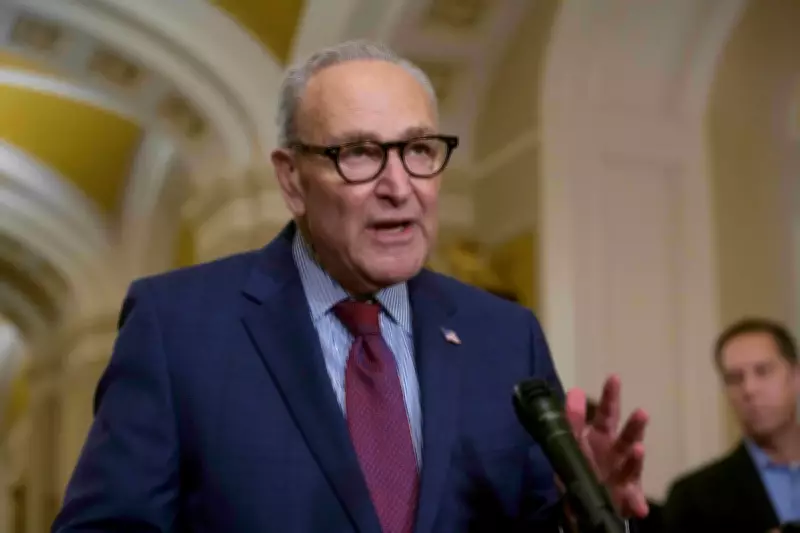
The rare bipartisan discussions between President Trump and his frequent adversary, Senate Democratic leader Chuck Schumer, gained momentum following the fatal shooting of 37-year-old Alex Pretti in Minnesota over the weekend. Senators from both parties have called for a full investigation into the incident, with Schumer describing it as "a moment of truth."
"The American people support law enforcement. They support border security. They do not support ICE terrorizing our streets and killing American citizens," Schumer stated emphatically during negotiations.
With no final agreement yet established and an uncertain path ahead, the standoff threatened to plunge the country into another shutdown. This comes just two months after Democrats blocked a spending bill over expiring federal health care subsidies, a dispute that previously closed the government for 43 days as Republicans refused to negotiate.
Democratic Demands for Immigration Reform
Democrats have laid out several specific demands, asking the White House to:
- End roving patrols in American cities
- Coordinate with local law enforcement on immigration arrests
- Require tighter rules for warrants
- Establish an enforceable code of conduct holding agents accountable for rule violations
Schumer emphasized that agents should be required to have "masks off, body cameras on" and carry proper identification, consistent with common practice in most law enforcement agencies. The Democratic caucus appears united in these "common sense reforms," with Schumer stating the burden now rests on Republicans to accept them.
"Boil it all down, what we are talking about is that these lawless ICE agents should be following the same rules that your local police department does," said Democratic Senator Tina Smith of Minnesota. "There has to be accountability."
Policy Divisions and Future Negotiations
As the two sides narrowed in on a spending deal, the length of a temporary extension for Homeland Security funding emerged as a significant sticking point. Senator Thune noted on Thursday that two weeks wasn't enough time to negotiate a final compromise, stating "We'll see where discussions are going between Democrats and the White House on that."
Even if the current deal proceeds, negotiations on a final agreement for the Homeland Security bill are likely to prove difficult. Democrats want President Trump's aggressive immigration crackdown to end, with Connecticut Senator Richard Blumenthal warning "If the Trump administration resists reforms, we shut down the agency." He added, "We need to take a stand."
Republicans appear unlikely to agree to all Democratic demands. North Carolina Senator Thom Tillis expressed opposition to requiring immigration enforcement officers to show their faces, even as he criticized Homeland Security Secretary Kristi Noem for decisions he said are "tarnishing" the agency's reputation.
"You know, there's a lot of vicious people out there, and they'll take a picture of your face, and the next thing you know, your children or your wife or your husband are being threatened at home," Tillis explained.
House Republicans and Legislative Uncertainty
Across the Capitol, House Republicans have indicated they do not want any changes to the bill they passed last week. In a letter to President Trump on Tuesday, the conservative House Freedom Caucus wrote that its members stand with the Republican president and ICE, declaring "The package will not come back through the House without funding for the Department of Homeland Security."
Speaker Johnson appeared open to the changes, albeit reluctantly, and told the AP he would want to approve the bills "as quickly as possible" once the Senate acts. "The American people will be hanging in the balance over this," Johnson cautioned. "A shutdown doesn't help anybody."
South Carolina Senator Lindsey Graham acknowledged that some Democratic proposals "make sense," such as better training and body cameras. However, he warned he was putting his Senate colleagues "on notice" that if Democrats try to make changes to the funding bill, he would insist on new language preventing local governments from resisting the Trump administration's immigration policies.
Earlier on Thursday, Tom Homan, the president's border czar, stated during a press conference in Minneapolis that federal immigration officials are developing a plan to reduce the number of agents in Minnesota, though this would depend on cooperation from state authorities.