US Protest Movement Adopts More Confrontational Tactics Against Trump Administration
American resistance movements are undergoing a significant tactical shift as they respond to what many perceive as burgeoning autocracy during Donald Trump's second presidential term. Where activists previously focused primarily on lobbying, voting, and legally permitted rallies, there is now a marked move toward more direct, nonviolent civil disobedience.
From Ballot Box to Street Blockades
The evolution of protest tactics represents a fundamental change in how American citizens are choosing to engage with political power. During Trump's first administration, resistance efforts concentrated heavily on converting street-level outrage into electoral action. This strategy proved effective, contributing to Democratic gains in the 2018 midterms and Joe Biden's victory in the 2020 presidential election, which saw the highest voter turnout in over a century.
"This time it is different," observes Professor Dana R. Fisher, who has been studying what she terms "Resistance 2.0" through a long-term research project on American protest movements. Her work documents how activists are expanding what scholars call the "repertoire of contention" beyond traditional political channels.

Survey Reveals Growing Support for Direct Action
Recent research provides compelling evidence of this tactical evolution. Working with organizers of the Free America Walkout—a nationwide protest involving more than 900 local actions across all fifty states—Fisher's team surveyed 7,452 registered participants about their attitudes toward protest methods.
The findings reveal overwhelming support for more confrontational approaches. An astonishing 99% of respondents expressed support for organizations engaging in nonviolent civil disobedience, including sit-ins and blockades. Furthermore, 79% agreed they support social movements taking more confrontational action against the Trump administration, while 65% indicated they would personally participate in such actions given the opportunity.
Historical Precedents for Tactical Escalation
This shift toward more disruptive methods finds precedent in successful American social movements throughout history. The women's suffrage movement of the early 1900s expanded its tactics beyond polite lobbying when activists realized that traditional approaches were insufficient. They began occupying public spaces and even burned an effigy of President Woodrow Wilson before finally securing voting rights in 1920.
Similarly, the civil rights movement strategically employed more disruptive tactics after recognizing limited access to power through legal and political systems. Through sit-ins, non-permitted marches, and other forms of civil disobedience—often met with violent responses—activists helped bring about landmark legislation including the Civil Rights Act of 1964 and the Voting Rights Act of 1965.
Recent Events Accelerate Tactical Shifts
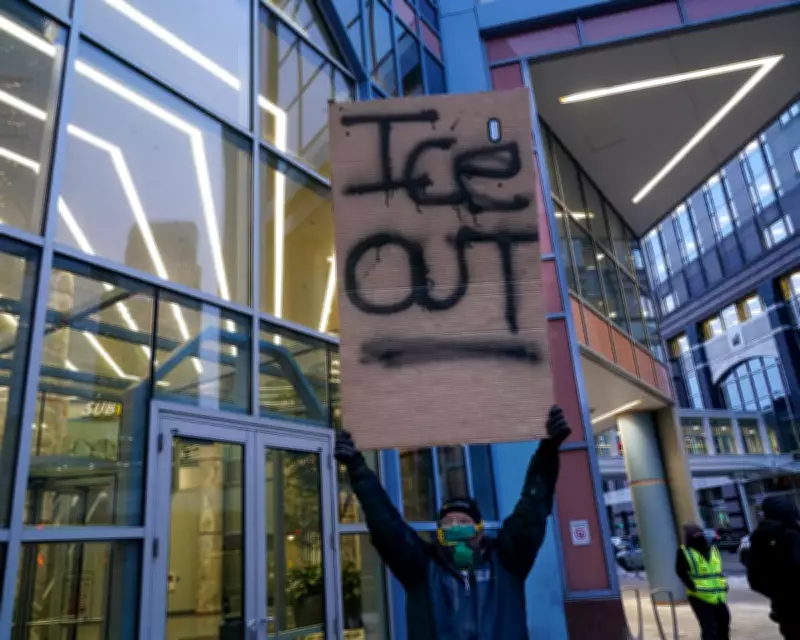
The killing of Alex Pretti by federal agents in Minneapolis on January 24, following weeks after another fatal incident involving ICE agents, has galvanized protest movements across the United States. These events have sparked demonstrations against what many perceive as ultra-violent immigration enforcement tactics under the Trump administration.
Minneapolis has experienced sustained protest activity, including a general strike on January 23 that mobilized tens of thousands of Minnesotans to participate in an economic blackout and street marches. The city's ongoing demonstrations reflect a broader pattern of escalating confrontation between citizens and authorities.
"An unintended side effect of these horrible acts of violence is that they generate substantial public attention and support for protestors," notes Fisher, suggesting that tragic events can paradoxically strengthen resistance movements by drawing broader participation and sympathy.
Building Solidarity Through Shared Struggle
What gives researchers hope amid concerning political developments is the evident growth of solidarity among American activists. As citizens find their voices and power to push back against perceived autocratic tendencies, they are building connections with friends and neighbors along the way.

The expansion of protest tactics represents more than just a change in methods—it signals an evolution in how citizens conceptualize their role in preserving democracy. Rather than relying solely on charismatic leaders or established political parties, Americans are increasingly taking collective responsibility for social change.
This moment of resistance opens a critical window for social transformation, but achieving meaningful change will require participation in actions that may take citizens beyond their comfort zones. As Fisher concludes, "We are going to have to work together to save ourselves." The tactical shift toward more confrontational nonviolent action represents both a response to immediate political circumstances and a continuation of America's long tradition of citizen-led social movements.