Waspi Women Face Second Compensation Rejection
Women affected by the communication of state pension age changes have been informed for the second time that they will not receive any form of compensation. This decision comes despite ongoing campaigns and political pressure from advocacy groups representing those born in the 1950s.
Government Maintains Position on Awareness
Work and Pensions Secretary Pat McFadden addressed the Commons, stating that a targeted compensation programme would prove impractical to implement effectively. He emphasised that a broader flat-rate scheme could cost taxpayers up to £10.3 billion, a substantial financial burden.
Mr McFadden argued: "The evidence shows that the vast majority of 1950s-born women already knew the state pension age was increasing thanks to a wide range of public information campaigns."

He detailed how awareness was spread through multiple channels:
- Informational leaflets distributed nationwide
- Education campaigns across various media platforms
- Information displayed in GP surgeries and healthcare settings
- Television, radio, cinema and online advertising
Campaigners Express Outrage
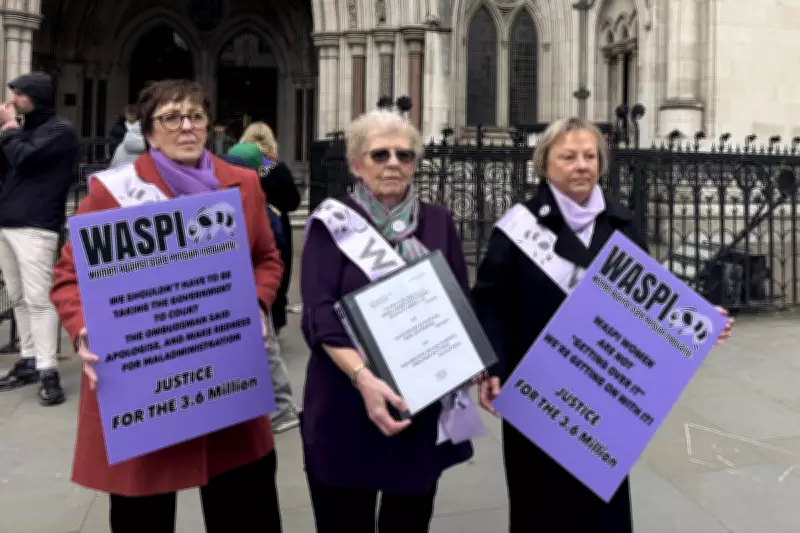
Angela Madden, chairwoman of Women Against State Pension Inequality (Waspi), responded with strong criticism, accusing the government of treating affected women with "utter contempt." She declared that Waspi is currently seeking legal advice and exploring all available options to challenge the decision.
Ms Madden stated: "This represents a disgraceful political choice by a small group of very powerful people who have decided the harm and injustice suffered by millions of ordinary women simply does not matter."
Parliamentary Opposition Voices Concern
Labour MP Rebecca Long-Bailey, who chairs the All-Party Parliamentary Group on State Pension Inequality for Women, expressed disappointment with the government's stance. She highlighted that the Parliamentary and Health Service Ombudsman had previously identified maladministration and recommended compensation.
Ms Long-Bailey commented: "Blatantly ignoring those recommendations not only undermines the authority of the Ombudsman, it sends a damaging message about how the state responds when it gets things wrong."
Government's Detailed Rationale
Mr McFadden provided further explanation for the decision, acknowledging that individual notification letters about pension age changes could have been distributed earlier. He reiterated the government's apology for this administrative delay but maintained that evidence suggests most women would not have read or recalled such unsolicited correspondence.
The Work and Pensions Secretary elaborated on this point:
- Evidence from 2007 indicates that the majority of affected women would not have engaged with unsolicited pension letters
- Those with less pension knowledge, who might have benefited most from earlier notification, were least likely to read such correspondence
- Therefore, earlier letters would probably not have altered what most women understood about their state pension age
Mr McFadden concluded that the government, after reviewing the original decision, has reached the same conclusion as former secretary of state Liz Kendall announced in December 2024. He stressed that while there are legitimate debates about the wisdom of increasing the state pension age, the compensation question specifically concerns how these changes were communicated to the public.
Historical Context and Financial Implications
The controversy stems from changes to the state pension age that particularly affected women born in the 1950s. The Parliamentary and Health Service Ombudsman had previously suggested compensation ranging between £1,000 and £2,950 for each affected individual, based on their assessment of communication failures.
This second rejection follows Labour's review of their previous policy after rediscovering a 2007 Department for Work and Pensions evaluation. This historical document had originally led officials to cease sending automatic pension forecast letters, a decision that has since become central to the compensation debate.

The government maintains that women did not suffer direct financial loss from the communication delays, a position that continues to fuel the ongoing dispute between campaigners and policymakers.