White House Appears to Admit Digitally Altering Activist's Arrest Image
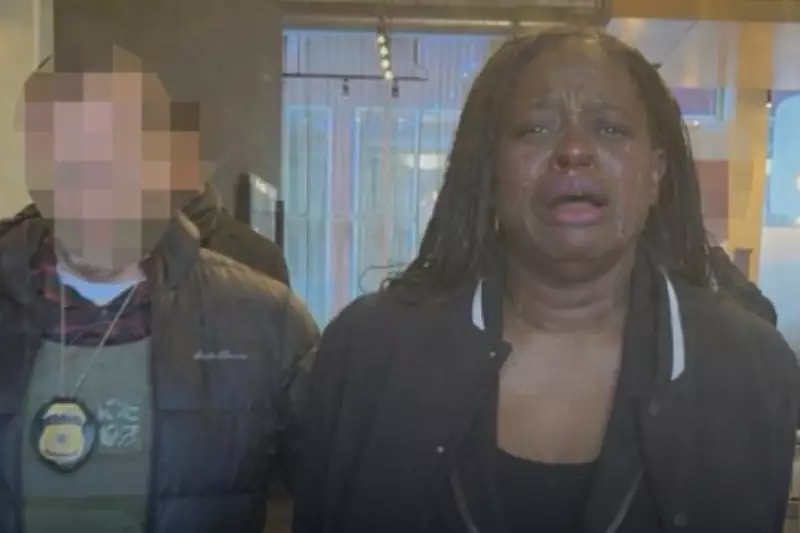
The Trump administration has sparked controversy after appearing to admit it digitally altered an image of a prominent activist's arrest to make her look like she was crying. The incident centres on Nekima Levy Armstrong, a lawyer and organiser who was arrested for leading an anti-ICE protest at a Minnesota church.
Conflicting Images and Official Response
On Thursday, federal officials announced the arrest of Levy Armstrong for organising the demonstration. Shortly afterwards, the official White House X account shared an image purportedly showing the activist in tears during her arrest. The accompanying caption accused her of being a "far-left agitator" responsible for "church riots in Minnesota."
However, Homeland Security Secretary Kristi Noem appeared to share a different version of the same image on the same day. In her post, Levy Armstrong was shown straight-faced as she was led away by an agent, raising immediate questions about the White House version's authenticity.

When pressed about the discrepancy and whether artificial intelligence or image-editing software had been used, the Trump administration directed inquiries to a social media post from Kaelan Dorr, the White House deputy communications director. His message stated simply: "Enforcement of the law will continue. The memes will continue. Thank you for your attention to this matter."
The Minnesota Church Protest and Legal Proceedings
Federal authorities have indicated they will charge Levy Armstrong under a conspiracy statute that prohibits individuals from threatening or intimidating others from accessing their constitutional rights. The charges stem from a Sunday protest where Levy Armstrong led demonstrators into a St. Paul church.
During the demonstration, activists chanted "ICE out" and "Justice for Renee Good" – referencing a Minneapolis woman fatally shot by an ICE agent as part of the administration's ongoing operations in Minnesota. Video footage shows some worshippers leaving the church while others appeared frightened or uncomfortable.
Levy Armstrong, who previously led Minneapolis's chapter of the NAACP, defended the protest before her arrest. She explained the action was partly intended to criticise Cities Church pastor David Easterwood, who appears to be an official with ICE's local field office.
"You cannot lead a congregation while directing an agency whose actions have cost lives and inflicted fear in our communities," she told the Associated Press. "When officials protect armed agents, repeatedly refuse meaningful investigation into killings like Renée Good's, and signal they may pursue peaceful protesters and journalists, that is not justice — it is intimidation."
Broader Context and Reactions
The ICE leader mentioned is among Trump administration officials named in a civil rights lawsuit accusing immigration agents of employing "police-state tactics" and mass racial profiling during Minnesota operations. Meanwhile, administration officials and local leaders have condemned the church protest.
True North Legal, representing Cities Church, stated: "The First Amendment does not allow premeditated plots or coordinated actions to violate the sanctity of a sanctuary, disrupt worship, and intimidate small children. There is no 'press pass' to invade a sanctuary or to conspire to interrupt religious services."
Minnesota Governor Tim Walz, who has echoed protesters' criticisms of ICE tactics, nonetheless called for activists to remain peaceful. His office clarified that he "in no way supports interrupting a place of worship."
A Pattern of Image Manipulation
This incident follows a pattern of image manipulation from the White House. As previously reported, the administration has embraced a communications strategy that sometimes distorts images or factual information.

Just one day before this controversy emerged, the White House falsely claimed President Trump hadn't confused Iceland and Greenland during a recent speech, despite clear evidence to the contrary. The administration has increasingly employed artificial intelligence in its social media strategy, with accounts linked to the president posting cartoonish images depicting dramatic scenarios.
Mike Ananny, an associate professor of communications and journalism at the University of Southern California, suggested these developments indicate a shifting political paradigm. "There's no sense of, 'Oh no, we were caught using a synthetically generated image,'" he observed. "All gloves are off. People don't seem to care."
The altered image controversy occurs amid heightened tensions in Minneapolis following Renee Good's fatal shooting by an ICE agent. As legal proceedings against Levy Armstrong progress, the White House's admission about image manipulation raises significant questions about truth in political communication.