White House Press Secretary's Uncharacteristic Restraint Hints at Presidential Retreat
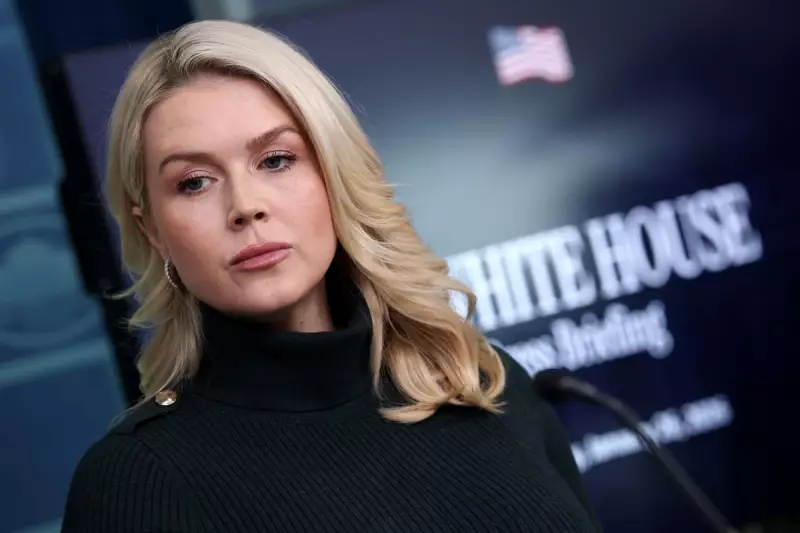
In a notable departure from the administration's typical combative stance, White House press secretary Karoline Leavitt appeared unusually defensive during Monday's press briefing while addressing the fatal shooting of Alex Pretti by federal agents in Minneapolis. What Leavitt chose not to say proved more significant than her actual statements, as she carefully avoided the victim-blaming rhetoric that has become standard practice within Donald Trump's administration.
A Measured Response to Tragedy
When Leavitt approached the briefing room podium, she described Pretti's death as a "tragedy" and indicated that President Trump preferred to allow the investigation to proceed without interference. Most strikingly, she pointedly refused to endorse senior adviser Stephen Miller's characterisation of Pretti as a "would-be assassin" on social media platforms.
The press secretary revealed that Trump and Minnesota Governor Tim Walz had engaged in what she termed a "constructive and productive conversation," during which they discussed potentially withdrawing border patrol agents from the state. Governor Walz's office subsequently confirmed that the president had "agreed to look into" reducing the number of federal agents deployed in Minnesota.

Pattern of Presidential Backtracking Emerges
This development represents what appears to be the third instance of presidential retreat within a single week, following two previous international controversies. First came the Greenland situation, where Trump initially insisted on American control before accepting a vague "framework" compromise following discussions with NATO Secretary General Mark Rutte.
Subsequently, a diplomatic crisis erupted when Trump suggested that NATO troops had "stayed a little back" from front lines in Afghanistan, provoking outrage in Britain which suffered 457 military fatalities during the conflict. A rebuke from Labour leader Keir Starmer, reportedly supported by King Charles, compelled Trump to issue what amounted to his closest approximation of an apology to date.
Minneapolis Situation Shows Signs of De-escalation
With Minneapolis currently resembling what some observers describe as an eerie dystopia under Immigration and Customs Enforcement (ICE) presence, multiple signals now suggest potential de-escalation. Trump himself posted on social media that he and Governor Walz were on a "similar wavelength," while Ohio Senator JD Vance, previously vocal in blaming poet Renée Good for her own death in Minneapolis earlier this month, remained conspicuously quiet this time.
Leavitt, typically known for articulating the Trump agenda with what critics describe as Puritanical fervour, appeared visibly uncomfortable and defensive throughout the briefing. While she repeatedly attempted to save face by blaming President Joe Biden, Democratic leaders in Minnesota, and leftwing agitators for creating conditions that led to the tragedy, she notably stopped short of blaming Pretti himself.
Press Secretary's Evasive Responses
When questioned about Miller's inflammatory tweet and why administration officials seemed to be jumping to conclusions before any investigation had concluded, Leavitt responded evasively: "Well, look, this has obviously been a very fluid and fast-moving situation throughout the weekend. As for President Trump, whom I speak for, he has said that he wants to let the investigation continue and let the facts lead in this case."
Pressed further about Miller's "would-be assassin" comment, she deflected: "Look, as I've said, I have not heard the president characterise Mr Pretti in that way." The press secretary declined to answer follow-up questions or comment on whether Miller would issue an apology to Pretti's family.
However, Leavitt did offer a rare expression of sympathy: "Nobody here at the White House, including the president of the United States, wants to see Americans hurt or killed and losing their lives in American streets. We mourn for the parents. As a mother myself, of course, I cannot imagine the loss of life, especially losing one's child."

Political Calculations Behind Potential Retreat
If Trump is indeed backing down from his typically confrontational approach - and observers caution this remains uncertain - such a move would be welcome to many but not entirely surprising. The president has consistently demonstrated himself to be primarily responsive to television coverage, more attuned to images and commentary than many of his younger supporters. Recent television coverage has been particularly damaging, featuring endless videos showing Pretti's street execution that contradict official accounts.
Furthermore, scriptwriters could hardly have created a more sympathetic victim for Republican viewers than Pretti, who worked as an ICU nurse caring for military veterans. Although allegedly carrying a firearm at the time of the incident - which he was legally entitled to do under Minnesota law - Republican defenders of the Second Amendment have expressed concern about this being used to justify what they perceive as government overreach.
Growing Republican Discontent
Trump would undoubtedly be aware of growing discontent within his own party, extending beyond the usual critics. Kentucky Congressman James Comer has urged the president to withdraw ICE from Minnesota, while Louisiana Senator Bill Cassidy has called for a joint investigation into the shooting. Michigan Congressman Bill Huizenga has similarly advocated for congressional hearings.
All these politicians recognise opinion polls indicating that a majority of Americans believe ICE has exceeded appropriate boundaries. The Wall Street Journal reported that Trump "fielded dozens of calls over the weekend from administration officials and senators, with some worrying that public sentiment has turned against the administration's immigration-enforcement actions." Immigration, traditionally a Republican strength, appears to be transforming into a political liability.
Trump's Position Within His Own Movement
Ultimately, Trump does not represent the most extreme figure within his administration. Former adviser Steve Bannon has previously described him as a "moderate" within the Make America Great Again movement. Figures including Stephen Miller, Homeland Security Secretary Kristi Noem, and others frequently advocate more extreme positions than Trump himself while lacking his political instincts and flexibility.
As Trump told reporters at the White House last October: "But I want to thank Stephen Miller, who's right back in the audience, right there. And I'd love to have him come up and explain his true feelings, but - maybe not his truest feelings. That might be going a little bit too far." This acknowledgment highlights the president's awareness of the political boundaries even within his own administration.