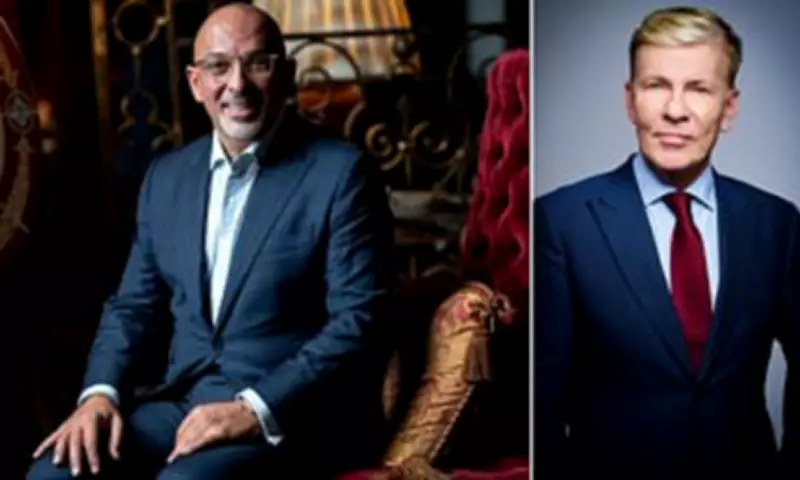
When former Conservative cabinet minister Nadhim Zahawi crossed the floor to join Reform UK last month, he firmly denied receiving any offer of a peerage. However, fresh developments suggest his political trajectory is taking a definitive turn away from his old party strongholds.
Stratford-upon-Avon Mansion Hits the Market
Zahawi, who served briefly as chancellor under Boris Johnson, has placed his expansive family home in Stratford-upon-Avon on the market with an asking price of £1.3 million. The property, which includes a notable stable block, occupies the constituency he represented for fourteen years before stepping down.
The stable block itself carries political baggage, having entered public consciousness in 2013 when Zahawi claimed £4,000 in parliamentary expenses to cover its heating costs. The MP later stated this was an administrative error, repaid the full amount, and issued a public apology.

A Clear Signal of Political Intent
The decision to sell this significant property is widely interpreted as a clear indication that Zahawi has no intention of contesting his former parliamentary seat. The constituency fell to the Liberal Democrats in the last general election following his departure.
This move coincides with speculation about his future role within Reform UK. Insiders suggest that when party leader Nigel Farage establishes his shadow cabinet, Zahawi is likely to be handed the foreign affairs portfolio. This appointment follows his reported denial of a peerage by current Tory leader Kemi Badenoch.
Such a role could be conveniently executed from the House of Lords, a precedent set by David Cameron during Rishi Sunak's premiership. The defection has prompted mixed reactions within Westminster corridors, with one Tory strategist reportedly quipping about 'all your egos in one basket' following similar moves by Suella Braverman and Robert Jenrick.
Broader Political Landscape and Cultural Skirmishes
The article touches upon several other political and cultural narratives unfolding across British public life. Prime Minister Keir Starmer recently revealed an unconventional diplomatic channel, noting that former US President Donald Trump bypasses official Downing Street protocols to call his mobile directly, even during family moments like watching an Arsenal football match.
BBC Diversity Role Sparks Debate
Meanwhile, the BBC faces criticism over its recruitment practices, specifically an advertised position for a Creative Diversity Business Advisor. The role requires 'applied expertise in DEI across protected characteristics' to manage related projects. Critics question whether such initiatives represent value, suggesting the corporation should instead focus on hiring journalists willing to specify historical atrocities like the Holocaust with precise victim identification.
By-Election Dynamics and Personal Sparring
In the Gorton and Denton by-election, Green Party candidate Hannah Spencer has been labelled a 'blue-collar candidate' due to her professed interest in greyhounds. However, commentators note a potential contradiction as she campaigns to ban greyhound racing, a traditional working-class pastime, which may alienate the very voters she seeks to attract.
Reform UK's candidate in the contest, former academic Matt Goodwin, has ignited a separate controversy with colourful remarks about his critics. 'Most people criticising me are nerds,' Goodwin stated, adding he would rather 'shoot myself in the head' than attend a dinner party with BBC presenter Nick Robinson and classicist Mary Beard. Professor Beard responded with characteristic wit, defending the value of nerdy perspectives, while Robinson has remained silent on the exchange.
Questioning Engagement with 'The Common View'
Further illustrating the perceived disconnect between political elites and the general public, the Commons Select Committee on International Aid plans to 'gather insights on what the public thinks about UK aid.' Their chosen venue for this endeavour? An evidence session at King's College London, before an audience composed primarily of politics and development students, with a panel featuring international charity executives and think-tank representatives.

This approach has raised eyebrows, prompting questions about how effectively such a setting can capture the authentic 'common view' the committee ostensibly seeks to understand.