Six-time Olympic gold medallist Sir Chris Hoy has publicly detailed the arduous twelve-week rehabilitation process he endured following a serious mountain biking accident earlier this winter. The cycling icon, who is currently battling terminal cancer, described the November incident as the "worst crash" of his extensive career.
A First-Person Account of the Accident
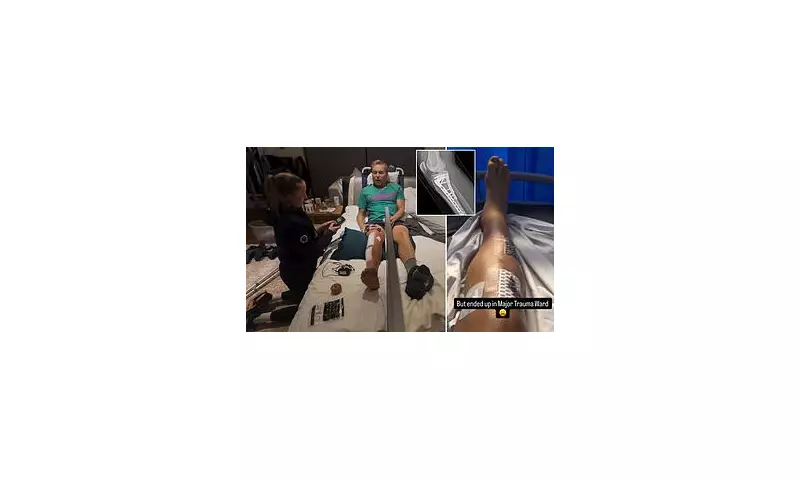
In a candid Instagram video posted on Monday, the 49-year-old Scot provided a minute-by-minute account of the traumatic event and the challenging road to recovery. The footage begins with a first-person perspective of Hoy enjoying a mountain bike ride with friends, before abruptly transitioning to the stark reality of a major trauma ward.
The crash resulted in multiple fractures to his lower right leg and knee, necessitating emergency surgery where metal rods and screws were inserted to stabilise the damaged limb. Medical X-rays featured in the video graphically illustrate the severity of the injuries sustained during what Hoy has characterised as a particularly nasty spill.

The Long Road Back to Mobility
After five days of hospital treatment, Hoy was discharged with his leg immobilised in a brace, dependent on a walking frame for basic movement. The video documents the initial phase of his convalescence, showing significant bruising, swelling, and what he described as "chunky scars" from the surgical intervention.
With support from his family and under the expert guidance of physiotherapist Katie Flatters, the cycling champion gradually regained mobility. He progressed from using crutches around his home to attempting single-leg squats on his uninjured left leg within weeks of the operation.
Professional Support and Progressive Rehabilitation
Hoy's recovery programme incorporated diverse therapeutic approaches, including regular soft tissue treatments administered by two-time Olympic swimmer Vicki Hayles. The rehabilitation timeline shows remarkable progression: by week five, he was pedalling with both legs on an exercise bike, and a week later began partial weight-bearing on a treadmill.
During the festive period, Hoy attended the World Darts Championship semi-finals with his wife Sarra, managing with just one crutch. By the eleven-week milestone, he had discarded crutches entirely and returned to outdoor cycling, even navigating snowy terrain in a vehicle.
Reflections on Recovery and Resilience
In an emotional caption accompanying the video, Hoy expressed profound gratitude to the medical professionals and support network that facilitated his recovery. "It's been a rough ride since then," he acknowledged, reflecting on the emergency surgery that followed the accident.
The Olympic legend paid particular tribute to what he called his "formidable team of women," including his surgeon, physiotherapist, massage therapist, and wife Sarra, who provided "love and humour" throughout challenging times. He also thanked friends including fellow cyclists Rob Hayles, Jason Kenny, and Jason Queally for practical assistance and companionship during his three-month period of being largely housebound.
Perspective on Risk and Living Fully
Speaking to Sky Sports last month, Hoy offered philosophical perspective on the accident: "I've been riding bikes for 43 years and it's the worst crash I've ever had. I'm pretty lucky that's the worst one I've had in all those years of riding."
He emphasised his commitment to living life fully despite risks: "None of us are here forever so you want to make the most of the time you have and do the things you enjoy. I've just had an unfortunate spill and it's the way the cookie crumbles."
Update on Health Journey
Alongside discussing his physical recovery, Hoy provided an encouraging update regarding his cancer treatment, revealing his condition is currently "stable" thanks to successful medical intervention. "Once you've got past the diagnosis, which for me was over two years ago, the first part of that is pretty grim and then you start the treatment," he explained.

The cycling champion expressed faith in scientific progress, noting that numerous treatment options exist for prostate cancer patients and expressing hope that future advancements might transform terminal diagnoses. His remarkable recovery from the cycling accident stands as testament to both medical expertise and personal determination in facing multiple health challenges simultaneously.