Alex Honnold's Skyscraper Live: A Heart-Stopping Spectacle
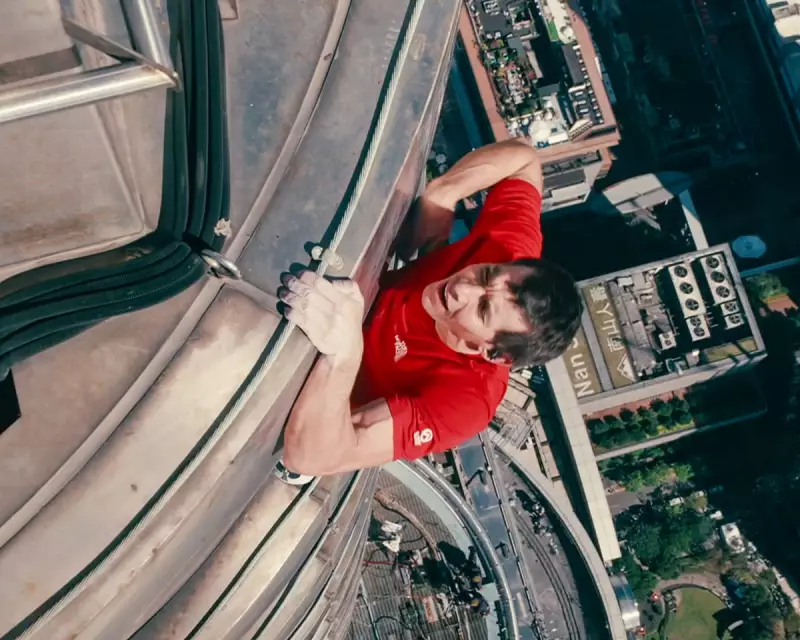
Netflix's Skyscraper Live has come and gone, but its impact lingers like a cold sweat. The broadcast featured free climber Alex Honnold scaling the 508-metre Taipei 101 in Taiwan without ropes, an event that many viewers have dubbed the most stressful television experience ever recorded. While Honnold's athletic prowess is undeniable, the show raised profound questions about the ethics of entertainment that hinges on the real possibility of death.
The Unforgiving Nature of Live Television
Honnold is no stranger to audiences, having starred in the Oscar-winning documentary Free Solo, which chronicled his unaided ascent of El Capitan. That film was a masterclass in tension, meticulously edited to maximise drama. In stark contrast, Skyscraper Live offered raw, unedited footage of his climb over an hour and a half. This live format amplified the risk factor exponentially; there was no safety net of post-production to mask any mishap, leaving viewers in a state of sustained anxiety.
Yet, the human mind struggles to maintain peak panic for such extended periods. Many found themselves drifting during the broadcast, perhaps glancing at their phones or brewing a cuppa, only to be jolted back by moments of sheer terror. The experience mirrored a turbulent long-haul flight: long stretches of monotony punctuated by bursts of adrenaline-fueled fear.

The Architectural Drama of Taipei 101
Credit must go to Honnold and his team for selecting Taipei 101, a skyscraper that seems tailor-made for such a feat. The structure presented three distinct stages, each escalating in difficulty. From dizzying heights to precarious overhangs, the climb culminated in a heart-stopping moment where Honnold had to ascend at a 45-degree angle on a section with minimal grip. Even rewatching the footage, knowing the outcome, can induce sweaty palms and a fizzy sense of dread akin to discovering a toddler in the knife drawer.
The Ethical Quandary of Jeopardy as Entertainment
Beneath the spectacle lies a queasy truth: audiences tuned in partly for the jeopardy. While admiring Honnold's skill, a small, suppressed part of every viewer acknowledged the macabre possibility of a fatal slip. This is not entirely new; events like Formula One often attract viewers for the crashes. However, Skyscraper Live made this implicit thrill gaudily explicit, reminiscent of Felix Baumgartner's 2012 stratospheric jump for Red Bull, which also sparked grim self-reflection among spectators.
Netflix likely does not want to brand itself as the home of potential tragedies, suggesting this should remain a one-off. If the platform commissions more live events where death is a real risk—such as free diving or extreme parkour—it risks reducing television to a Victorian freak show. Beyond ethical concerns, as one viewer quipped, our collective sphincters might not withstand the strain.
Skyscraper Live is currently available for streaming on Netflix, serving as a breathtaking yet controversial milestone in modern entertainment.