Historic Skyscraper Ascent to be Televised Globally
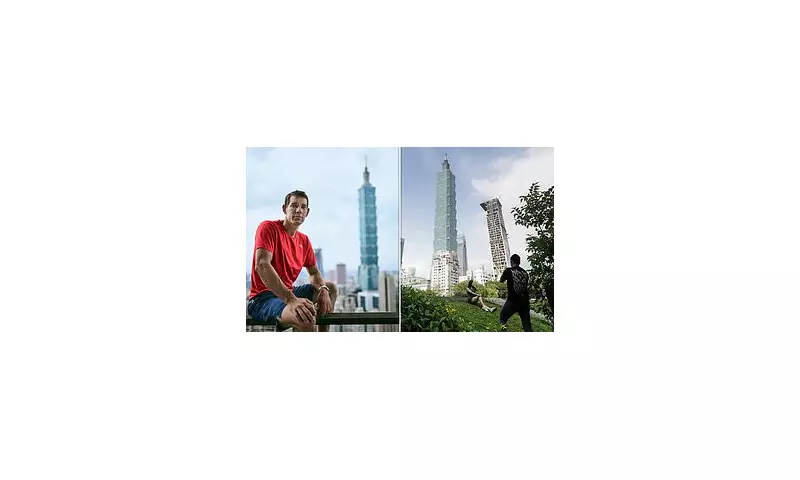
Dominating the skyline of Taiwan's capital at a staggering 1,667 feet (508 meters), the earthquake-proof Taipei 101 skyscraper has long captured the imagination of professional rock climber Alex Honnold. For more than a decade, this steel and glass architectural marvel has represented an ultimate urban climbing objective. On Saturday morning, Honnold will finally attempt to scale it in his signature free solo style—completely without ropes or protective equipment—in what promises to be a historic moment broadcast live by Netflix.
Excitement and Ethical Concerns Surround High-Risk Broadcast
The announcement of this unprecedented event has generated a complex mixture of excitement and trepidation within both climbing communities and broader public discourse. Significant ethical questions have emerged regarding the implications of broadcasting such a high-risk endeavour live to a global audience. Many observers have particularly questioned Honnold's continued pursuit of extreme free solo climbs now that he is a married father of two young daughters, adding a personal dimension to the safety debate.
Honnold, who achieved legendary status through his ropeless ascent of Yosemite National Park's El Capitan documented in the Oscar-winning film Free Solo, remains dedicated to pushing the boundaries of climbing worldwide. 'When you look at climbing objectives, you look for things that are singular,' Honnold explained to The Associated Press late last year. 'Something like El Capitan where it's way bigger and way prouder than all the things around it.' Taipei 101 represents precisely this category of singular achievement.

Technical Challenges and Historical Precedents
While Honnold won't be the first person to ascend the iconic skyscraper, he will be the pioneering first to accomplish the feat without any safety ropes. French climber Alain Robert previously scaled the building on Christmas Day in 2004 during its grand opening celebrations, when Taipei 101 held the title of world's tallest building. Robert's climb took nearly four hours—almost double his anticipated time—while battling an injured elbow and challenging wind and rain conditions.
After months of dedicated training, including practicing specific moves on the building and consulting with Robert via his climbing podcast, Honnold approaches the challenge with characteristic confidence. 'I don't think it'll be that extreme,' he remarked. 'We'll see. I think it's the perfect sweet spot where it's hard enough to be engaging for me and obviously an interesting climb.'
The architectural design presents unique climbing challenges across its 101 floors:
- The most demanding section comprises 64 floors in the middle portion
- This features the building's distinctive 'bamboo boxes' that create its signature appearance
- The climb is divided into eight segments, each with eight floors of steep, overhanging climbing
- Each segment concludes with a balcony where Honnold can briefly rest
Broadcast Logistics and Safety Protocols
The Skyscraper Live broadcast will employ a crucial 10-second delay, with programming scheduled for Friday evening in the United States and Saturday at 1am for viewers in the United Kingdom. James Smith, an executive with event producer Plimsoll Productions, emphasised that safety consultations began almost immediately after initial discussions with Honnold about the ambitious project.
Smith works closely with Secret Compass, a specialised risk management group for film and television that has supported diverse productions from Antarctic penguin documentaries to Chris Hemsworth's crane walk from an Australian skyscraper roof. The production team has implemented multiple safety measures:

- Continuous communication capability between Smith and Honnold throughout the event
- Cameramen positioned strategically inside the building structure
- Multiple designated hatches and bail-out points during the ascent
- Four high-angle camera operators suspended on safety ropes
'These people all know Alex. They trust Alex. They're going to be close to him throughout the whole climb,' Smith explained. 'They're going to get us kind of amazing shots, but they're also there just to keep an eye on him, and if there's any problems, they can kind of help.'
The production has additionally commissioned professional weather forecasters to provide continuous updates leading to climb day. Smith noted there is currently a slight chance of morning light rain, with the understanding that Honnold will not attempt the climb if conditions prove unfavourable.
Local Perspectives and Cultural Significance
Within Taiwan's climbing community, the event has generated considerable excitement. Taiwanese rock climber Chin Tzu-hsiang, who trains at a local gym, reflected on growing up constantly looking up at Taipei 101 and wondering about its climbability. Honnold remains a household name among climbers even in Taiwan, with Chin noting that students with only one or two years of climbing experience are eagerly anticipating the broadcast.
'For Alex Honnold to finish the climb, it's like he's helping us fulfill our dream,' Chin expressed, adding that based on Honnold's meticulous preparation evident in previous climbs, he trusts the climber not to take reckless risks.
Smith emphasised the historic nature of the undertaking: 'This will be the highest, the biggest urban free solo ever. So we're kind of writing history and those events, I think, have to be broadcast and watched live.'
Ethical Considerations and Broader Implications
According to Subbu Vincent, director of media and journalism ethics at Santa Clara University, the novelty and inherent risk make the ethical dimensions particularly crucial. Vincent stressed the importance of Honnold having a clear 'back-off clause' and ensuring production elements don't increase the already substantial risks. The broadcast delay represents one essential ethical safeguard, allowing immediate cessation if problems arise.
'I don't think it's ethical to proceed to livestream anything after,' Vincent stated regarding potential incidents during the climb.
Further ethical considerations involve Honnold's potential influence on impressionable young viewers who might feel emboldened to undertake dangerous模仿行为 after watching the broadcast. This debate echoes discussions surrounding televised daredevil stunts dating back to Evel Knievel's era. The climbing world has witnessed numerous free soloing tragedies, including an 18-year-old Texas climber who fell in Yosemite last June, while the dangerous 'roof-topping' trend—involving illegal access to skyscraper tops for dramatic photos—has claimed several lives.
Jeff Smoot, author of All and Nothing: Inside Free Soloing, shares these concerns but notes that risk acceptance has always been integral to climbing culture. Having begun climbing in the 1970s watching legends like John Long and John Bachar regularly free solo, Smoot observes: 'From the public's perspective, this is thrill-seeking. From the climber's perspective, it's a meditative art form.'
Initially questioning why Honnold would attempt such a climb without ropes and why it needed live filming, Smoot ultimately acknowledged the public fascination: 'If it wasn't dangerous, would people want to watch?'
Taipei 101 officials have declined to comment on the event, while Secret Compass did not respond to interview requests, leaving many operational details undisclosed as the climbing community and global audience await this unprecedented urban free solo attempt.