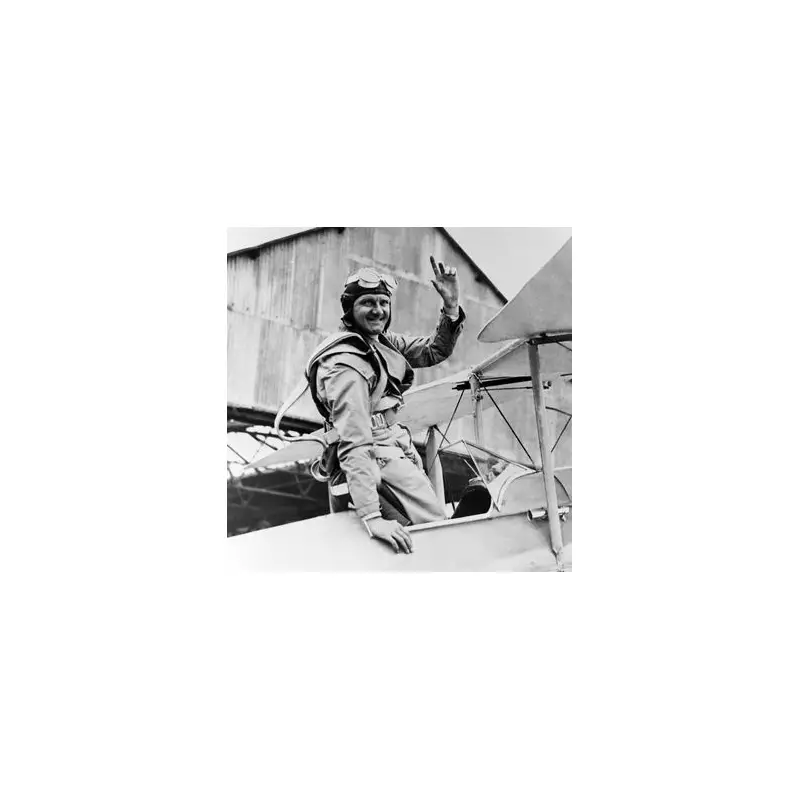
Mount Everest, the world's highest peak, has claimed hundreds of lives in its history of exploration. Yet few stories from its slopes are as profoundly strange or tragic as that of Maurice Wilson, a British Army officer whose fatal 1934 attempt was driven by faith and fasting rather than mountaineering skill.
A Plan Forged in Faith, Not Experience
Born in Bradford and a veteran of the First World War, Maurice Wilson was a man of intense, unshakeable conviction. Having convinced himself he had cured his own tuberculosis through prayer and fasting, he developed a radical belief: that divine intervention could achieve the impossible. His new goal was to climb Mount Everest solo, a feat no one had yet accomplished, to prove the power of faith to the world.
His plan was, by any rational measure, delusional. With almost no mountaineering experience, Wilson believed spiritual purity—achieved through prayer and sustained fasting—would protect him from the lethal cold, thin air, and technical challenges that had defeated professional expeditions.

An Insane Journey: From Gypsy Moth to Disguise
Wilson's scheme was even more audacious than a simple climb. His initial idea involved flying a small aircraft from Britain to Tibet, crash-landing it high on Everest's slopes, and walking the remaining distance to the summit. In 1933, he piloted a second-hand Gypsy Moth biplane on a perilous solo flight to India, a remarkable feat that demonstrated his piloting courage, if not his judgement.
After authorities in India confiscated his plane, Wilson's determination only grew. He disguised himself as a Buddhist monk to retrieve the aircraft, later sold it, and proceeded to cross illegally into Tibet on foot. By the spring of 1934, he had reached the base of the mountain's northern side, his original plan in tatters but his obsession undimmed.
A Fatal Ascent into the Unknown
Alone and woefully unprepared, Wilson began his climb. His diary, recovered later, reveals a startling ignorance of glacial terrain, altitude sickness, and basic ice-climbing techniques. He carried inadequate equipment, hoped old steps cut in the ice would still be usable, and relied on his faith to overcome physical obstacles.
After several failed attempts, two Sherpas who briefly accompanied him pleaded with him to turn back. Wilson refused. On 29 May 1934, he set off alone towards the daunting North Col. His final diary entry, dated 31 May, reads with tragic simplicity: “Off again, gorgeous day.” He was never seen alive again.
A Frozen Legacy in a Crevasse
The following year, a British expedition led by the renowned explorer Eric Shipton discovered Wilson's frozen body at the foot of the North Col. He lay beside the remains of his tent, likely having succumbed to exhaustion, starvation, or the brutal cold. His body was given a mountaineer's burial, committed to a crevasse near where he fell.
Wilson's story stands apart from modern Everest tragedies, which often involve overcrowding or commercial expedition pitfalls. His was a solitary quest born of profound personal belief. It remains one of the most bizarre and haunting chapters in the long, deadly history of attempts on the world's highest peak—a stark reminder that on Everest, conviction alone is no match for the mountain's ruthless reality.