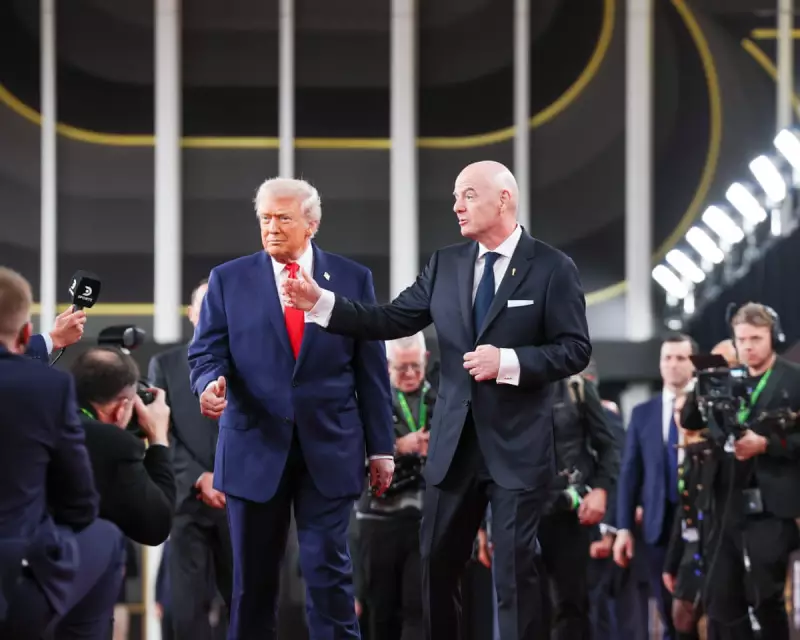
The 2026 FIFA World Cup, set to be hosted across the United States, Canada, and Mexico, is now firmly positioned to join history's most politically tainted tournaments. A stark analysis draws direct parallels between the upcoming event and the World Cups hosted by Benito Mussolini's Italy in 1934 and Argentina's military junta under General Jorge Rafaél Videla in 1978.
A Pattern of Authoritarian Exploitation
Historical precedent shows FIFA's flagship event has repeatedly been handed to regimes with clear, brutal agendas. In 1934, Mussolini had already consolidated fascist power, colonised Libya, and annexed Rijeka. The tournament became a propaganda tool for his expansionist ambitions.
By 1978, Videla's junta was well-known for systematic detention, torture, and murder. Despite international protest, the World Cup proceeded, with FIFA President João Havelange accepting a medal from Videla and declaring the world could see "the true face of Argentina." The pattern continued with Vladimir Putin's Russia in 2018, four years after the annexation of Crimea.
The 2026 Context: US Foreign Policy Under Trump
The crystallising moment for the 2026 edition's legacy came with last week's forceful abduction of Venezuela's sitting president and his wife. This was followed by President Donald Trump announcing the socialist state was effectively American-run territory.
This action is part of a broader foreign policy that has included softening support for Ukraine, threatening to invade Mexico and annex Canada and Greenland, and initiating widespread trade wars. The administration, despite promises of isolationism, has created geopolitical mayhem based on the assumption it can act unilaterally.
FIFA's Complicity and the New Normal
FIFA President Gianni Infantino has shown immovable support for Trump, with awards and medals flowing from the football body to the US administration. This relationship underscores a seismic shift. The World Cup is no longer an outlier for sportswashing by states like Qatar and Saudi Arabia; it has become the standard.
The tournament now serves as a convenient vehicle for dangerously self-interested governments. The US, in its current position, is in no state to lecture on human rights, making the 2026 event a seamless fit in FIFA's modern era of compromised hosts.
Looking ahead, the 2030 World Cup spread across three continents will exacerbate environmental damage, while the 2034 edition has already been signed over to Saudi Arabia's Mohammed bin Salman. The beautiful game has fully followed the path of the Olympics and Formula One, accepting the sordid baggage of the highest bidder.
When the definitive story is written on how the World Cup lost its way, historians will point to the 2026 tournament—played in Canada and Mexico, and, most problematically, embarrassingly, and irredeemably, in these United States.