Adam Clery's Toxic Relationship with Newcastle United: A Fan's Dilemma
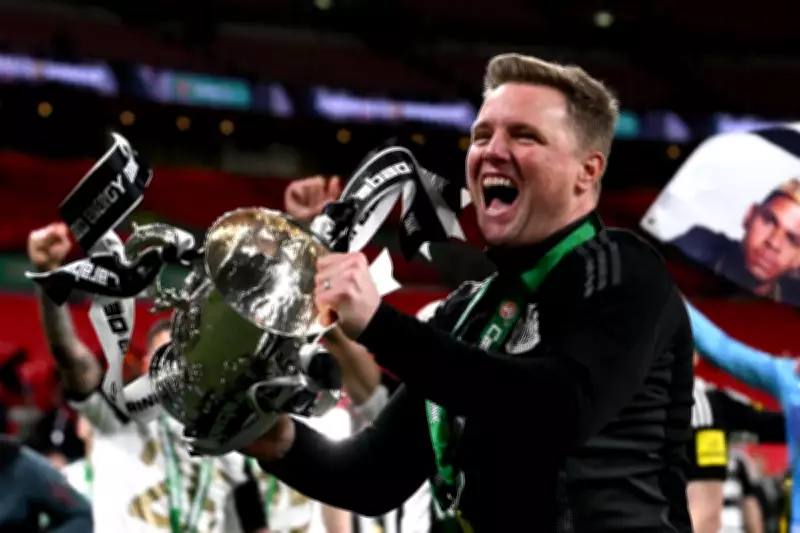
In his latest football column, Adam Clery delves into the emotional turmoil of supporting Newcastle United, describing it as a toxic relationship that leaves him questioning the future of manager Eddie Howe. Published on Friday 30 January 2026, this excerpt from his newsletter captures the essence of a fan caught between unwavering loyalty and the harsh realities of on-pitch performance.
The Contradictory Heart of a Newcastle Supporter
Clery openly admits to holding two entirely contradictory opinions about Eddie Howe. On one hand, he expresses a deep, almost eternal devotion to the manager, envisioning a scenario where Howe remains in charge for decades, even in a metaphorical brain-in-a-jar setup. The joy and improbable successes under Howe's tenure have built an unshakeable credit of goodwill, making Clery willing to stick by him through thick and thin, including potential relegation battles.
Yet, simultaneously, Clery cannot ignore the growing sense that Howe's time at Newcastle might be drawing to a close. He acknowledges that if he were a season-ticket holder or part of the club's financial backers, he would likely advocate for a managerial change this summer. The season has been marked by recurring frustrations, with many issues seemingly stemming from tactical decisions rather than mere bad luck.
Newcastle's Paradoxical Season: Riches Without Results
The column highlights the paradoxical nature of Newcastle United this season. Despite being one of the richest clubs in the world, they struggle to attract top transfer targets. They can match European champions like PSG at home but falter against the Premier League's bottom teams away. Statistically, they lead the league in presses but have scored only one goal from these efforts, placing them joint-bottom in that metric.
Clery references a conversation with Sam Dalling, who suggests that while a new manager might not be better than Howe, being different could be crucial. This idea resonates because it addresses the predictability of Newcastle's current tactics, which opponents have learned to exploit.
Tactical Inflexibility: A Recurring Weakness
Using examples from matches against Brighton and Barcelona, Clery illustrates how Newcastle's defensive shape, a rigid 4-5-1 off the ball, has become a liability. He points to a goal conceded against Brighton in October, where four players were left unmarked between the lines, allowing easy penetration. This pattern repeats in games, showing a lack of adaptability that teams like Aston Villa have capitalised on.
The analysis suggests that while there's no guarantee a new manager would implement a more effective strategy, any change would at least disrupt the predictability that Premier League sides currently plan for with ease.
A Plea for Change Amidst Unwavering Loyalty
Despite the tactical criticisms, Clery's emotional attachment shines through. He deeply wants Howe to succeed and believes the manager has the potential to turn things around. However, he draws a parallel to toxic relationships, where friends might intervene with tough love, implying that change must come from within.
In closing, Clery makes a heartfelt plea to Eddie Howe, urging him to evolve for the sake of the fans and the club's future. The column serves as a poignant reflection on the complexities of football fandom, where logic and emotion often collide.