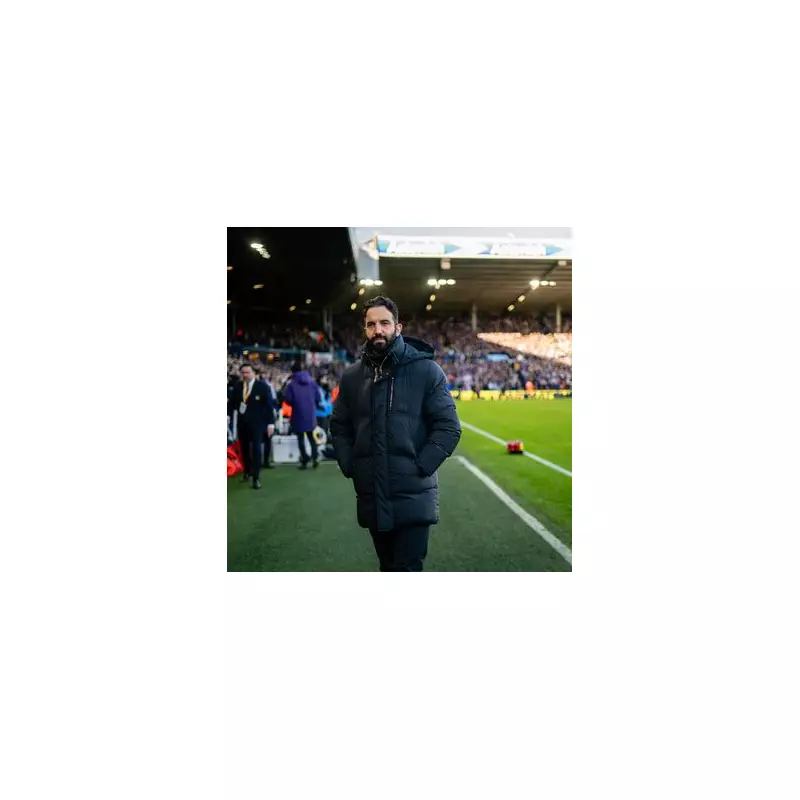
Ruben Amorim arrived at Manchester United in November 2024 with a reputation for unwavering tactical conviction. For over a year, his mantra has been as predictable as it is rigid: United will play a 3-4-2-1 formation. However, a stark financial reality and a mounting injury crisis are now compelling the Portuguese manager to consider a fundamental shift in philosophy.
The Rigid Philosophy Meets a Harsh Reality
Since taking charge at Old Trafford, Amorim has deployed his favoured three-at-the-back system in all 63 of his matches in the dugout. The approach, which brought him significant success at Sporting Lisbon, was a cornerstone of his appointment. Yet, a telling admission on Christmas Eve 2025 signalled a potential turning point.
"We can play a different way to take more quality from these players," Amorim told reporters. "I have the feeling that if we have to play a perfect 3-4-3 we need to spend a lot of money and need time. I’m starting to understand that is not going to happen so maybe I have to adapt." This comment followed a clear message from the club's owners that significant funds would not be made available in the January transfer window.
Injuries and AFCON Force Pragmatic Shifts
Amorim's squad has been decimated by a combination of injuries and the Africa Cup of Nations, depriving him of key players including Bruno Fernandes, Mason Mount, Kobbie Mainoo, and Bryan Mbeumo. This scarcity has forced moments of pragmatism. In a 1-0 win over Newcastle, United finished the match with a makeshift back four featuring Lenny Yoro, Ayden Heaven, Tyler Fredricson, and Tyrell Malacia.
However, consistency has been elusive. Days later, in a 1-1 home draw with bottom-side Wolves, Amorim reverted to his trusted 3-4-2-1—a move pundit Gary Neville labelled 'backwards'. The most recent test came in the fierce rivalry clash at Elland Road against Leeds United on Sunday.
The Leeds Test and a Glimmer of Adaptation
For the trip to Leeds, Amorim's initial team selection raised eyebrows. He named a starting line-up containing six defenders and two holding midfielders, with Patrick Dorgu surprisingly deployed as a No.10 and striker Joshua Zirkzee on the bench. The first half was a dour, safety-first affair for the visitors.
The game turned only when Zirkzee was introduced in the 63rd minute for Yoro. The Dutch forward's impact was immediate, providing a delightful through ball for Matheus Cunha to score the equaliser in a 1-1 draw. The substitution and subsequent change in shape demonstrated the latent potential in a more flexible approach, directly challenging Amorim's default system.
The evidence is mounting. While Amorim's commitment to his philosophy is well-documented, the constraints of a thin squad and a restricted budget are presenting an unavoidable ultimatum. The manager's own words suggest he is beginning to acknowledge that his future success at Manchester United may depend less on perfecting a single, imported system and more on his ability to adapt his tactics to the players at his disposal. The penny, it seems, has finally dropped.