Australian Open 2026 Creates Unprecedented Tennis History
The 2026 Australian Open has already etched its name into the annals of tennis history, achieving a remarkable feat not witnessed since the dawn of the Open era in 1968. For the very first time at a grand slam tournament, the top six seeds in both the men's and women's singles draws have successfully navigated their way into the quarter-final stage. This extraordinary occurrence has set the scene for two blockbuster last-eight line-ups, promising a thrilling climax to the year's first major.
A Stark Contrast to Recent Grand Slam Turbulence
The journey to this historic point has been characterised by a notable lack of early-round drama and a surprising dearth of major upsets. An abundance of straight-sets victories for the sport's elite has ensured a smooth passage for the favourites, consolidating their positions and minimising early exits. This stands in stark contrast to the volatility often associated with modern grand slams, particularly on the men's side where recent tournaments have seen top seeds falter unexpectedly.
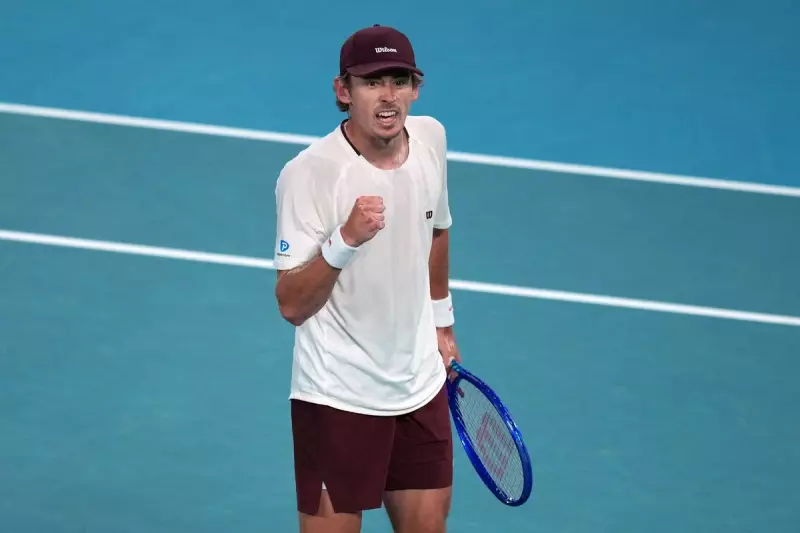
The quarter-final match-ups are now confirmed, featuring the cream of the crop. In the men's draw, world number one Carlos Alcaraz faces the in-form Alex de Minaur, while the legendary Novak Djokovic takes on Lorenzo Musetti. The other clashes see Alexander Zverev against young American Learner Tien, and Jannik Sinner pitted against Ben Shelton. The women's tournament is equally stacked, with top seed Aryna Sabalenka facing Iva Jovic, Coco Gauff meeting Elina Svitolina, Amanda Anisimova battling Jessica Pegula, and Iga Swiatek confronting Elena Rybakina.
Analysing the Women's Draw: Consistency Reigns Supreme
On the women's side, this collective success continues a defining theme from the previous season, which saw four different major champions crowned. The current top echelon, including Swiatek, Sabalenka, Gauff, and Rybakina, has demonstrated remarkable consistency and resilience. While the women's game is historically more prone to surprises due to the best-of-three sets format, the established stars have largely neutralised potential threats. Players like Naomi Osaka, who withdrew injured, or others who reached the fourth round, such as Victoria Mboko, ultimately found opponents like Sabalenka and Gauff elevating their games at the crucial moment.
Jessica Pegula's performance exemplifies this reliability. Her victory over defending champion Madison Keys, who lacked match sharpness, solidified Pegula's reputation as one of the tour's most dependable performers in the opening week of a major. The outliers in the seeded dominance are the talented young American Iva Jovic and the experienced Elina Svitolina, whose post-motherhood career has been marked by a notable ability to peak at the grand slam level.
The Men's Response: A Collective Mentality Shift
The men's achievement is perhaps the more significant story, representing a potential sea change in competitiveness. For years, the tour has been dominated by the duopoly of Carlos Alcaraz and Jannik Sinner, who had won eight consecutive grand slam titles heading into Melbourne. This dominance, with the exception of the ageless Novak Djokovic, had raised questions about the fighting spirit of the chasing pack. Memories of last year's Wimbledon, where half the top-16 seeds were eliminated by the second round, highlighted this fragility.
However, the 2026 Australian Open has witnessed a palpable reaction. Only one top-10 player, Felix Auger-Aliassime, fell before the second week, and that was due to a retirement through injury. Key figures have spoken of a renewed focus and determination. Both Alex de Minaur and Ben Shelton independently used the term 'locked in' to describe their mindset. Shelton, who set up a semi-final rematch with Sinner, emphasised his improved mental focus from the first point to the last.
Lorenzo Musetti pointed to a 'mentality switch' during his run to the 2025 US Open semi-finals, giving him the belief to be aggressive on hard courts. Even Novak Djokovic has been ruthlessly efficient, not dropping a set en route to the quarter-finals, conserving energy for the challenges posed by Alcaraz or Sinner that likely await in the latter stages. This collective response suggests the chasing pack is no longer willing to cede the initiative, setting the stage for an intensely competitive conclusion to a truly historic tournament.