The Australian Open organisers have implemented significant schedule adjustments as a severe heatwave is forecast to strike Melbourne at the start of the tournament's quarter-final stage. With temperatures predicted to soar to a scorching 46 degrees Celsius by late afternoon on Tuesday, tournament officials are preparing to enforce their comprehensive extreme heat protocol to protect players, spectators, and staff.
Heat Stress Scale Triggers Critical Interventions
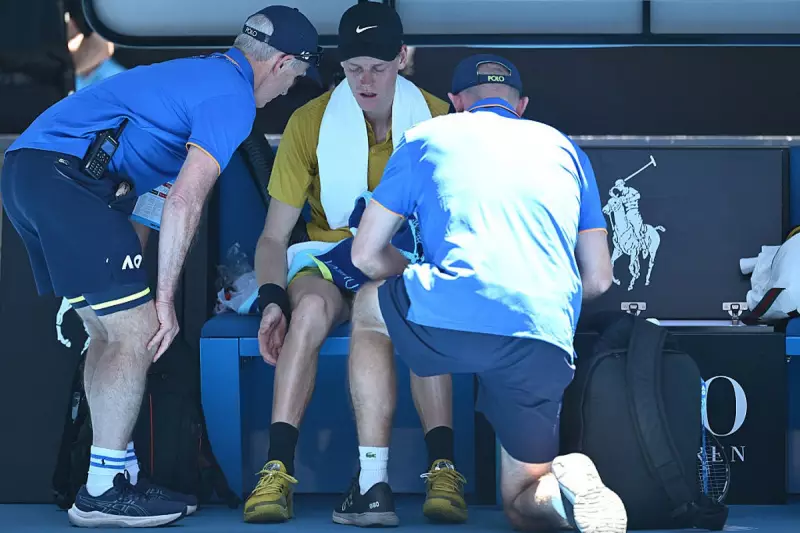
The tournament's heat management system faced a crucial test during Sunday's matches when defending champion Jannik Sinner experienced visible distress during his third-round encounter with American Eliot Spizzirri. As temperatures reached 40C, Sinner began suffering from severe cramping, shaking his legs and stretching his hands while appearing in significant difficulty after dropping a break to his opponent.
At that precise moment, the Australian Open's Heat Stress Scale reading ticked from 4.9 to 5.0, triggering an immediate suspension of play across all courts. On Rod Laver Arena, the roof was promptly closed, and players were escorted from the court. Sinner later acknowledged he got "lucky" with the timing of the intervention, having previously struggled in extreme heat conditions, including a retirement from Shanghai last year due to cramping against Tallon Griekspoor.
How the Heat Stress Scale Operates
Developed in collaboration with the University of Sydney and first implemented by Tennis Australia in 2019, the tournament's heat stress scale represents a sophisticated approach to athlete welfare. Readings are continuously taken throughout the day across Melbourne Park, with a 1-5 measure calculated using four critical factors:
- Air temperature
- Radiant heat
- Humidity levels
- Wind speed
According to tournament guidelines, when the heat stress scale reaches specific thresholds, the tournament referee can enforce protective measures:
- At 4.0: A mandatory 10-minute cooling break between the second and third sets in women's singles or between the third and fourth sets in men's singles
- At 5.0: Complete suspension of play when an even number of games in that set is reached, with roofs closing on covered courts for the remainder of matches
Quarter-Final Schedule Adjustments for Extreme Conditions
With Tuesday's forecast predicting peak temperatures of 46C by 5pm local time, tournament organisers have made substantial scheduling changes. Aryna Sabalenka's quarter-final match against American teenager Iva Jovic on Rod Laver Arena will commence at 11:30am local time, a full hour earlier than usual, with the roof highly likely to remain closed from the beginning.
Alexander Zverev's encounter with Learner Tien will follow, scheduled not before 1:30pm. Should this quarter-final extend significantly, it could overlap with the hottest period of the day as temperatures approach their peak. Later matches have been strategically positioned to avoid the most extreme conditions, with Coco Gauff facing Elina Svitolina from 8pm local time and home favourite Alex de Minaur taking on Carlos Alcaraz in the night session, when temperatures may still reach 30C by 10pm.
Comprehensive Welfare Measures Implemented
Beyond player protection, special conditions will be established for all tournament personnel. Ball kids will experience reduced court time with more frequent rotations and extended recovery periods between sessions. Play on outside courts will commence from 9am, while the wheelchair tournament start has been postponed to Wednesday to avoid the heatwave's peak intensity.
Australian player Alex de Minaur expressed readiness for the challenging conditions, stating: "I'm Aussie - I don't mind the heat. I have said it since day one. That's just what I have grown up with, and I'm ready for these types of conditions. I assume the roof will be closed. I don't know for certain, but if the heat rule is into effect, it's going to make it a little bit of an indoor match. Hey, it is what it is. I mean, once I rock up on Tuesday and I walk on court, you just deal with whatever's in front of you."
The Australian Open's comprehensive heat management protocol demonstrates how major sporting events must adapt to increasingly extreme weather conditions, balancing competitive integrity with participant safety during unprecedented temperature events.