Boston Mayor Michelle Wu has found herself at the centre of a political firestorm after former US President Donald Trump launched a scathing attack on her leadership capabilities regarding security preparations for the upcoming 2026 FIFA World Cup.
Political Tensions Spill Into Sports Arena
The controversy erupted when Trump took to social media to question Mayor Wu's competence in handling the massive security operation required for the global football tournament. In his characteristic blunt style, the former president suggested that Boston's leadership might compromise the safety and success of World Cup events scheduled for the historic city.
Wu's Firm Response to Presidential Criticism
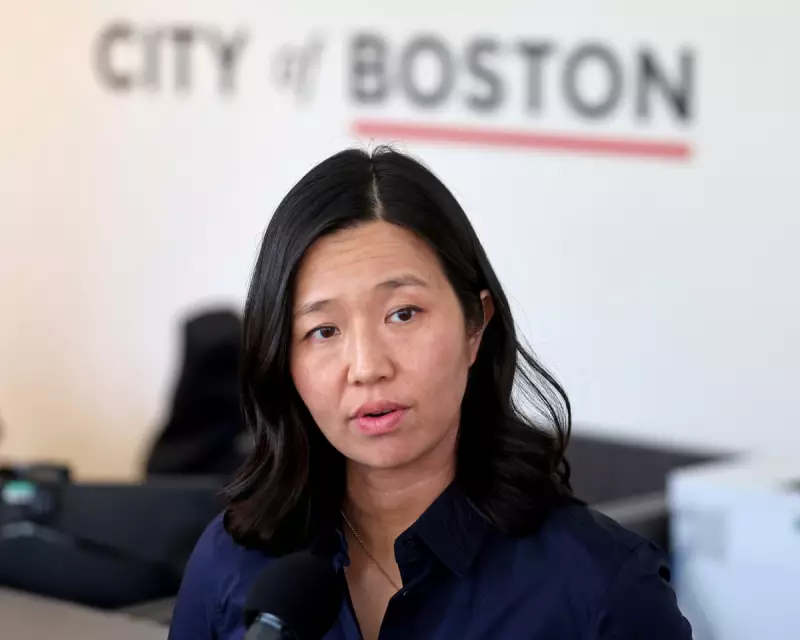
Mayor Wu, representing the Democratic party, didn't hesitate to fire back at Trump's accusations. She defended her administration's comprehensive security planning while criticising what she described as Trump's attempt to politicise an event that should unite rather than divide.

"We will not allow the World Cup to become another political football," Wu stated emphatically during a press conference. "Our focus remains on delivering a safe, secure, and memorable experience for fans from around the world."
World Cup Security: A Logistical Challenge
The 2026 World Cup, being co-hosted by the United States, Canada, and Mexico, represents one of the most complex security operations in sporting history. Boston's Gillette Stadium is scheduled to host several matches, requiring coordination between local, state, and federal security agencies.
- Multiple international teams and thousands of overseas fans expected
- Coordination required across numerous law enforcement agencies
- Potential for political demonstrations during high-profile matches
- Need to balance security with maintaining festive atmosphere
Broader Implications for Major Sporting Events
This very public clash raises important questions about the intersection of politics and international sports. As World Cup 2026 approaches, other host cities may face similar political challenges, particularly in the increasingly polarised American political landscape.
The exchange between Trump and Wu highlights how major sporting events have become arenas for political point-scoring, potentially overshadowing the spirit of international cooperation and celebration that such tournaments are meant to embody.
With the tournament still nearly two years away, this confrontation suggests that the road to World Cup 2026 may be as much about political battles as it is about footballing excellence.