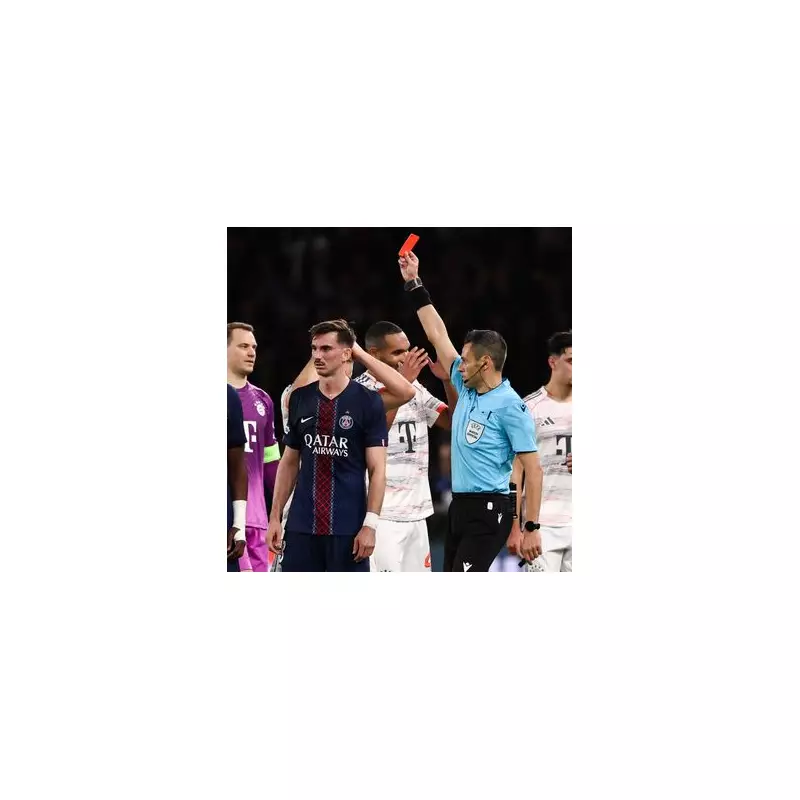
Ahead of the final matches of the Champions League's opening round concluding this Wednesday, attention turns not only to the drama on the pitch but also to the disciplinary tightrope several star players are walking. Mirror Football provides a comprehensive guide to the tournament's often complex suspension regulations, detailing when yellow cards expire and the significant risks for key figures from Real Madrid, English clubs, and other European giants.
The Core Suspension Rule: Three Cards and Beyond
The fundamental regulation governing suspensions in the Champions League is known as the Three-Card Rule. This stipulates that a player will receive an automatic one-match ban after accumulating three yellow cards, provided none of those cautions resulted in a direct red card. This rule is active throughout the entire league phase and continues seamlessly into the knockout rounds, remaining in force until the completion of the quarter-final stage.
Subsequent suspensions then follow a strict pattern. Once a player has reached the initial three-card threshold and served their ban, they enter a new phase of disciplinary scrutiny. From that point onward, a suspension is triggered for every subsequent odd-numbered yellow card received. This means a player would face another one-match ban upon receiving their fifth caution, and again upon their seventh, and so on. This system is designed by UEFA to deter persistent tactical fouling and repeat offences by ensuring there is a cumulative individual penalty beyond the initial suspension.
The Knockout Stage Carryover and Critical Reset
A crucial aspect for players and managers to understand is the carryover of disciplinary records. All single yellow cards accrued during the league phase do not vanish when the group stage ends; they are carried forward into the knockout play-offs, the round of 16, and the quarter-finals. This continuity means that a player entering today's pivotal matches with two existing bookings to their name will miss their team's next European fixture immediately if they receive another caution.
The landscape changes dramatically after the quarter-finals. UEFA implements a significant "amnesty" or reset upon the completion of the quarter-final stage. All yellow cards expire at this point and are not carried forward to the semi-finals. This rule is specifically designed to ensure that no player misses the showpiece Champions League final purely due to an accumulation of yellow cards, preserving the spectacle of the biggest match in European club football.
However, there is a vital exception to this clean slate. If a player incurs a suspension during the second leg of a quarter-final tie, that ban must still be served in the first leg of the semi-final. Yet, because the yellow card tally is wiped before the semi-finals begin, it becomes impossible for a player to be suspended for the final unless they are shown a direct red card during the semi-final matches themselves.
High-Profile Players on a Disciplinary Tightrope
The enforcement of these rules places several elite players in a precarious position as the group stage concludes. At Real Madrid, superstar Jude Bellingham is among those just one booking away from a one-match ban. Similarly, Inter Milan's defensive rock Alessandro Bastoni and Paris Saint-Germain's full-back Nuno Mendes also sit on two yellow cards. If any of these key figures receive a caution in their final league match, they will be forced to sit out the first leg of their team's next knockout fixture, a potentially significant blow to tactical plans.
English Clubs Facing Selection Headaches
The concern extends prominently to the Premier League's representatives. Arsenal, Liverpool, and Tottenham Hotspur all have players currently sitting on two yellow cards, putting them at immediate risk. For Arsenal, midfielder Christian Norgaard is in the danger zone. Liverpool's Curtis Jones and Tottenham's forward Randal Jolo Muani are also one mistimed tackle away from a suspension.
Losing even one of these options for the start of the knockout stage would represent a considerable setback for their respective European campaigns. As the competition intensifies, squad depth and availability of key players become absolutely critical, making disciplinary management a top priority for managers like Mikel Arteta, Jurgen Klopp, and Ange Postecoglou.
Other Continental Stars in Danger
The disciplinary spotlight also shines on other major clubs across the continent. Barcelona has two players, Fermin Lopez and Gerard Martin, who must navigate their final group match without entering the referee's book. Perhaps most notably, Inter Milan's captain and talisman, Lautaro Martínez, is also on two yellow cards. This urges the Argentine striker to play with extreme caution against Borussia Dortmund to ensure his vital availability for the next round of the competition.
As Wednesday's matches unfold, the battle for progression will be paralleled by an individual battle for discipline, with suspension rules adding a compelling strategic layer to the climax of the Champions League group stage.