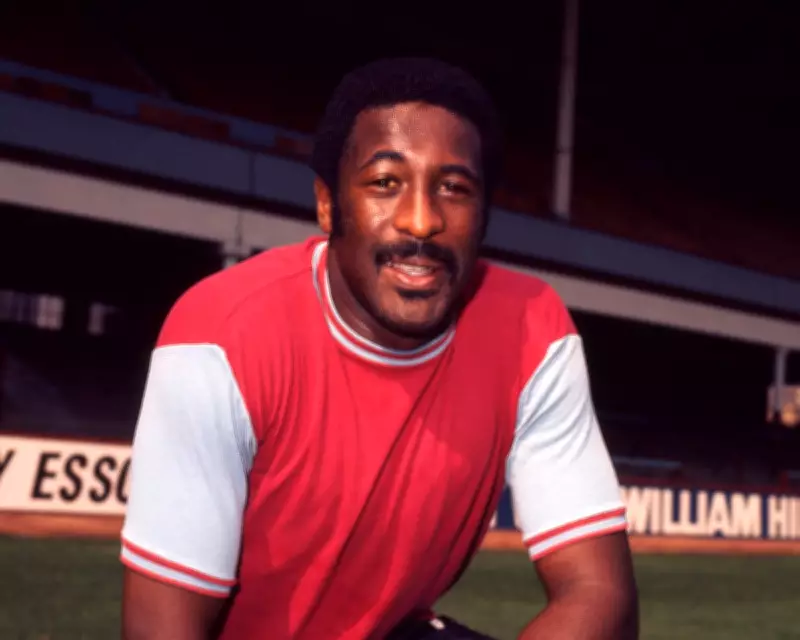
Transforming the Beautiful Game: The Clyde Best Story Review
A new documentary, Transforming the Beautiful Game: The Clyde Best Story, offers a powerful and uplifting tribute to the barnstorming West Ham striker from the early 1970s. This film not only celebrates Best's career but also delves into the wider implications of racism and empowerment in football, proving that in the streaming era, there are still untold stories with profound significance.
Pioneering Pathfinder in English Football
Clyde Best's status as one of the first black players in English elite football is reasonably well-known, yet this film aims to ensure it receives the recognition it deserves. Best's journey began at age 17 when he traveled from Bermuda to London for a trial session, which led to him being signed by Ron Greenwood, the future England manager. While he was quickly accepted by his West Ham teammates, Best faced virulent racism elsewhere, particularly in the post-imperial 1970s era influenced by figures like Enoch Powell. The film soberly notes that when fictional character Alf Garnett hurled abuse from the terraces, it was essentially directed at players like Best.
Stellar Lineup and Historical Context
The documentary features a stellar lineup of talking heads who acknowledge Best's impact, including West Ham contemporaries such as Geoff Hurst and Harry Redknapp, as well as successors like Viv Anderson, John Barnes, Les Ferdinand, Shaka Hislop, and Garth Crooks. It also provides a potted history of black players before Best, revealing that Jack Leslie, a prolific scorer for Plymouth Argyle in the 1920s and 30s, later cleaned Best's boots as a West Ham kitman. Leslie was allegedly denied a chance to be England's first black full international in 1925 due to his ethnicity.

In April 1972, West Ham made history by fielding three black players—Best, Clive Charles, and Ade Coker—in a match against Tottenham, a landmark not repeated until West Brom's "Three Degrees" in 1978. However, Best's time at West Ham ended in 1976 when he moved to the North American Soccer League (NASL) with Tampa, missing out on the club's 1975 FA Cup victory. The film suggests that while race may have played a part in his being dropped, football's ruthless nature makes this assertion somewhat uncertain.
Shift to the US and Broader Themes
Upon moving to the US, Best encountered a different culture, free from the monkey chants and National Front presence he faced in England. Yet, the film recounts a frightening incident where Ade Coker got lost in south Boston in 1975 and had to hide from a menacing mob. As the focus shifts to the NASL, the documentary becomes a detail-light encomium for the league's attempt to establish soccer in the US, which ultimately proved futile. This shift highlights the film's uncertain aim, caught between appealing to British football nostalgists, marketing the game to a US audience, and conducting a fervent disquisition on racism in football.
The presence of TV actor Tony D Head as the main presenter, who struggles with names like Mike Trebilcock and Brendan Batson, adds to this sense of uneven direction. Despite this, Best emerges with considerable dignity, especially in a final montage showcasing his special appearances and honorary degrees in his elder-statesman role. He reflects on his father's advice: "Clyde, when you go out there and play, you're not playing for yourself, you're playing for the people coming after you."
Conclusion and Screening Details
Transforming the Beautiful Game: The Clyde Best Story is a fitting tribute that honors a trailblazer while addressing critical issues of race and empowerment. It serves as a reminder of the importance of blazing trails for future generations. The film will be screened at Sadler's Wells East from 25 March, offering audiences a chance to engage with this significant chapter in football history.