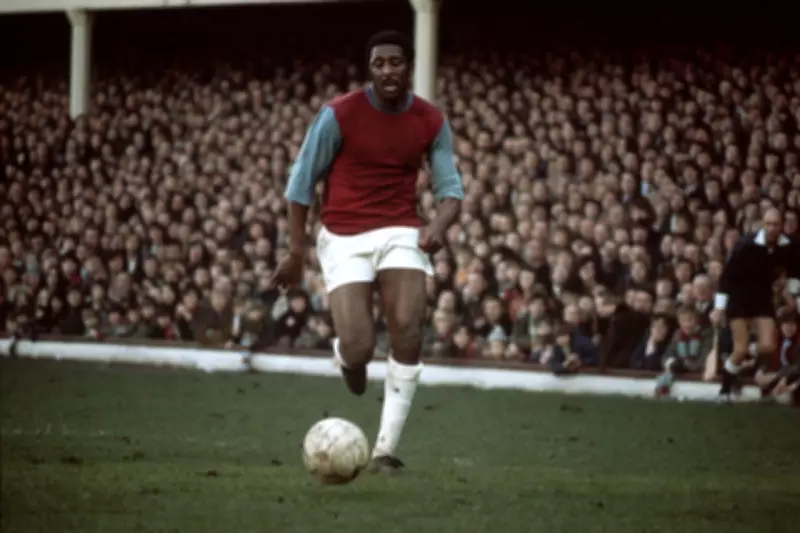
Clyde Best, widely regarded as football's first Black superstar, has opened up about the horrific racial abuse he endured during his playing career in the 1960s and 70s. In a candid interview, the former West Ham striker suggests that modern-day racism, particularly through social media, is even tougher for current players to handle than the overt discrimination he faced.
A Trailblazer's Harrowing Experiences
Best moved from Bermuda as a teenager to join West Ham in 1968, quickly becoming a pioneering figure in English football. However, his journey was marred by appalling abuse from the stands. He recalls one chilling incident where he received a threat via mail, warning that someone would attack him with acid the next time he ran out from the tunnel at Upton Park.
"I had a letter sent to me by mail, saying someone's going to throw acid in my face," Best told the Press Association from his home in Bermuda. "I take my hat off to the players, because they made two lines as we ran out of the tunnel, and put me in the middle. I'll always remember that incident. But I had a job to do and I wasn't going to let it stop me."
Standing Strong Against Adversity
Despite the constant barrage of racist chants and threats, Best demonstrated remarkable resilience. He vividly remembers a match at Everton where monkey chants were directed at him. In response, he instructed his teammate Frank Lampard to pass him the ball, then skillfully dribbled past defender Terry Darracott and scored, earning applause from the crowd thereafter.
"It was worth doing and letting them know that, 'hey, I can play as well'," Best said. "They applauded every time I got the ball after that." This defiance helped him score 58 goals in 213 appearances for West Ham, but he acknowledges the psychological toll of such experiences.
The Evolution of Racism in Football
While Best was able to confront racists directly on the pitch, he believes today's players face a more insidious challenge. He points to the abuse aimed at England players Marcus Rashford, Jadon Sancho, and Bukayo Saka after they missed penalties in the Euro 2020 final as a prime example.
"With social media it's a lot easier to get at people like the boys who missed those penalties," Best explained. "That sort of stuff, you thought would have been out of the way. That's what makes it tougher for players today." He emphasises that modern athletes must develop thick skins to pursue their dreams amidst online vitriol.
Documentary Highlights Legacy and Lessons
A new documentary, Transforming the Beautiful Game: The Clyde Best Story, will chart his groundbreaking career and the racism he overcame. Featuring contributions from football legends like Harry Redknapp, Les Ferdinand, Viv Anderson, and Ian Wright, the film aims to educate and inspire.
It is set to be shown at the Sadler's Wells East Theatre in London from Wednesday 25 March, offering a poignant look at Best's impact on the sport. Now 74, Best's reflections serve as a powerful reminder of football's ongoing battle against discrimination and the need for continued progress.