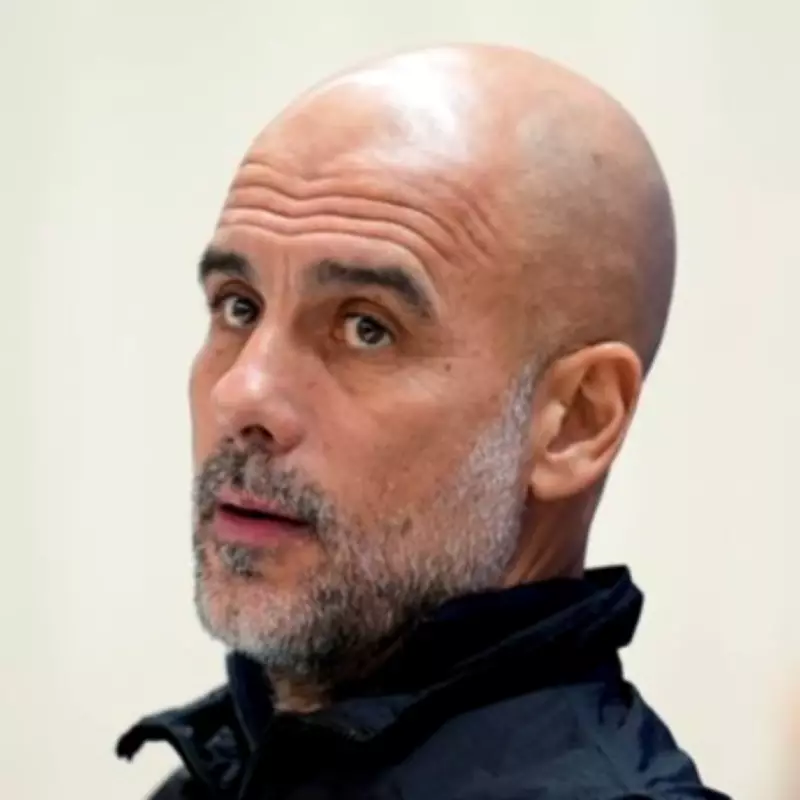
Manchester City manager Pep Guardiola has once again used his platform to speak out on pressing global political issues, delivering a powerful and emotional address during his latest press conference. The esteemed football figure addressed multiple international conflicts, including the situation in Palestine, recent fatal shootings involving US Immigration and Customs Enforcement (ICE) officers, and the ongoing crisis in Sudan.
Guardiola's Emotional Response to Global Violence
Speaking ahead of Manchester City's upcoming Premier League fixture against Newcastle United, Guardiola expressed profound distress about violence affecting civilians worldwide. The City manager referenced specific incidents that have captured international attention, including the fatal shootings of two American citizens during protests involving ICE officers.
Addressing Controversial ICE Shootings
Guardiola specifically mentioned the cases of Renee Good and Alex Pretti, both of whom were shot by ICE officials in separate incidents. Good sustained three gunshot wounds to her left forearm, breast, and head while in her vehicle on January 7th, while Pretti, an intensive care nurse, was shot multiple times and killed. The Manchester City manager challenged his audience to imagine similar violence occurring against NHS staff members in Britain, highlighting what he perceives as unjustifiable use of force.

"Look what happened in the United States of America," Guardiola stated emphatically. "Renee Good and Alex Pretti have been killed - one of them a nurse. Imagine [someone from] the NHS, five six people around him, go on the grass and 10 shots. Tell me how you can defend that?"
Broader Conflict Commentary
Beyond the American context, Guardiola expanded his commentary to include multiple international conflicts that have dominated global headlines. He referenced the ongoing violence between Israel and Palestine, Russia's invasion of Ukraine, and the devastating conflict in Sudan. The City manager expressed particular anguish about what he described as genocide in Palestine and widespread suffering across conflict zones.
Guardiola articulated his personal philosophy regarding speaking out on such matters: "When I see the images, I am sorry - it hurts. It hurts me, that is why in every position I can help speaking up to be a better society, I will try and will be there. All the time."
Potential Political Repercussions
The manager's comments about the United States may prove particularly controversial given the political context. Former President Donald Trump, whose administration has faced criticism for ICE's actions, was recently awarded the inaugural FIFA Peace Prize by the organization's president Gianni Infantino ahead of this summer's World Cup in America. Guardiola's remarks could potentially create diplomatic tensions given Manchester City's ownership connections to the United Arab Emirates, whose representatives have engaged with Trump's initiatives.
Complex Club Context
Guardiola's statements occur within a complex backdrop for Manchester City Football Club. Chairman Khaldoon Al Mubarak recently sat alongside Donald Trump as the UAE signed up to the president's Board of Peace initiative. The UAE's vice-president is City owner Sheikh Mansour, creating potential conflicts between the manager's public statements and the club's ownership affiliations.
Furthermore, protests have occurred outside the Etihad Stadium this season, with groups accusing the UAE of providing substantial financial and military support to one side of the Sudanese conflict - allegations that have been firmly denied. The UAE has since committed $20 million in aid through the UN World Food Programme.
Fanbase Considerations
The manager's commentary also intersects with Manchester City's diverse fanbase, which includes a significant Jewish community. The Jewish Representative Council of Greater Manchester previously wrote to chairman Al Mubarak expressing concern that Guardiola had not condemned a synagogue attack in Prestwich, highlighting the delicate balance the manager must navigate when addressing politically charged issues.

Philosophical Underpinnings
Throughout his address, Guardiola emphasized universal human empathy as his guiding principle rather than political alignment. He rejected partisan frameworks, insisting that his responses stem from basic human compassion rather than ideological positioning.
"It's our problems as human beings," he reflected. "There is somebody who sees the images from all around the world who is not affected? Here it's not a question about right or wrong. Maybe a politician, left wing, right wing, of course, everyone with ideas can do with that, but there is someone here that is not affected every single day?"
The City manager concluded with a powerful statement of principle: "I have a lot of friends from many, many countries, a lot of friends, but when you have an idea and you need to defend it and you have to kill thousands of people [to do that], I'm sorry, I will stand up, always I will be there."
Guardiola's willingness to address such politically sensitive topics continues to distinguish him within the world of professional football management, positioning him as one of the sport's most vocal figures on global humanitarian issues.