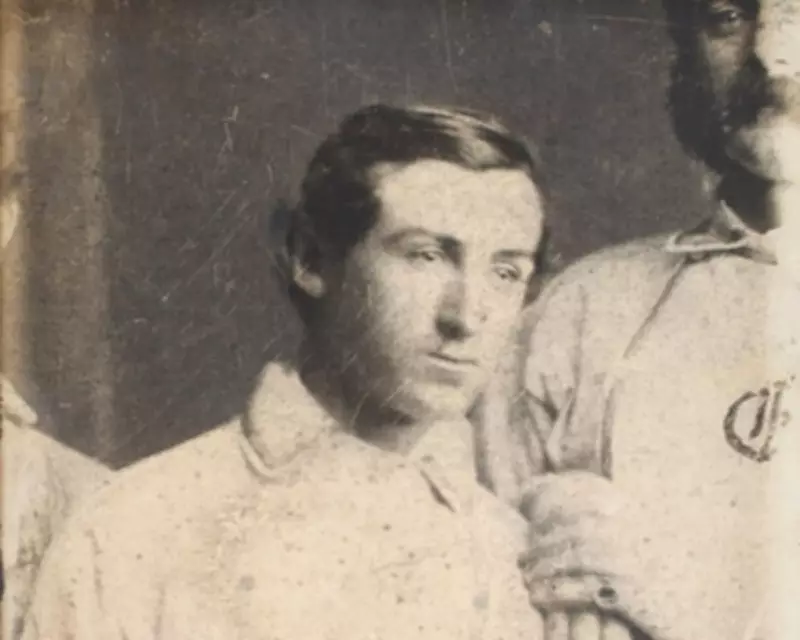
The Mysterious Fate of James Creighton: Baseball's Forgotten Pioneer
In the annals of baseball history, few figures loom as large yet remain as obscure as James Creighton, a pitcher whose brief but brilliant career in the mid-19th century has sparked enduring debates and mysteries. A new book, Death in the Strike Zone: The Mystery of America’s First Baseball Hero by historian Thomas Gilbert, delves into Creighton's legacy, arguing that he not only invented the curveball but also deserves a place in the Hall of Fame, from which he has been conspicuously absent.
A Star Cut Short: Creighton's Rise and Tragic End
By the time of his death at just 21 years old in 1862, James Creighton had already cemented his status as a baseball luminary. Starring for the Brooklyn Excelsiors, one of America's top teams during the Civil War era, he compiled an impressive ledger of accomplishments that made his grave a shrine for fans. However, clouds of uncertainty soon gathered over the circumstances of his demise and the true extent of his achievements, casting a shadow on his posthumous recognition.
Gilbert's research paints a vivid picture of Creighton's impact, noting that a century ago, his influence was undeniable. Albert Spalding, in his 1911 book on baseball, hailed Creighton as "the greatest, fastest pitcher ever." Yet, despite such accolades, Creighton has been kept out of the Hall of Fame, a oversight Gilbert seeks to rectify through meticulous detective work.

Inventing the Curveball: A Groundbreaking Claim
One of the book's most compelling arguments centers on Creighton's role in developing the curveball. Traditionally, credit for this milestone has gone to William Arthur "Candy" Cummings, but Gilbert posits that Creighton threw the first curveball a decade earlier. By analyzing rare photographs and parsing contemporary newspaper accounts, Gilbert found evidence that Creighton's pitching style involved a curving motion that defied the underhand, softball-style norms of the time.
In mid-19th-century baseball, pitchers lobbed balls underhand from 45 feet away, with rules prohibiting whipping motions. Creighton, however, introduced unprecedented power and a technique that involved stopping forward momentum to break off a curve. Gilbert explains, "Creighton did not exactly find a loophole in the rules; more that he transcended the rules. The rules did not say you had to run up to a line." This innovation, Gilbert believes, allowed Creighton to throw a pitch similar to modern curveballs, breaking upward in a way that baffled hitters.
The Role of Catcher Joe Leggett and Training Innovations
Key to Creighton's development was his catcher, Joe Leggett, who played a pivotal role in nurturing his talent. In a groundbreaking move, Leggett encouraged Creighton to train with weights, a practice unheard of at the time. After Creighton's death, Leggett went on to mentor other curveball specialists like Cummings and Asa Brainard, further cementing his influence on the sport's evolution.
Gilbert's investigation also highlights how Creighton's power pitching transformed the game, leading to the development of the strike zone. By pounding nearly unhittable balls into the strike zone, Creighton forced umpires to start calling balls and strikes, a gradual shift that reshaped baseball's rules and strategies.
Controversies and Changing Perceptions
The legality of Creighton's curveball has been a point of contention. Initially, prominent figures like Henry Chadwick, chair of the Rules Committee, and Pete O'Brien, captain of the Brooklyn Atlantics, declared the pitch legal. However, a decade after Creighton's death, both reversed their stance, contributing to the ambiguity surrounding his legacy. Gilbert argues that these changing perceptions may have unfairly denied Creighton recognition for his pioneering efforts.

The Mystery of Creighton's Death
Creighton's untimely demise adds another layer of intrigue. While tall tales suggested he died hitting a home run, Gilbert dismisses these accounts, pointing instead to a pre-existing medical condition: an inguinal hernia. He posits that the powerful twisting motions required in baseball, particularly in Creighton's pitching style, exacerbated this condition, leading to gangrene and a painful death. Gilbert notes that the Excelsiors, who had several doctors on their roster, may have overworked Creighton despite knowing his health risks, though he stops short of assigning blame.
"You cannot escape the conclusion that the people running the team intentionally overworked him," Gilbert says, adding that the subsequent martyrdom and monument erected in Creighton's honor might have been partially inspired by guilt.
A Case for the Hall of Fame
Despite the mysteries and controversies, Gilbert makes a strong case for Creighton's inclusion in the Hall of Fame. He cites Alexander Cleland, an early advocate for a proper Hall of Fame, who acknowledged pioneers like Creighton in his writings. "Obviously, he should be in," Gilbert asserts, emphasizing Creighton's transformative impact on baseball as both a player and an innovator.
Through Death in the Strike Zone, Gilbert not only sheds light on a forgotten hero but also challenges baseball's historical narratives, urging a reevaluation of Creighton's place in the sport's pantheon. As debates over his curveball and Hall of Fame snub continue, Creighton's legacy remains a testament to the enduring mysteries of America's pastime.