The Final Duel: O'Neill and Lennon's Football Saga Reaches Its Climax
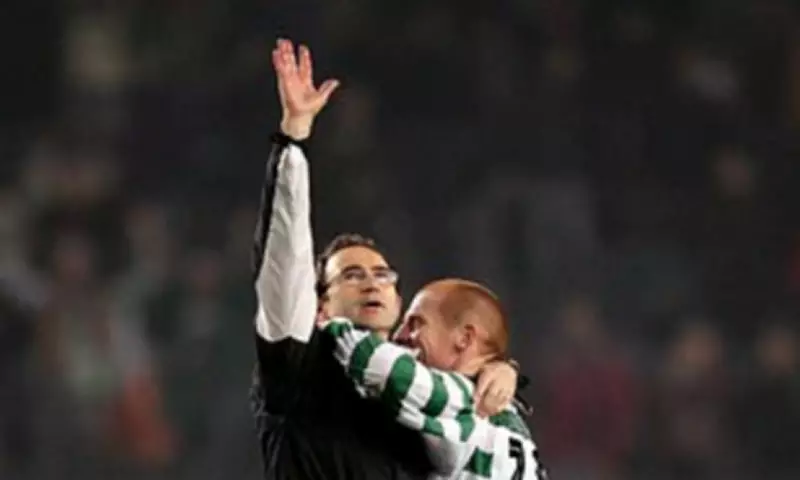
From humble beginnings in Grantham Town's dug-out back in 1987, Martin O'Neill has managed countless footballers throughout his illustrious career. Yet, no individual has been more intrinsically linked to his journey than Neil Lennon. Their professional relationship, which began nearly three decades ago, will reach a poignant conclusion next month when they face each other as rival managers in the Scottish Cup final. This match is likely to be O'Neill's last in charge, adding significant emotional weight to what feels like a pre-ordained confrontation.
A Partnership Forged at Leicester
Born fifty miles and nineteen years apart in Northern Ireland, O'Neill and Lennon first connected professionally in February 1996. O'Neill, then manager of Leicester City, signed the midfielder from Crewe Alexandra, convinced that Lennon could drive the club to the top flight and major honors. This decision proved transformative for both men's careers.
After a challenging start at Filbert Street, O'Neill ushered in Leicester's glory days. The Foxes achieved promotion via the play-offs, secured two League Cup victories, and consistently punched above their weight in league competitions. Throughout this period, Lennon's contribution was nothing short of monumental.

Mutual Respect and Professional Impact
Reflecting on their partnership, O'Neill emphasized Lennon's profound impact. "He's had a major impact for me down the years. Really, a major impact," O'Neill recalled. "His input and contribution at Leicester City alone was immense, absolutely immense."
O'Neill highlighted a pivotal moment when Lennon chose Leicester over Coventry City, who were in the Premier League at the time under Ron Atkinson. Lennon accepted less money to join O'Neill's project, providing a significant morale boost during a period when Leicester couldn't "win a game to save my life." In the play-off final against Crystal Palace, Lennon delivered an "incredible" performance that defied expectations about his physical capabilities.
"Considering you think, as he's a little stout fellow, he might not be able to run. But he could cover the distances and he was great," O'Neill noted. "Then we went up and he played a major part in us winning the trophies and staying in the top ten for four years."
From Leicester to Celtic: A Seamless Transition
O'Neill's admiration for Lennon extended beyond his playing abilities to include his winning mentality and deep understanding of the game. This made Lennon's transition to management seem inevitable once his playing days concluded.
When Lennon took over at Celtic following Tony Mowbray's dismissal, O'Neill served as a trusted sounding board. "Yes, we kept in touch," O'Neill revealed. "But if I was giving out any advice, it would have been 'just be you'. Be yourself, that's what I would have told him."
O'Neill emphasized the importance of authenticity in management, drawing from his own experience under Brian Clough at Nottingham Forest. "You don't copy people. You can learn from people, but you don't copy anyone. With Lennon, I don't even think I would have had to give him that advice."
Lennon's Managerial Achievements and Challenges
Lennon proved more than ready for management. During his first stint at Celtic, he secured three league titles and two Scottish Cups. He later guided Hibernian back to the Premiership and into European competition before returning to Celtic in 2019 following Brendan Rodgers' departure. There, he added two more league titles, two Scottish Cups, and a League Cup to his impressive trophy collection.
O'Neill finds it remarkable that Lennon's substantial achievements are often overshadowed by criticism directed at him for Celtic's challenging final season. "Look at his career. It's incredible," O'Neill stated. "He took a lot of criticism and I don't think it was really deserved. Celtic were trying to go for ten-in-a-row and there was Covid. From a distance, I felt Covid suited Rangers rather than Celtic at the time, but that's beside the point. When everything settles down, Lenny's record both as a player and as a manager is incredible."

Current Challenges and Future Prospects
Following successful spells with Omonia Nicosia, where he won the Cypriot Cup, and a brief, less successful tenure with Rapid Bucharest, Lennon returned to management with Championship side Dunfermline Athletic a year ago. Under his guidance, Dunfermline has become a promotion contender and Scottish Cup surprise package, defeating established sides like Hibernian and Aberdeen.
O'Neill expressed surprise that no higher-division club has pursued Lennon given his impressive credentials. "The short answer to that is yes," O'Neill said. "That's not to say he's not enjoying it at Dunfermline. I think he gets on really well with the chairman and the owner of the football club. And that says something for him."
The Scottish Cup Final: A Fitting Finale
Amid numerous compelling stories throughout Scottish football this season, the first and likely last managerial meeting between O'Neill and Lennon on May 23 stands out as particularly significant. O'Neill hopes to conclude his managerial career with a double victory, while Lennon believes his youthful Dunfermline side may also have a play-off final to anticipate.
Regardless of other outcomes, Lennon has an opportunity to join legendary Dunfermline managers Jock Stein and George Farm as a cup-winning boss. When asked about facing his former protégé, O'Neill maintained his competitive spirit. "I don't want him to win it, let me put it that way," O'Neill smiled. "I want to beat him. I don't care whether he's my brother. I want to win. Listen, if I don't allow my granddaughter to win at Ludo then I'm not going to let Neil Lennon win a cup final."
This final confrontation encapsulates a professional relationship that has spanned nearly three decades, from Leicester's rise to Celtic's dominance, now culminating in a Scottish Cup final that promises to be both emotionally charged and fiercely competitive.