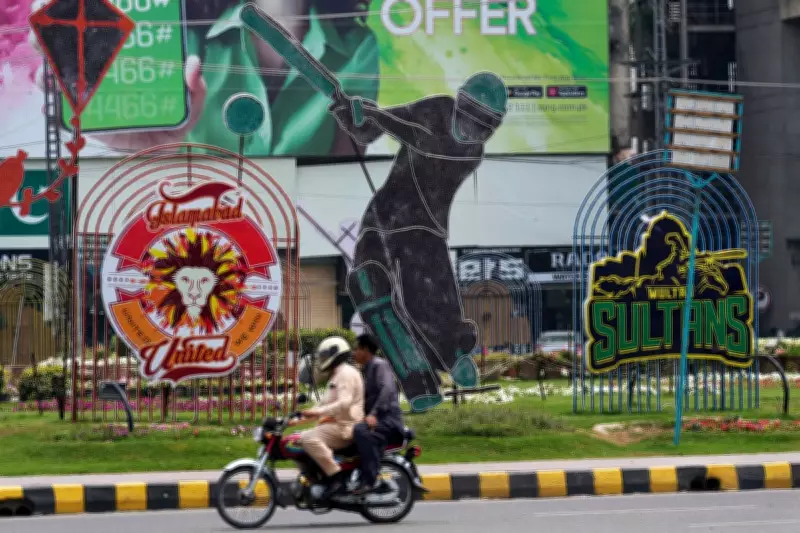
Pakistan has issued a direct appeal to cricket enthusiasts, urging them to watch the nation's premier tournament from home rather than travelling to matches. This unprecedented move comes as the South Asian country grapples with severe fuel shortages, exacerbated by the ongoing US-Israeli military conflict against Iran.
Pakistan Super League Venues Slashed
The Pakistan Super League, scheduled to run from 26 March to 3 May, has dramatically reduced its hosting venues from six to just two. All matches will now be staged exclusively in Lahore and Karachi. The Pakistan Cricket Board justified this decision by highlighting that an average of 30,000 spectators and support staff travelling daily for over a month would place an unsustainable strain on the country's already depleted energy resources.
Broader Emergency Measures Implemented
This sporting restriction forms part of a wider package of emergency measures enacted by the Pakistani government. Schools have been closed for a two-week period, while the price of high-octane fuel has been increased by approximately 60 per cent. This levy is projected to generate an additional 9 billion rupees per month in revenue. Finance Minister Muhammad Aurangzeb has indicated that the government is preparing further targeted steps in the coming weeks to manage the soaring cost of oil.

Strait of Hormuz Closure Cripples Supply
The root cause of the crisis lies in the Middle East, where the war has forced the closure of the Strait of Hormuz. Prior to the hostilities, this critical maritime chokepoint handled a quarter of all seaborne oil and a fifth of global liquefied natural gas shipments. Asia, which accounted for about 84 per cent of the crude oil and 83 per cent of the LNG passing through the strait in 2024, is bearing the brunt of the disruption.
Regional Impact Across South Asia
The consequences are reverberating across the subcontinent. In India, a sudden shortage of cooking gas is forcing restaurants to close their doors, with panic buying and long queues becoming commonplace outside distributors. Nearly 60 per cent of India's liquefied petroleum gas is imported, with roughly 90 per cent of that volume traditionally transiting through Hormuz. In response, the oil ministry has ordered refineries to maximise LPG production for household use, boosting domestic output by around 25 per cent.
In Bangladesh, the newly elected government has closed universities and placed the military in control of oil depots amid fears of widespread street protests. Sri Lanka, where petroleum constitutes a quarter of total imports, has introduced fuel rationing, scaled back public events, and shifted schools to a four-day week.
Economic Forecasts Paint Grim Picture
United Nations estimates reveal that oil prices have surged by around 45 per cent and gas by 55 per cent since late February, with fertiliser prices increasing by 35 per cent. Regional inflation could climb to 4.6 per cent in 2026, up from 3.5 per cent in 2025. The UN's Asia-Pacific development arm has warned of a triad of higher inflation, weaker exports, and rising debt risks, predicting that growth across the region's developing economies will slow to just 4 per cent this year.
Countries at Immediate Risk
Researchers at the International Food Policy Research Institute have identified Bangladesh, India, Pakistan, and Sri Lanka as among the nations most immediately vulnerable. In India, farmers are growing increasingly anxious about fertiliser availability ahead of the crucial June planting season.
A stark warning from the Council on Foreign Relations suggests that many Asian governments could exhaust their oil reserves within the next month if the Strait of Hormuz remains closed. This scenario would likely lead to factories shuttering or operating on reduced schedules, coupled with a collapse in tourism across the region, compounding an already dire economic situation.