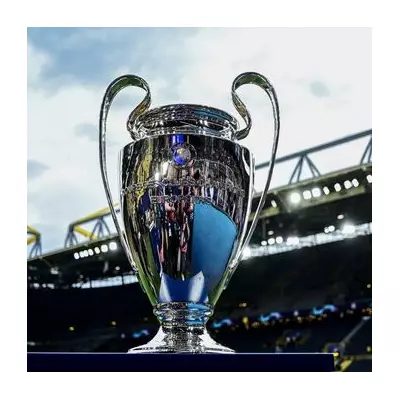
Premier League Sides Handed Warning After Champions League Dominance Talked Up
The Champions League knockout stage is already heavily populated by English clubs, with five Premier League outfits securing their places after a remarkably successful league phase. This achievement has ignited a significant debate about whether the Premier League is reasserting its dominance on the European stage.
Unprecedented Success in the League Phase
In the newly revamped tournament format, Arsenal made history by becoming the first team ever to record a perfect eight wins from eight matches, finishing as top seeds. They were closely followed by other Premier League giants, with Chelsea and Liverpool also delivering strong performances. Notably, Tottenham Hotspur, despite enduring considerable domestic struggles, continued to excel in Europe, securing their spot with a crucial victory over Frankfurt. Manchester City completed the quintet, securing the necessary win and benefiting from Benfica's result to leap into eighth position.
This collective success means that five of the six Premier League representatives have automatically qualified for the last sixteen, dodging the play-off round entirely. The sheer volume of English clubs in the knockout phase has led many players, managers, and pundits to proclaim the Premier League as the world's finest football division.
A Throwback to Past Dominance
The current scenario evokes memories of the late 2000s, a period when English teams were truly dominant in European competition. Between 2007 and 2009, Premier League clubs occupied nine of the twelve available semi-final spots, culminating in the all-English final of 2008 where Manchester United emerged victorious. The impressive numbers from this season's league phase suggest that English football could be poised to replicate such achievements, prompting a critical examination of whether the Premier League is once again heading to the forefront of continental football.
Expert Opinions and Cautions
Andy Dunn offers a stark warning against premature celebration. He argues that while the Premier League may appear dominant in the early, expanded stages of the competition, its recent record in the latter rounds tells a different story. Dunn points out that the reigning champions are a French team, and no Premier League side has featured in the last two finals. Furthermore, over the past two seasons, English clubs have provided only one of the eight semi-finalists. He attributes much of the early success to the Premier League's unrivalled financial muscle, which allows for deeper squads capable of navigating the league phase against less wealthy opponents, but questions whether this translates to superiority at the very elite level when facing continental powerhouses.
Daniel Orme questions the "best league in the world" narrative, noting that no English team has reached the Champions League final since 2023. While he acknowledges the impressiveness of five automatic qualifications, he insists the true test will come in the knockout rounds. Orme suggests that the Premier League's intense domestic schedule may grant English clubs a fitness advantage in the early stages, but wonders if this edge will persist as energy is sapped by relentless fixtures later in the competition.
Sam Meade remains unconvinced by the dominant narrative, highlighting that Spanish clubs have been more successful in actually winning the tournament over the past decade. He credits English teams for their league phase performances but advises against talking up the Premier League's supremacy until the business end of the competition in April or May. Meade notes that wealth undoubtedly plays a role on the pitch, but the real measure of quality for clubs like Arsenal, City, and Liverpool will be their performance in high-pressure knockout situations.
Jeremy Cross emphasises the Premier League's unique competitive and physical nature, which he believes hardens teams for European football. He points to the financial disparity, with six Premier League clubs in the top ten of the Deloitte Football Money League and half of the top thirty coming from the English top flight. This wealth, largely derived from enormous broadcast revenues, enables deeper squads. Cross uses Tottenham's contrasting domestic and European form as an example, suggesting that for some clubs, European competition provides a release from Premier League intensity, often pitting them against perceived inferior opposition.
The Verdict
The overwhelming presence of Premier League clubs in the Champions League knockout stage is undeniably impressive and has sparked justifiable pride. However, a chorus of expert voices urges caution. The consensus suggests that while financial power and domestic competitiveness provide a strong foundation for success in the expanded league phase, true dominance is measured by lifting the trophy. The coming knockout rounds will provide the ultimate answer as to whether this early English success is a sign of renewed continental supremacy or merely a strong start in a long campaign.