USWNT's Post-2026 Window: Hayes' Four-Point Plan for World Cup Qualifying
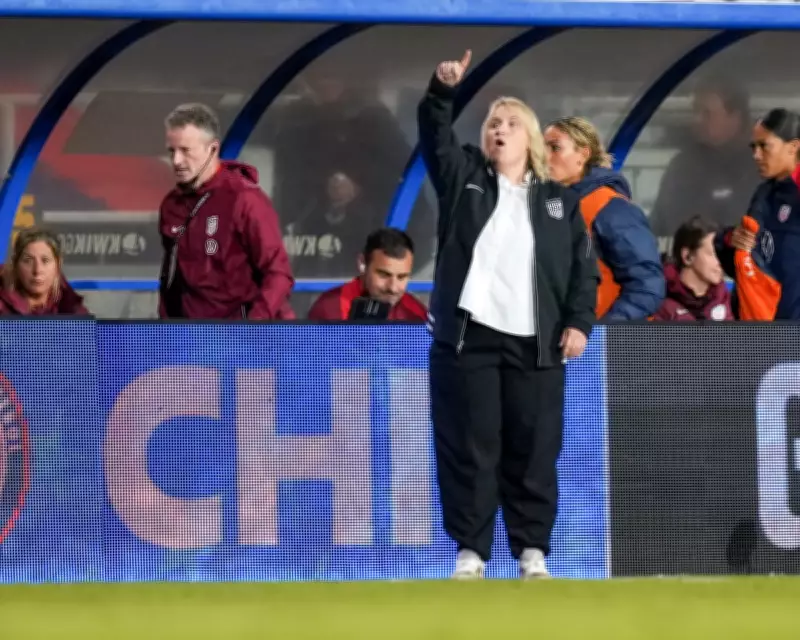
The first international window of 2026 has concluded for the US women's national team, yet it felt like an extension of a recurring theme under manager Emma Hayes. Once again, Hayes utilised this period to evaluate new talent from her extensive player pool, fielding experimental squads that set records for inexperience.
In a 6-0 victory over Paraguay, the starting lineup averaged just 9.6 caps, the lowest in 25 years, a record broken days later with a 5.2-cap average against Chile. This contrasts sharply with the Olympic squad's average of 51.4 caps, highlighting Hayes' focus on youth and depth as the team prepares for higher-stakes matches later this year.
With World Cup qualifying in November looming, Hayes must make decisive choices across the roster. Here is a four-point analysis to guide fans through the upcoming selections.
The Goalkeeper Conundrum: Finding a New Number One
Alyssa Naeher's retirement has left the USWNT without a clear successor in goal. Phallon Tullis-Joyce of Manchester United, with four caps, appears to be the frontrunner, having integrated well into the team's possession style and demonstrated strong shot-stopping abilities. Her performances at club level have only bolstered her case.
Other contenders include Mandy McGlynn, who started against Paraguay, Claudia Dickey, who kept a clean sheet versus Chile, and Jordan Silkowitz, yet to debut. Jane Campbell and Angelina Anderson have also been in recent camps, while Casey Murphy has not added to her caps since late 2024. With only 26 caps spread across six candidates since 2025, the chosen starter will need more game time to build defensive partnerships and confidence.
Prediction: Tullis-Joyce is likely to start the Concacaf W Championship, supported by McGlynn and Dickey.
Defensive Dynamics: Solid Foundations and Open Battles
Naomi Girma remains a cornerstone of the defence, praised for her composure and distribution, while Emily Fox has emerged as a world-class right-back. However, left-back is uncertain with Crystal Dunn and Jenna Nighswonger absent from recent squads. Izzy Rodriguez, Kate Wiesner, Lilly Reale, and Kerry Abello are vying for the spot, with Rodriguez impressing against Paraguay.
At centre-back, Tierna Davidson is recovering from injury, leaving Emily Sonnett, Jordyn Bugg, Emily Sams, Tara Rudd, and Eva Gaetano competing to partner Girma. Right-back backup is also competitive, with Avery Patterson and Gisele Thompson making impacts in the NWSL.
Prediction: Sonnett to start centrally alongside Girma, with Reale on the left.
Midfield Overhaul: Seeking Cohesion and Creativity
The midfield has been a point of inconsistency since the 2019 World Cup, with Rose Lavelle's health often a concern. Her transitional play is vital, complemented by Lily Yohannes's distribution and Sam Coffey's defensive reliability. Captain Lindsey Heaps, trusted by Hayes, typically plays as a number 10 but has faced spacing issues in major tournaments.
Alternatives include Claire Hutton, Hal Hershfelt, Olivia Moultrie, and Korbin Shrader, while Jaedyn Shaw and Croix Bethune offer dynamism in attacking roles. With potential squad limits for the World Cup, midfield selections could be particularly tough.
Prediction: Lavelle and Bethune to rotate at number 10, with Heaps and Coffey in deeper roles.
Forward Line Wealth: Depth and Decision-Making
The forward line is brimming with talent, led by Trinity Rodman, now the NWSL's highest-paid player and a captaincy candidate. Sophia Wilson and Mallory Swanson are expected to return after maternity leave, adding to the competition. Catarina Macario has re-established herself but faces rotation at Chelsea, while Alyssa Thompson has excelled at Angel City and Chelsea with her dribbling and shot creation.
Other rising stars include Emma Sears, Michelle Cooper, and Ally Sentnor, who have contributed goals and versatility. Hayes faces enviable choices in selecting her attacking trio.
Prediction: Rodman on the right, Wilson as striker, and Thompson on the left.
As the USWNT moves toward World Cup qualifying, Emma Hayes's experimental phase must give way to strategic decisions, with these four areas critical to shaping a competitive squad for the challenges ahead.