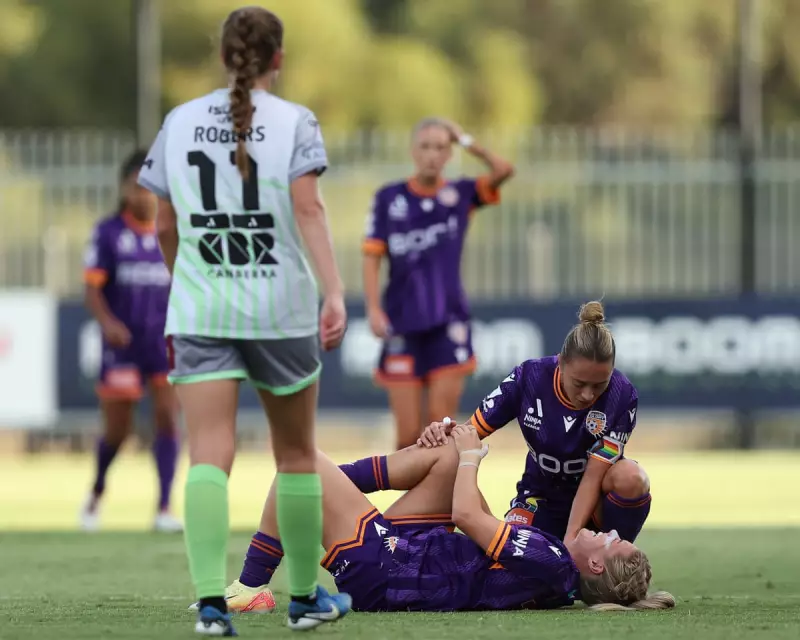
A worrying spate of serious knee injuries has struck Australia's top women's football competition, the A-League Women, exposing a significant gap in research and resources dedicated to player welfare.
A Sudden Pop and a Season Ended
Central Coast Mariners defender Cannon Clough described the moment her season abruptly ended. After jumping to defend a high ball, she felt a kick through her leg upon landing. Her foot twisted one way while her body went another, accompanied by a disturbing 'pop'. Initially hopeful it was a minor issue, the diagnosis was a brutal shock: a torn anterior cruciate ligament (ACL) and meniscus.
"It smacked me in the face," Clough said. "I've never faced an injury that keeps you out for as long as this one. Nothing has hit me that hard."

A League in the Dark on Injury Data
Clough is one of seven A-League Women players to suffer an ACL tear in the 2025-26 season. Alarmingly, four of those injuries occurred in just the past two weeks, joining Sabitra Bhandari, Grace Kuilamu, and Isabella Coco-Di-Sipio on the sidelines.
This crisis unfolds against a backdrop of concerning ignorance. The A-Leagues currently have no publicly available data tracking ACL injuries, nor any dedicated internal research exploring why they happen so frequently. This mirrors a global failure in sports science, where only an estimated 6% of research focuses on female athletes, despite women being two to six times more likely than men to tear their ACLs.
The Call for Full-Time Conditions and Care
Players and experts point to the league's conditions as a potential factor. The condensed holiday schedule, summer heat, increased travel, and crucially, the part-time structure of the league are seen as compounding risks. With most players on 32-week contracts, they must balance training and recovery with other work, lacking the dedicated support of full-time professionals.
For an injury requiring over 12 months of rehabilitation, this lack of structured, ongoing care is devastating. Teammate Taren King, who recently returned from her own ACL injury, highlighted the mental struggle. "The darkest days are when you feel you're on your own," King said. "Getting out of bed to go and do your rehab is tough because there's no one there making sure you do it."
This is why the playing cohort is united in calling for the league to become fully professional from next season. Full-time status would mean full-time medical and support staff, creating an environment where prevention and rehabilitation are prioritised.
"It's just making sure the engine, the athletes – the things that need to keep working – actually keep working," Clough argued. "Otherwise the whole league suffers."
Global initiatives like Fifpro's Project ACL are now leading the way, investigating environmental factors like facilities, staffing, and scheduling in England's Women's Super League. Until similar focus and investment reaches the A-League Women, players remain vulnerable, playing through a fog of unanswered questions about their own bodies and the risks they face.