Just over a month since Lando Norris clinched the championship in Abu Dhabi, the Formula One world is stirring back to life, but the landscape for 2026 is utterly transformed. The sport is braced for its most radical overhaul in 76 years, with new technical regulations, fresh teams, and for the iconic Ford Motor Company, a monumental return after a 22-year absence.
A Frosty Launch in Detroit for a New Era
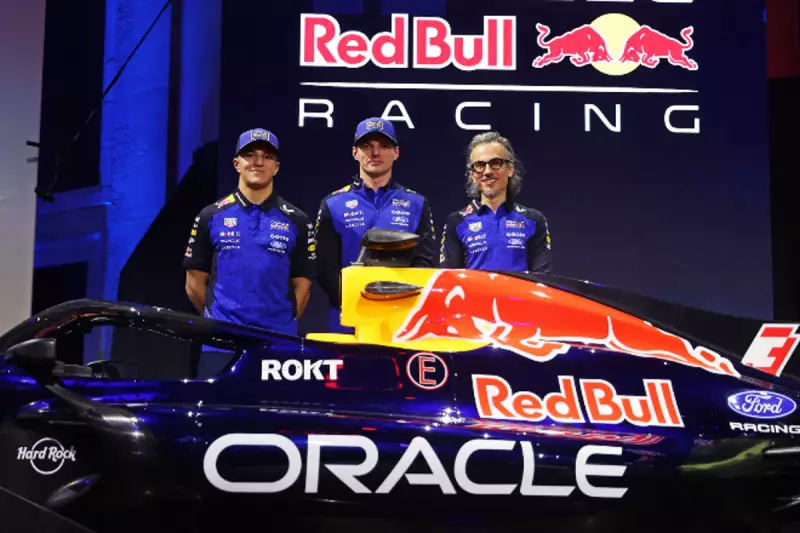
The 2026 season was ushered in not from the familiar surrounds of the UK's 'Motorsport Valley', but in the biting cold of Detroit, Michigan. At the historic Michigan Central Station, with temperatures plunging to -10°C, Red Bull Racing unveiled their new livery and formalised their pivotal partnership with American automotive giant Ford. This reunion marks a full-circle moment; Ford left F1 in 2004 when they sold the Jaguar team to Red Bull.
The event showcased the RB22, a car sporting a retro-inspired lighter blue livery that evoked Red Bull's early years in the sport. Max Verstappen, now entering his 11th consecutive season with the team, expressed his admiration for the bold design. "I love the new livery," said the Dutch star. "The whole look brings back a lot of great memories... I'm excited to drive a car with a completely different look." He will be partnered by French driver Isack Hadjar, his fourth teammate in just 15 months.

Scaling the Technical Peak
The 2026 campaign represents the single biggest challenge in Red Bull's history. Not only are they adapting to sweeping new chassis and engine rules—featuring smaller cars, increased electrical power, and the replacement of DRS with an 'active aero' system—but they are also producing their own power unit for the first time, in partnership with Ford. This follows previous engine partnerships with Cosworth, Ferrari, Renault, and Honda.
Leading this Herculean technical effort is Ben Hodgkinson, Red Bull Ford's powertrains technical director, who was instrumental in Mercedes' dominance at the start of the hybrid era in 2014. Over the past three years, his team has constructed three new factories and recruited 700 staff. "I don't think you belong in this industry if you don't believe you can do it," Hodgkinson told The Independent. "That is clearly the target."
He dismissed rumours that former employer Mercedes is the clear frontrunner, suggesting such talk often originates from the teams themselves. "My gran used to say an empty can rattles the loudest," he remarked, preferring to focus on the task ahead. The first true test of their progress will come at the private pre-season test in Barcelona, starting on 26 January.
The Stakes for Verstappen and Ford's Humble Ambition
The pressure is immense, and the stakes could not be higher for the team's star asset. While Verstappen is contracted until the end of 2028, it is widely understood that his future at Red Bull hinges on having a car capable of fighting for victories. The team's new principal, Laurent Mekies, who took over from Christian Horner in July, is tasked with delivering on that vision.
Ford CEO Jim Farley, a noted motorsport enthusiast, was present in Detroit and struck a tone of humble determination. He acknowledged the company faces a "mountain to climb", despite the resources of Red Bull and Verstappen's unparalleled talent. "Max is a special talent, not only behind the wheel but as a leader in the team. We're going to need that this year," Farley stated.
He emphasised the scale of the challenge, noting Ford's past experience counts for little in this new era. "This is a monumental power unit development; we're not like Mercedes and Ferrari, who've been doing this for a long time. It's going to test our company like almost no other project."
With the season opener in Australia on 8 March, the clock is ticking. The 2026 grid is a clean slate, and for Red Bull and Ford, the arduous climb to the summit of Formula One has just begun.