Stranded in the vast, silent expanse of the Saudi Arabian desert, surrounded by discarded tyres and jagged mountains, my only companion was the crackling voice of Stevie Nicks from the car stereo. With no internet and no clue of my location, I was utterly lost in a sweltering vehicle. It was in this moment of disorientation that I gained a sliver of understanding of what competitors in the legendary Dakar Rally endure every single day.
The Chaotic Prologue: A Taste of Dakar Madness
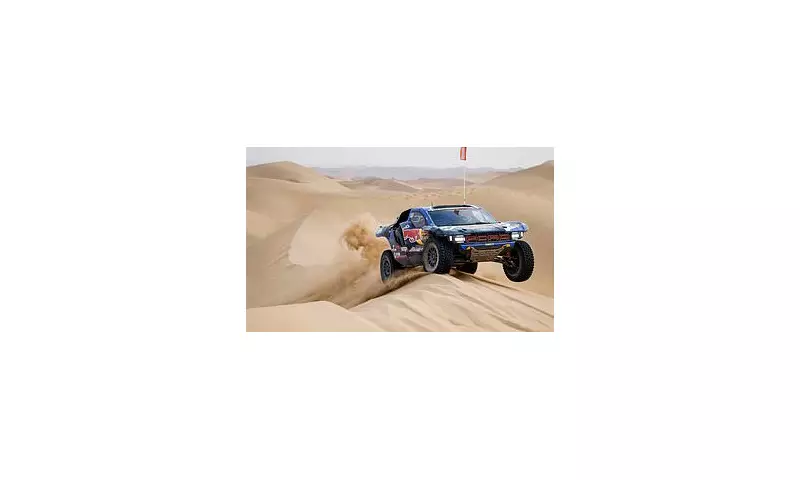
My own misadventure unfolded on the opening day of the Dakar Rally, a near two-week marathon widely regarded as motorsport's ultimate test. Over 800 competitors push their minds and bodies to breaking point in the desert's summer-like heat. I was searching for a vantage point to watch the Prologue, a 22-kilometre qualifying stage, to witness bikes, cars, and buggies tearing across the sand at breathtaking speeds.
After an hour of futile searching, a signal finally pinged on my phone. We scrambled back to the motorway, unaware of the chaos ahead. In a whirlwind twenty minutes, police halted traffic for our U-turn, only for our guide to abandon us in a thick cloud of dust on a treacherous rocky track. My host floored the accelerator of our Chinese 4x4—affectionately dubbed 'Herbie'—in a desperate attempt to keep up, the vehicle shuddering as if it might shake apart. It was utterly bonkers, yet brilliant—our own miniature, terrifying glimpse into the Dakar world.

My education had begun 24 hours earlier upon arriving in Yanbu, naive to the event's grandiose insanity. I knew it was dangerous, but I had no concept of the sheer lengths drivers and riders go to simply to finish. Just six hours in the Bivouac—the colossal mobile camp serving as the rally's nerve centre—taught me this event is among the most savage challenges in all of sport.
As four-time Dakar champion Carlos Sainz told Daily Mail Sport, "Dakar pushes the limits, you have to respect the race before it starts." He is absolutely right. The race commands respect. It is a 15-day slog featuring a qualification stage and 13 racing stages, where a vast array of vehicles must self-navigate thousands of kilometres of open desert and treacherous terrain.
Superhuman Grit: Broken Bones and Two-Second Margins
The 2026 edition exemplified the rally's unpredictable drama. In the motorcycle category, Red Bull KTM factory rider Luciano Benavides beat Honda rival Ricky Brabec to the crown by a mere two seconds after 49 hours of racing—one of the greatest comebacks in Dakar history. The margin is almost unfathomable. To add to the incredulous plot, the Argentine rider had entered the event with a serious knee injury that nearly prevented him from starting.
This year, the spirit of never giving up was personified by the 2025 bike champion, Daniel Sanders. The Australian Red Bull KTM rider was in prime position to defend his title when, 138km into Stage 10, he launched off a dune into a massive hidden drop. The crash left him with a broken collarbone and a broken sternum. Yet, with help from rival Ricky Brabec, he remounted. "We don't quit," Sanders declared at the Bivouac. Defying logic, he completed the final three days of the rally with only one working arm, securing an incredible fifth place overall.
Another rider who embodies this mental fortitude is two-time Dakar bike champion Sam Sunderland. Recalling his 2022 victory, Sunderland described a catastrophic crash on day four where he knocked himself out, injured his neck, and destroyed his bike's brakes and handlebars with 150km of stage remaining. "I was at the bottom of the barrel, searching for motivation," he said, describing the internal battle between quitting and drawing on years of sacrifice to push through the pain for another eight days.
The Ultimate Test: Navigation in a Sea of Nothing
While physical endurance is paramount, many argue Dakar tests the mind like no other event. Competitors must maintain intense focus for 15 days while battling fatigue and navigating a completely unknown route across a landscape of arid nothingness. Navigation is arguably the most challenging aspect. Racers only receive their direction at the start of each stage, relying on a detailed roadbook created by organisers who scout the terrain at a sedate 30 km/h.

In cars, a co-driver must interpret and shout out directions from tablets while being violently thrown around the cabin. Motorcyclists are alone, forced to read their navigation while wrestling a 170kg bike over dunes, with no roll cage for protection. Getting lost is a constant, dangerous threat. Sunderland recounted leading a 570km stage in South America a decade ago, only to get lost 50km from the finish in 48-degree heat. "I remember hallucinating. I was so buggered... I was just cuckoo," he admitted.
Born 48 years ago after founder Thierry Sabine got lost in the Libyan desert, the Dakar's essence remains unchanged. Now based in Saudi Arabia since 2020, it has grown to include trucks and buggies, with cars like those of eventual 2026 car category winner Nasser Al-Attiyah repeatedly hitting 170 km/h over terrain that looks unfit for such speeds.
As I left the echoing Bivouac in Yanbu for the final time, the relentless sound of engines and drills fading, I felt profoundly humbled. The Dakar Rally is a unique spectacle of human resilience—a chaotic, brutal, and utterly spectacular test where simply reaching the finish line is a monumental victory.