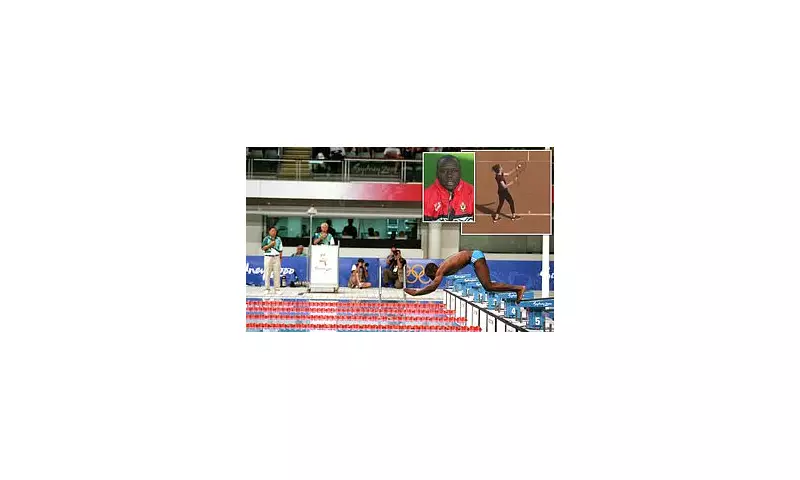
It's a universal thought for any sports fan watching from the sofa: in that isolated moment of glaring error, 'I could do better than that.' Whether it's a striker skying a sitter or a tennis player serving a double fault, the fleeting belief is common. Yet sustaining performance is another matter. However, a select few athletes have left spectators genuinely mystified, performing at a level where an ordinary person might genuinely fancy their chances.
Court Calamities and Pool Struggles
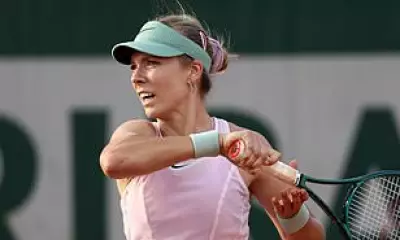
The debate was reignited this week by Hajar Abdelkader, a 21-year-old Egyptian tennis player. Her performance in an International Tennis Federation (ITF) W35 first-round match in Nairobi was startling. She suffered a 6-0, 6-0 defeat to world number 1,026 Lorena Schaedel, scoring just three points in 37 minutes—none from her own racket. The display was so profoundly poor it prompted questions about her competitive experience.
This echoes the story of Eric 'the Eel' Moussambani at the 2000 Sydney Olympics. The swimmer from Equatorial Guinea had only started training eight months prior, often in crocodile-infested waters due to a lack of pools. Granted a wildcard, he laboured through his 100m freestyle heat, recording a time of 1:52.72—the slowest in Olympic history and roughly 50 seconds behind his competitors. Yet his struggle resonated, and he became a beloved underdog, carried by a supportive crowd's ovation.

Track Troubles and Dancing Disasters
On the athletics track, Nasra Ali Abukar created headlines for all the wrong reasons at the 2023 World University Games in China. Her 100m time of 21.81 seconds is considered the slowest official competitive run ever recorded, leaving her a staggering ten seconds behind the field. An investigation concluded she was 'neither a sportsperson, nor a runner', leading to the sacking of the Somali Athletics Federation chairwoman over allegations of nepotism.
The 2024 Paris Olympics introduced the world to Australian breakdancer Raygun (Rachel Gunn). Despite qualifying legitimately, her routine—featuring moves likened to 'kangaroo hopping'—scored zero points across three battles. The performance drew widespread mockery and online abuse, with critics claiming it embarrassed Australian hip-hop. Judges acknowledged her courage, knowing she would be 'absolutely smashed' at the elite level.
A Premier League Imposter
Football folklore holds the tale of Ali Dia, perhaps the worst player in Premier League history. In 1996, Southampton manager Graeme Souness received a call from a man pretending to be football star George Weah, recommending his 'cousin' Dia. After a brief trial revealed his lack of skill, a desperate Souness still named him on the bench against Leeds. After an injury to Matt Le Tissier, Dia made a 20-minute cameo that confirmed his incompetence before being substituted. Le Tissier later joked he thought Dia had 'won a competition' to be there.
These episodes remind us that while elite sport is brutally difficult, the chasm between the best and the very worst can be astonishingly wide. They serve as curious footnotes in sporting history, where the line between professional endeavour and amateur struggle was blurred not by effort, but by a stark, undeniable lack of ability.