Cricket Row with Bangladesh Sparks IOC Concern Over India's 2036 Olympic Bid
The withdrawal of Bangladesh from cricket's T20 World Cup has triggered significant alarm bells for India's ambitious bid to host the 2036 Olympic Games. This development has raised profound concerns at the International Olympic Committee (IOC) regarding the potential politicisation of sport, a factor that could critically undermine India's hosting prospects.
Political Tensions Escalate Over Cricket Dispute
Bangladesh pulled out of next month's tournament last weekend after the International Cricket Council (ICC) declined a request to relocate their group matches from India to co-hosts Sri Lanka. This decision follows a protracted political row, initially sparked by the Kolkata Knight Riders' removal of Bangladeshi bowler Mustafizur Rahman from their IPL squad. Relations between India and Bangladesh have deteriorated sharply in recent weeks, exacerbated by the death of a Hindu man in northern Bangladesh, which has led to violent street clashes.
Kolkata authorities have stated they acted on instructions from the Board of Control for Cricket in India (BCCI), which maintains strong governmental ties. In a further escalation, Pakistan is reportedly considering boycotting the T20 World Cup in solidarity with Bangladesh, with a final decision anticipated this weekend.

ICC Governance and BCCI Influence Under Scrutiny
Although the ICC officially made the decision to keep Bangladesh in India, replacing them with Scotland, the BCCI is understood to have lobbied heavily against the switch. While the ICC asserts its independence, it has a history of decisions favouring the BCCI, such as guaranteeing India a semi-final spot in Guyana at the 2024 T20 World Cup for broadcasting and financial reasons.
The BCCI wields immense influence at the ICC level, with close connections to the Indian government. ICC chair Jay Shah previously served as BCCI secretary, and his father, Amit Shah, is the Home Affairs Minister in Narendra Modi's administration. Additionally, ICC chief executive Sanjog Gupta formerly led sport and live experiences at JioStar, the media conglomerate holding exclusive TV rights for ICC events in India.
IOC's Stance on Political Interference
This political controversy emerges at an inopportune moment for India, which was recently confirmed as host of the 2030 Commonwealth Games in Delhi and is now bidding for the 2036 Olympics in Ahmedabad, with Qatar seen as its primary rival. However, the IOC's tolerance for political interference is markedly lower than that of the ICC. A source indicated to the Guardian that it would be unthinkable for India to secure the Games if there were risks of boycotts by other nations.
The Olympic Charter mandates that sports organisations operate independently, free from external political influence, with Rule 50.2 explicitly banning political or religious expressions at the Games. The IOC's zero-tolerance approach was recently demonstrated in October, when Indonesia was suspended from hosting discussions for refusing visas to the Israeli team at the World Artistic Gymnastics Championships in Jakarta, effectively ending its 2036 bid.
Cricket's Role in Olympic Hosting Decisions
International cricket politics could significantly influence the 2036 Olympic hosting battle, especially with cricket returning to the Games in Los Angeles 2028 for the first time since 1900 and scheduled for Brisbane 2032. The inclusion of cricket is a strategic move by the IOC to engage the Indian market, but not at any cost.
Pakistan's matches in the T20 World Cup will be held in Sri Lanka as a reprisal for India's refusal to play across the border in last year's Champions Trophy, with bilateral series between the two nations now suspended. The IOC source emphasised that India must demonstrate substantial improvements in relations with Pakistan and Bangladesh to be considered a credible Olympic host.
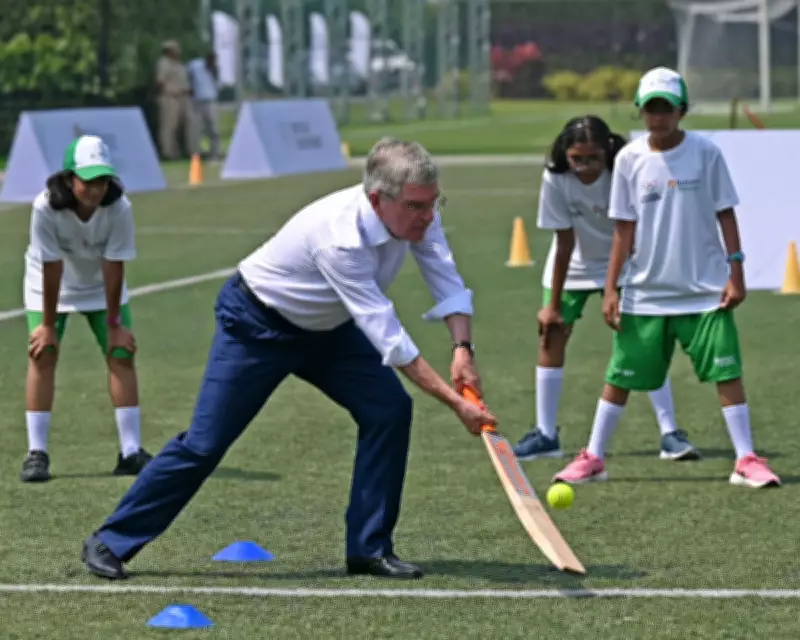
As Thomas Bach, president of the IOC, monitors India's decisions ahead of its 2036 bid, the current cricket dispute underscores the delicate balance between sport and politics, with far-reaching implications for India's Olympic aspirations.