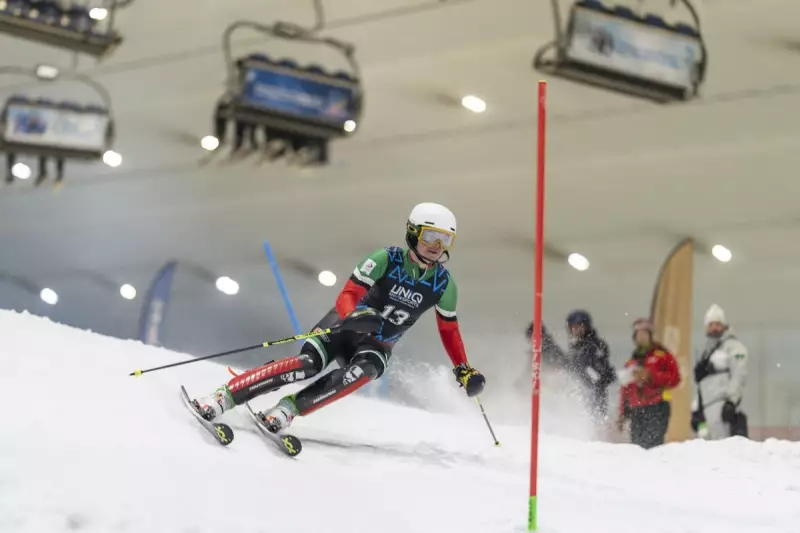
From Shopping Mall Slopes to Olympic Dreams: Alex Astridge's Historic Journey
In an extraordinary sporting narrative that defies geographical expectations, British-born Alex Astridge is poised to make history next month by becoming the first male athlete from the United Arab Emirates to compete in alpine skiing at the Winter Olympic Games. The 19-year-old's journey from indoor slopes to international competition represents a remarkable breakthrough for winter sports in a desert nation.
An Unconventional Training Ground
Astridge's Olympic pathway began not in snow-capped mountains but within the climate-controlled confines of Ski Dubai, perched atop the colossal Mall of the Emirates. This 85-metre high indoor ski facility, surrounded by hundreds of luxury retail outlets, provided the unlikely setting where Astridge first clicked into skis at just three years old.
"I started skiing at Ski Dubai when I was three years old, and the Olympics was always a dream for me," Astridge revealed in an exclusive interview. "The dream lasted until I was 14, when the UAE Winter Sports Federation was created. Suddenly it was no longer a dream, it was something I thought I could do, and ever since then I have been working towards it."

Turning Indoor Limitations into Competitive Advantages
The skier has transformed what many might perceive as limitations into distinct training benefits. The consistent conditions of the indoor slope - maintained just above freezing regardless of external weather - have allowed Astridge to complete scores of repetitive runs during single sessions, meticulously correcting technique without weather-related disruptions.
"I don't think it's as big a disadvantage as people think," Astridge asserted regarding his unconventional training environment. "There's a lot of nations who have qualified athletes without mountains or indoor slopes. Sure, there are a few disadvantages, but the only reason I was able to get where I have is Ski Dubai."
A Historic Moment for UAE Winter Sports
Astridge's qualification for the men's slalom event in Milan-Cortina marks a significant milestone for the UAE, coming just four years after neighbouring Saudi Arabia sent its first winter athlete to compete in Beijing. While Saudi Arabia has announced ambitious plans to develop outdoor winter sports facilities with an eye toward potentially hosting future Games, the UAE's geographical reality necessitates continued reliance on innovative indoor solutions.
The logistical challenges facing desert nations in winter sports were highlighted this week when Saudi Arabia withdrew from hosting the 2029 Asian Winter Games, citing prohibitive costs. Against this backdrop, Astridge's achievement becomes even more noteworthy.
Inspiring the Next Generation
Despite being born in Cambridge, Astridge moved to the UAE within six months of his birth and has never considered representing any nation other than his adopted homeland. "I've spent my life in the UAE, and you're told when you're a kid that you should represent your home country," explained the international business management student at Heriot Watt Dubai.
"The UAE is the only home I've ever known. It was where I was raised, where I went to school, and where I went to ski. It's the only flag I want to raise high."
Now, Astridge hopes his journey will inspire the more than 200 young alpine skiers currently training at Ski Dubai. "I love getting involved with the kids who are starting out," he said. "I want them to know that it is possible, it's not just a hobby that you do until you quit. There's a pathway in place for all of them and they can do it if they're good enough. For them, skiing in the Olympics is no longer a fairytale."
As Astridge prepares to compete alongside fellow UAE qualifier Piera Hudson in the women's events, his story transcends mere athletic achievement. It represents the power of perseverance, innovative adaptation, and the expanding global reach of winter sports into regions once considered improbable participants on the world's coldest sporting stages.