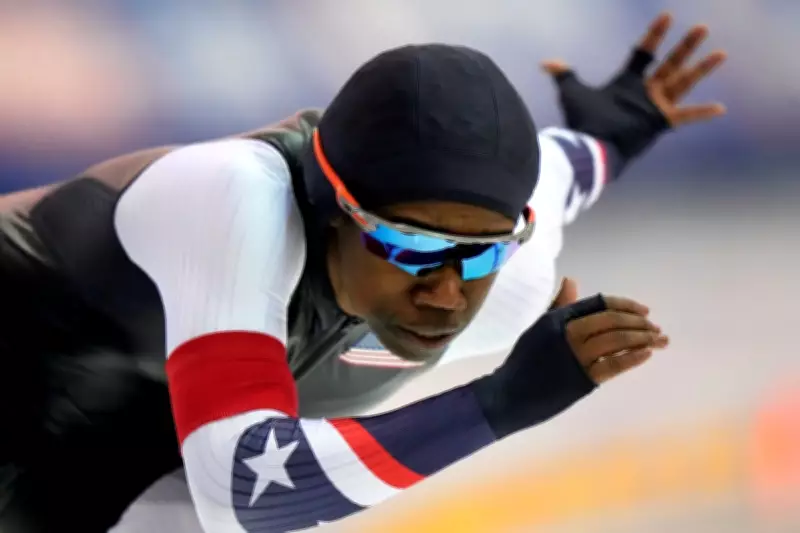
American speedskater Erin Jackson has made history, but she is determined not to remain a solitary figure in the annals of the Winter Olympics. When she triumphed in the 500 meters at the Beijing Games four years ago, Jackson secured her first Olympic medal and ended a 28-year drought for American women in that event. However, it was only days later that she discovered an even more significant milestone: she had become the first Black woman from any nation to claim an individual gold medal in any sport at the Winter Olympics.
A Surprising Revelation and a Hopeful Mission
Reflecting on this achievement, Jackson expressed her astonishment. "It was just really surprising, I guess, because I felt like, 'How could that be?'" she remarked in an interview with The Associated Press during the U.S. Speedskating trials ahead of the Milan Cortina Games. "When you think about how many Winter Olympics we've had, I just thought it was really strange. I hope people can see my story and the stories of other Black women in winter sports and then, hopefully, we'll have more coming up soon."
Despite her hopes, progress remains slow. At 33, Jackson is the sole Black athlete among the 21 speedskaters on the U.S. long track and short track squads for these Olympics, though the overall roster may be the most diverse the country has fielded at a Winter Games. Her teammate, two-time bronze medalist Brittany Bowe, highlighted the importance of representation. "I can't imagine being a younger kid watching the Olympic Games and never seeing somebody that looked like me do what I'm trying to do," Bowe said. "For her to be able to do that, and she is now that face for young Black girls to be able to look up and say, 'She can do it? Now I can do it' — it's monumental."

Overcoming Obstacles and Focusing on Performance
Jackson's path to gold was not without its challenges. In a notable act of sportsmanship, Bowe gave up her spot in the 500 meters four years ago to Jackson after she slipped at the trials; fortunately, an extra U.S. berth opened up, allowing both to compete in China. Jackson, who had already become the first Black woman to win a World Cup 500, seized the opportunity. At the time, her focus was squarely on performance rather than historical significance.
"We didn't even think about that at the time. I didn't even realize it until a day or two later," recalled U.S. Speedskating national team coach Ryan Shimabukuro. "She's proud of it, obviously. And I'm proud of her for it. But we didn't really think about that, as much as: What is the best way to skate the fastest?"
Inspiring Future Generations and Addressing Barriers
Today, Jackson's goals extend beyond personal accolades. As she prepares to compete in the 500 and 1,000 meters in Italy, having won both distances at the trials despite recovering from a torn left hamstring, she is committed to fostering diversity in winter sports. "I just hope that I can help other people of colour get involved in winter sports and speedskating," she said. "It's really important to see people like you achieving something, because then maybe that can inspire you to try the same things."
Jackson, who grew up in Ocala, Florida, and transitioned from inline skating to ice just four months before qualifying for the 2018 Olympic team, aims to be a role model. "I just always want to be a good example," she emphasised, "or someone who other people can look to."
Building a Legacy Through Foundations and Support
Looking ahead, Jackson plans to establish a foundation after her competitive career ends, inspired by groups like EDGE Outdoors in Washington state, which provides scholarships for minority women in skiing and snowboarding. She has already contributed by reviewing scholarship applications for them and has worked with the Utah-based Sisters in Sports Foundation, offering mentorship and funding for female athletes with disabilities.
Jackson pointed out a critical barrier to diversity in winter sports: cost. "One of the biggest issues with winter sports is there is a really big barrier to entry around cost. They're really expensive sports to get into," she explained. "That kind of limits the talent we can have and the people who can give it a shot."

Through her achievements and advocacy, Erin Jackson is not just chasing medals; she is paving the way for a more inclusive future in winter sports, hoping that her historic gold will be the first of many for Black women on the Olympic stage.